
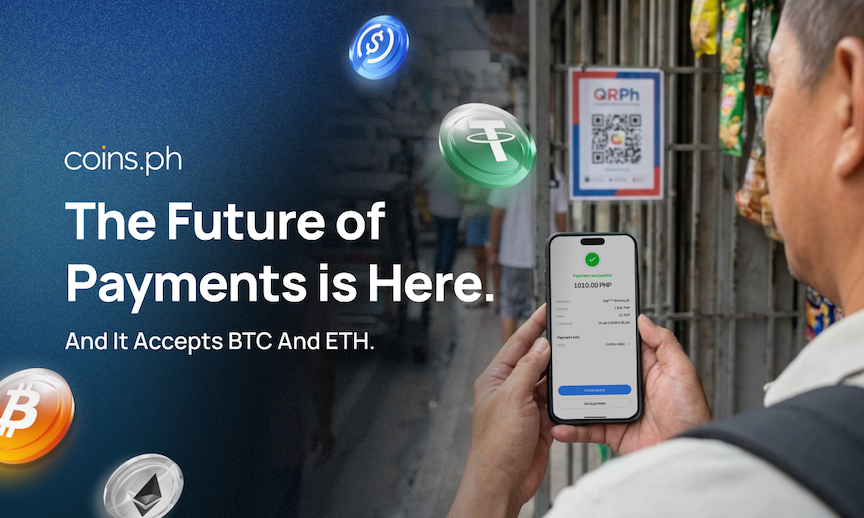
Coins.ph is expanding its QRPh crypto payments feature to support Bitcoin and Ethereum transactions, enabling users to spend digital assets at an estimated 700,000 QRPh-enabled merchants nationwide.
The rollout marks another step in the growing integration of cryptocurrency into everyday payments in the Philippines, as digital asset platforms continue to push for real-world utility beyond trading and speculation.
Powered by QRPh — the national QR payment standard developed by the — the feature automatically converts crypto into Philippine pesos at checkout, allowing users to pay merchants through the same QR-based system widely used across digital wallets and banking apps.
The expansion follows Coins.ph’s earlier rollout of QRPh-compatible stablecoin payments for USDT and USDC, positioning the Philippines among the first markets globally to integrate stablecoins into a national QR payment infrastructure.
According to Coins.ph, support for additional digital assets is expected in the coming months as the company accelerates its broader push toward crypto-enabled everyday payments.
‘Money in motion’ and the push toward a super app
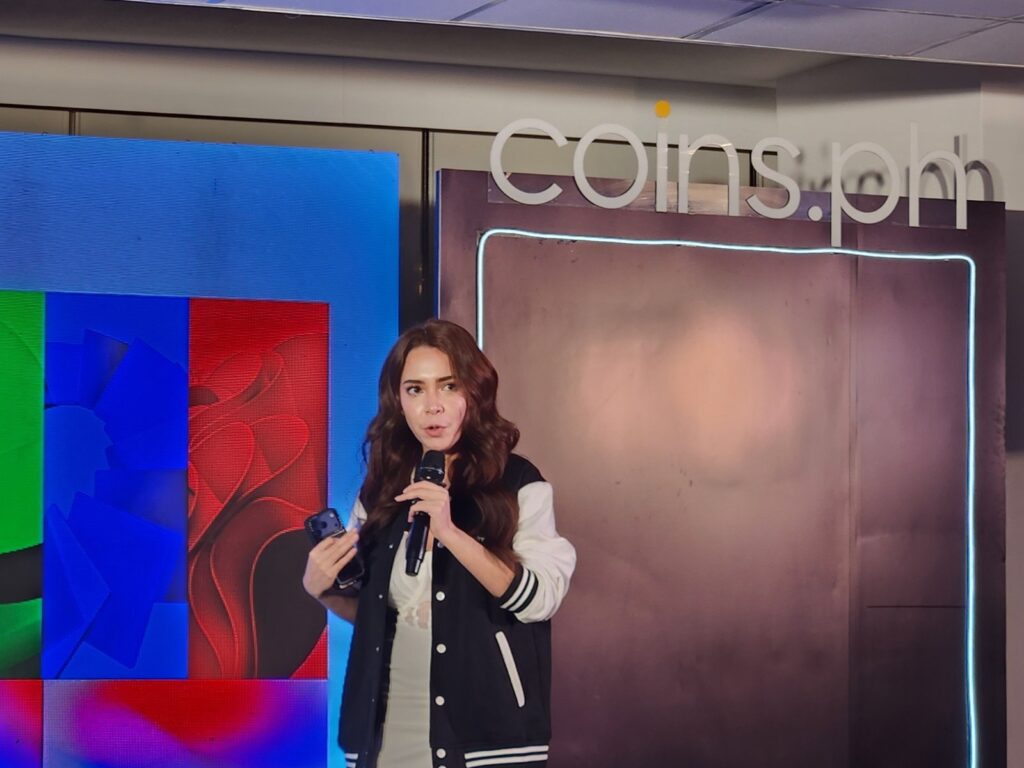
Amira Alawi, Global Marketing Director of Coins.ph, speaking at the event
The announcement comes as Coins.ph doubles down on its ambition to evolve into a full-fledged “super app,” with deeper integration between payments, crypto services, and financial tools.
In a speech delivered during the Coins.ph NEXT event held at its headquarters in Bonifacio Global City (BGC), Amira Alawi, the company’s Global Marketing Director, outlined the company’s vision for transforming how users interact with digital money.
Alawi said the company is moving toward a model where “form meets functionality,” enabling what she described as “money in motion” — where users can seamlessly send, receive, and spend funds without needing to switch between multiple applications or wallets.
She noted that recent campaigns, including a viral video featuring actress and entrepreneur Ivana Alawi, which reached tens of millions of viewers, represent early steps toward mainstream crypto adoption in the Philippines.
“We’re moving from a crypto dashboard to a more payments-centric experience,” she said, adding that the goal is to make digital assets intuitive enough for non-crypto users to adopt in everyday transactions.
Alawi also highlighted ongoing efforts to simplify user experience design, including more intuitive app navigation and visual updates aimed at making the platform more accessible and “mainstream-ready,” particularly for younger users.
Crypto adoption driven by everyday utility

Screen grab from Amira Alawi’s LI post
The Philippines remains one of the world’s most active crypto markets, with more than 15 million users and strong remittance flows that continue to drive demand for digital financial tools. Stablecoins such as USDT have gained popularity among Filipinos for cross-border transfers and digital savings due to their accessibility and near-instant settlement capabilities.
Coins.ph said its QRPh crypto payments feature is already seeing increased usage as consumers begin using digital assets not only for investment, but also for daily spending and remittances.
The company emphasized that its long-term strategy includes expanding access to underbanked regions across Visayas and Mindanao, where digital wallets and mobile-first financial services are increasingly becoming key tools for financial inclusion.
Coins.ph added that it is actively exploring partnerships and marketing collaborations to further accelerate adoption, while continuing to operate under its regulatory framework as a licensed Virtual Asset Service Provider and Electronic Money Issuer under the Bangko Sentral ng Pilipinas (BSP).
Crypto payments gaining traction
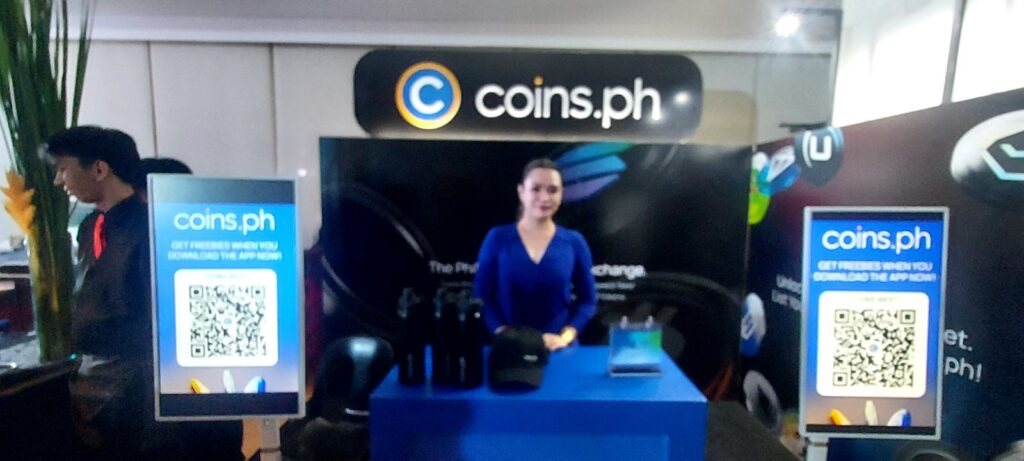
QRPh-compatible stablecoin payments featured at Coins.ph NEXT event
The expansion follows the company’s earlier launch of QRPh-compatible stablecoin payments for USDT and USDC, further strengthening the Philippines’ position among early adopters of stablecoin-enabled QR payment infrastructure.
The move reflects a broader shift toward utility-driven crypto adoption, where digital assets are increasingly used for payments, remittances, and savings rather than purely for investment purposes.
By integrating crypto spending into QRPh, Coins.ph enables users to directly use crypto balances for retail purchases without requiring merchants to handle cryptocurrency.
Transaction activity for QRPh crypto payments has already shown strong growth since its rollout.
Interest in crypto payments also received a boost after Ivana Alawi showcased the feature to her audience of more than 55 million followers across social media platforms, signaling how crypto-based payments are increasingly entering mainstream consumer awareness in the country.
Coins.ph said more integrations, mainstream partnerships, and additional token support are expected as adoption continues to expand.
Focus shifts toward practical crypto utility
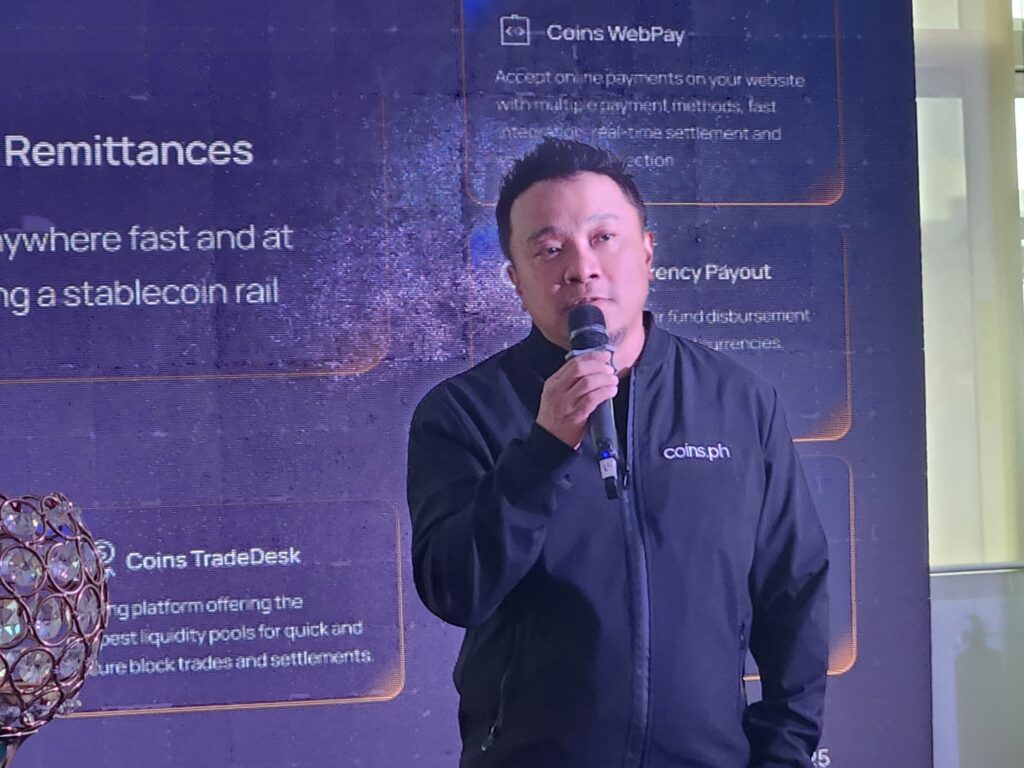
Wei Zhou, CEO of Coins.ph
For Wei Zhou, CEO of Coins.ph, the future of digital assets will depend heavily on practical consumer use cases.
“The future of crypto adoption will be driven by utility,” Zhou said. “By expanding QRPh crypto payments to Bitcoin and Ethereum — with more tokens to come — we’re making digital assets practical, accessible, and relevant to everyday Filipino life.”
As digital payments continue evolving in the Philippines, the latest expansion underscores how crypto platforms are increasingly positioning themselves within the country’s broader financial ecosystem, particularly in payments, remittances, and digital commerce.
—
Disclaimer: This article is for news and informational purposes only and should not be construed as financial or investment advice or an endorsement of any cryptocurrency or platform. Crypto-assets are highly speculative and involve significant risks. Readers should verify the regulatory status of crypto service providers with the BSP and the SEC before making any investment or transaction.