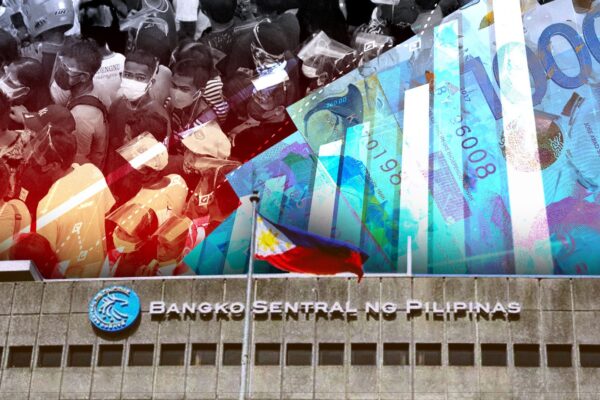
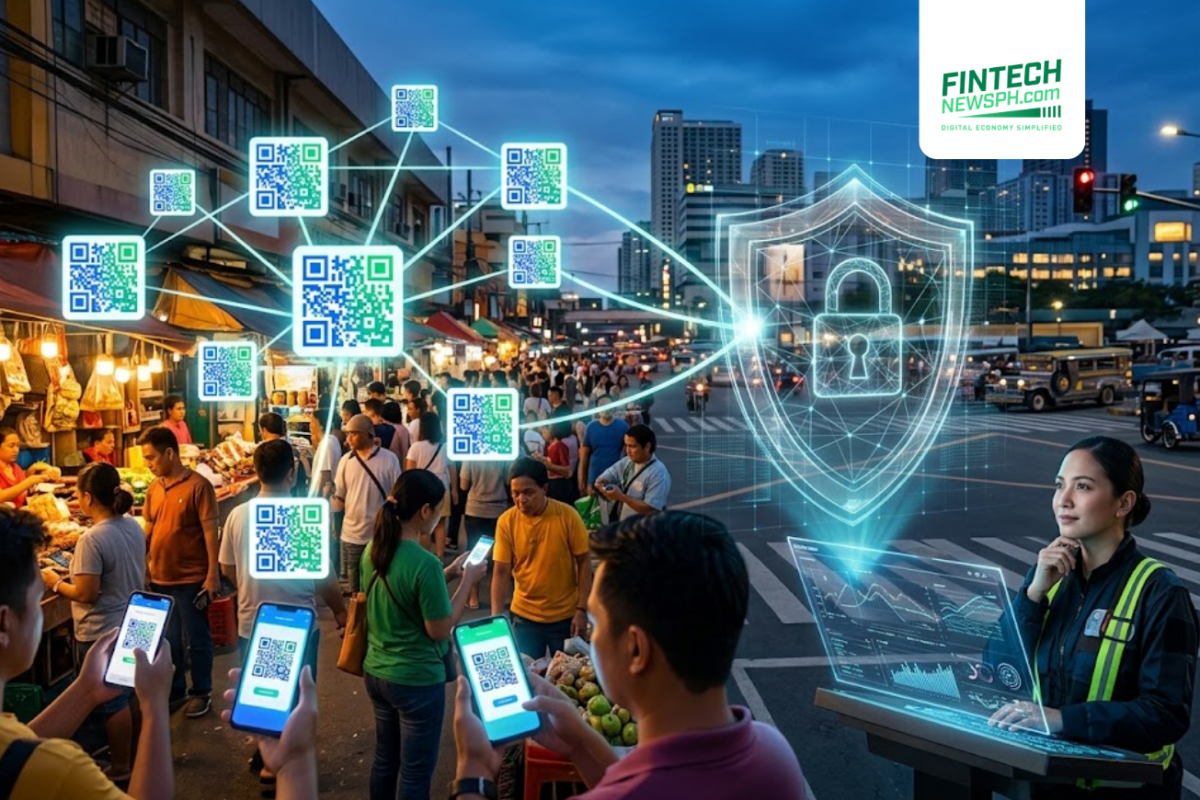
QR Ph payments are becoming a bigger part of how Filipinos move money, allowing customers to pay merchants and transfer funds across participating banks and e-wallets without having to stay within a single financial platform.
That growth is a major step forward for digital payments, but it also raises a harder question: Can the Philippines keep QR-based payments safe as transaction volumes continue to climb?
The scale of QR payments has changed rapidly. According to the Bangko Sentral ng Pilipinas (BSP), QR Ph person-to-merchant transactions reached 2.5 billion in 2025, up from 174.3 million in 2024. Their total value reached about ₱1.2 trillion, a 408.3% increase from the previous year.
The numbers show how quickly QR payments have moved from a convenient alternative to cash into a significant part of the country’s retail payment infrastructure.
But more transactions also mean more opportunities for fraudsters to exploit users, merchants, and payment channels.
The QR code is not the weakest link
QR Ph was designed to make payments more interoperable. The standard allows a common QR code to be scanned and interpreted by participating banks and electronic money issuers, enabling payments and fund transfers across institutions.
That interoperability is one of its biggest advantages. A customer does not need to know which bank or e-wallet a merchant uses before making a QR payment.
However, interoperability does not automatically protect a user from being deceived into making the wrong transaction.
The bigger security challenge increasingly sits around the payment itself. A legitimate QR payment system can still be abused through social engineering, fake payment requests, manipulated QR codes, fraudulent merchant identities, or compromised accounts.
This is where QR phishing, or quishing, becomes particularly relevant.
The BSP now lists quishing among common financial scams, describing it as the use of malicious QR codes to direct victims to fraudulent websites, obtain personal information, or download malware.
For consumers, that means scanning a QR code is no longer something that should automatically be treated as harmless simply because the transaction happens through a familiar banking or e-wallet application.
Fake merchants can exploit trust
One of the more straightforward risks is merchant impersonation.
A scammer can place a fraudulent QR code where customers expect to find a legitimate merchant’s payment code. The victim may scan it, enter an amount, and authorize the payment without realizing that the money is going somewhere else.

This becomes more difficult in crowded environments such as markets, transport areas, food stalls and small retail businesses where QR codes are increasingly common.
The growth of initiatives such as Paleng-QR Ph also means more micro and small merchants are being introduced to digital payments. That can improve financial inclusion and reduce dependence on cash, but it also makes merchant awareness an important part of payment security.
A customer may know how to check the name displayed by a banking app before confirming a transfer. A small merchant, meanwhile, may be less familiar with the warning signs of a replaced QR code, fake payment confirmation, or fraudulent account.
Account takeover changes the risk again
QR payment fraud is also not limited to the physical QR code.
If a customer’s bank or e-wallet account is compromised, the attacker may be able to use the legitimate payment infrastructure to move money. In that situation, the QR code itself may be perfectly genuine. The problem is that the person controlling the account is not.
This is why payment security increasingly requires more than protecting the QR standard. Banks and e-wallets need systems that can identify unusual behavior around transactions, devices, accounts, and beneficiaries.
The BSP’s own reporting framework recognizes several forms of unauthorized online transactions linked to social engineering, including phishing, vishing, smishing, and quishing. It also separately tracks unauthorized transactions associated with weaknesses in a financial institution’s information security controls.
That distinction matters. A secure payment system has to defend against both technical compromise and manipulation of the customer.
Transaction monitoring becomes more important
As QR payments scale, financial institutions have access to more transaction signals that can potentially be used to identify suspicious activity.
A payment that is unusual because of its amount, timing, recipient, device, location, or transaction pattern can potentially trigger additional checks. For banks and e-wallets, the challenge is doing this without creating so much friction that legitimate low-value payments become difficult.
This balance will become increasingly important as QR payments become routine.
A customer buying lunch should not have to go through the same experience as someone attempting an unusually large transfer to a newly added beneficiary. At the same time, a system that approves every transaction without considering behavioral signals could give fraudsters more room to operate.
The country’s broader payment infrastructure is already being designed with security requirements in mind. A recent BSP procurement document for a unified payment platform, for example, specifies encryption, multi-factor authentication, fraud detection capabilities, access controls, and comprehensive transaction logging as security requirements.
The direction is clear: payment infrastructure has to be designed not only to move money quickly, but also to make transactions traceable, monitorable, and defensible.
The security challenge extends to merchants
Consumers are often told to be careful before scanning a QR code, but merchants have an equally important role.
A merchant QR code is effectively a payment endpoint. If it is replaced, redirected, or presented alongside misleading information, customers can unknowingly send money to the wrong destination.
Businesses therefore need basic controls around who can access their QR materials, where codes are displayed and how payment confirmations are verified.
For small merchants, this does not necessarily mean deploying sophisticated cybersecurity systems. Simple practices such as checking the merchant name displayed before accepting payments, keeping QR materials physically secure, and avoiding reliance on screenshots as proof of payment can reduce opportunities for fraud.
Payment providers also have a role in making these safeguards understandable. Security warnings that are buried in technical language are less useful than clear, timely prompts that explain what a customer should verify before authorizing a payment.
Scale should come with stronger consumer protection
The rise of QR Ph is ultimately a sign that the Philippines is becoming more comfortable with interoperable digital payments.
The BSP’s National Retail Payment System framework is built around interoperability, inclusivity and competition, with the goal of allowing customers to transfer funds across participating financial institutions without being locked into a single provider.
That model can make digital payments cheaper, faster, and more accessible. But as adoption grows, the definition of a successful payment system has to go beyond transaction speed and availability.
It also has to include how quickly suspicious transactions can be detected, how effectively compromised accounts can be contained, how merchants can verify payments, and how quickly victims can report and recover from fraud.
The BSP itself advises consumers to check suspicious links and sources, protect their personal and financial information, and immediately report suspicious transactions to their bank or e-money issuer.
For users, the safest habit may be simple: slow down before pressing confirm.
Check the recipient or merchant name. Verify the amount. Be suspicious of QR codes sent through unexpected messages or displayed in unusual places. And never assume that a familiar-looking QR code automatically means the person or business behind it is legitimate.
The next phase of QR payments will be a security test
The Philippines has already demonstrated that it can scale interoperable QR payments quickly. The next challenge is proving that security can scale at the same pace.
With billions of QR Ph transactions already moving through the system, fraud prevention can no longer be treated as a secondary feature. It has to be built into the entire payment journey, from the QR code displayed by a merchant to the device used by the customer and the monitoring systems operating behind the transaction.
QR Ph may make digital payments more seamless. Keeping those payments trustworthy will require banks, e-wallets, merchants, regulators and consumers to move just as quickly on security.
The question is no longer whether Filipinos will use QR payments. The numbers suggest they already are.
The bigger question is whether the country’s payment ecosystem can make trust as scalable as the transactions themselves.