

Artificial intelligence is changing the way companies handle customer service, but the bigger challenge is no longer whether businesses should use AI. It is how they can put it to work across thousands or millions of customer interactions without losing control over data, quality and compliance.
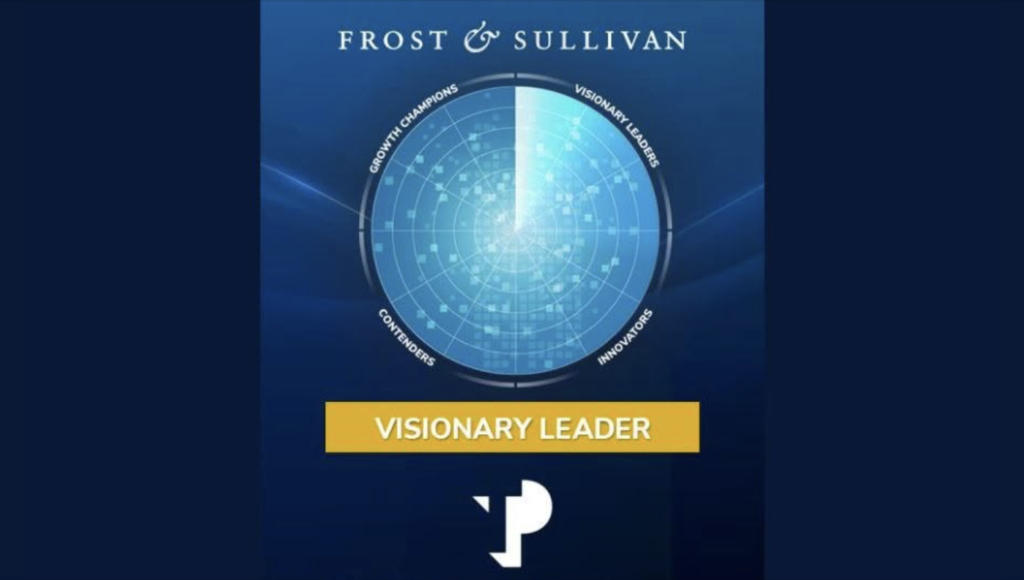
That is where TP, formerly known as Teleperformance, is positioning itself as it earns a “Visionary Leader” ranking in Frost & Sullivan’s 2026 Frost Radar: Customer Experience Management Services in Asia-Pacific.
TP posted the highest combined Innovation and Growth score among 21 providers assessed for the report, which was selected from a wider pool of more than 200 companies.
The recognition comes as the Asia-Pacific customer experience management market continues to expand. Frost & Sullivan expects the market to grow from US$41.91 billion in 2024 to US$52.57 billion by 2030, with AI becoming an increasingly important part of how companies manage customer interactions.
“This recognition reflects something we’ve seen play out across the region this year: innovation and growth are no longer separate measures of performance, they’re increasingly interconnected,” said Dave Rizzo, President and CEO, APAC, TP. “We’re honored that Frost & Sullivan has recognized both dimensions of our work.”
For companies in financial services, the shift could be particularly significant. Banks and fintech firms are dealing with growing volumes of digital transactions while customers increasingly expect faster responses and more personalized service.
In the Philippines, AI is already becoming part of conversations around customer experience, fraud prevention, credit and operational efficiency, while the Bangko Sentral ng Pilipinas is also looking at the governance and responsible use of AI in financial services.
For local fintechs, that means the competitive advantage may increasingly come not simply from having an AI chatbot or automated support tool, but from how well AI is integrated into the systems handling customer data, transactions, fraud alerts and service requests.
From AI experiments to everyday operations
TP says it has invested US$100 million in AI, while expanding its data services capabilities and using AI internally in areas such as quality assurance, recruitment, training and workforce management.
One of the more notable applications is its approach to quality assurance.
Traditional customer-service operations typically review only a small portion of interactions. TP said its agentic quality-assurance technology can analyze all customer transactions, rather than the roughly 2% to 3% sample commonly reviewed, giving companies a broader view of where service problems are occurring.
For a bank, digital wallet or fintech, the same principle could have practical implications. Instead of relying on a limited number of customer interactions to identify recurring problems, AI could help companies spot patterns across a much larger pool of conversations and transactions — from repeated complaints about a payment failure to issues that may signal friction in onboarding or account servicing.
The challenge, however, is making sure those systems operate within appropriate controls.
That is an area TP highlighted in its Frost & Sullivan assessment, particularly through its TP.ai platform and governance capabilities for regulated industries.
“The real shift is from experimenting with AI to deploying and governing it at enterprise scale, and that starts with the data and orchestration behind it,” explained Rizzo. “TP.ai brings that together for our clients, and our continued investment across the AI ecosystem is what lets us move them from experimentation to enterprise-wide transformation.”
Rizzo added that TP.ai is intended to bring those capabilities together as businesses move from testing AI applications to deploying them across their operations.
Why it matters to Philippine fintech

The development comes at a time when Philippine banks and fintech companies are expanding beyond basic digital transactions and competing increasingly on the quality of the customer experience.
The country’s financial sector is also moving toward more connected digital services through initiatives such as open finance, which aims to give customers greater control over how their financial data is accessed and shared while enabling new financial products and services.
That creates a larger role for data and AI—but also raises the stakes when something goes wrong.
A customer who encounters a failed payment, suspicious transaction or locked account does not necessarily care which technology sits behind the service. What matters is whether the problem is resolved quickly, accurately and securely.
For fintechs, that makes customer support part of the product itself.
As AI takes on more of that work, companies will need to balance automation with human oversight, particularly for situations involving fraud, disputes, account restrictions and other sensitive financial decisions. The ability to explain and govern AI-driven outcomes is becoming as important as the technology’s ability to produce them.
Eight consecutive years of recognition
Krishna Baidya, Vice President of ICT Research at Frost & Sullivan, said TP has moved beyond simply announcing AI capabilities and is now deploying them in production across Asia-Pacific.
He cited the company’s TP.ai platform, governance controls for regulated industries and local market leadership structure as factors supporting its position across both established and high-growth markets.
“TP has moved past announcing AI capability and is now deploying it at production scale across Asia-Pacific,” Baidya said.
TP’s regional model combines centralized technology capabilities with teams familiar with local languages, regulations and customer expectations. The company operates across close to 100 countries and provides services ranging from customer care and back-office operations to digital transformation, consulting and specialized services.
Frost & Sullivan said the latest recognition marks the eighth consecutive year that TP has maintained its position as a leader in both growth and innovation.
For the wider financial services industry, the development points to a broader shift already underway: AI is moving from an experimental technology sitting alongside customer operations to becoming part of the infrastructure behind them.
For Philippine fintechs, that could mean the next stage of competition will not simply be about who can launch the newest digital feature. It may increasingly come down to who can use AI to make financial services faster and more responsive while keeping customer data, security and trust intact.