

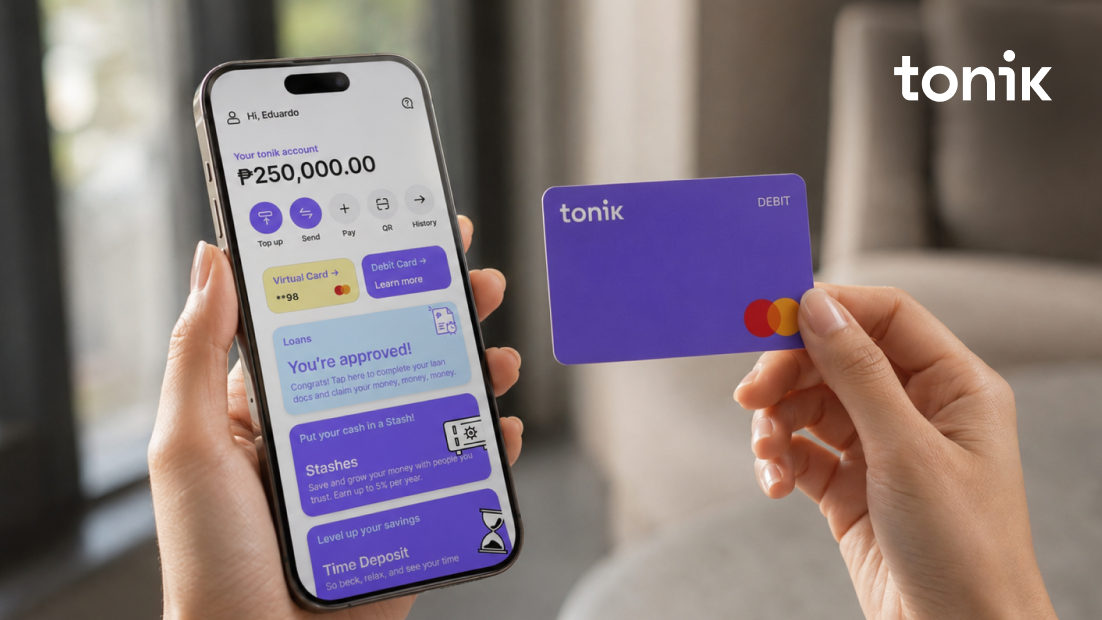
Tonik is betting that millions of Filipinos taking out formal loans for the first time could drive the next phase of Philippine fintech growth, as the industry looks beyond payments toward a much larger digital credit opportunity.
Tonik founder and CEO Greg Krasnov, speaking on ANC’s Startup, estimates that around US$100 billion in mass-market credit demand remains underserved in the Philippines.

Greg Krasnov, Tonik Founder and CEO
The estimate is Tonik’s own assessment of the market, but it points to a broader shift already taking shape. Fintech helped millions of Filipinos become accustomed to moving and spending money digitally. The next competition could be over who gets access to credit once they enter that ecosystem.
Payments have already crossed a major threshold
Digital payments have moved firmly into the mainstream.
According to the Bangko Sentral ng Pilipinas’ 2024 E-payments Measurement Report, digital transactions accounted for 57.4% of monthly retail payment volume in 2024, up from 52.8% a year earlier.
That progress means the industry’s next growth opportunity increasingly lies beyond simply convincing consumers to open digital accounts or pay through their phones.
IMAGE CREDIT: BSP
Credit is a more difficult market to crack.
Many potential borrowers may regularly earn, spend and transact digitally but still have limited conventional credit histories. For lenders, reaching those customers requires determining who can repay a loan without relying entirely on the records traditionally used by banks.
Tonik has already built its business around lending
Tonik’s strategy provides one example of how valuable digital credit can become.
The bank reported in May that its loan portfolio had reached US$110 million as of April 2026, 2.3 times higher than a year earlier. Its annualized revenue run rate exceeded US$60 million, with 99% coming from lending, according to the company.
Tonik also reported positive consolidated cash net income in the first quarter of 2026, while Tonik Digital Bank achieved IFRS profitability during the same period.
IMAGE CREDIT: Tonik
The company attributed its performance to a business model centered on consumer credit rather than building scale primarily through deposits, payments, or user numbers.
Its lending products span digital personal loans, salary-linked loans and merchant installment financing, while the bank says AI-driven underwriting helps it assess borrowers with limited traditional credit records.
Digital lending is opening to more players
The broader lending market is also entering a new regulatory phase.
The Securities and Exchange Commission officially lifted its nearly five-year moratorium on new online lending platforms beginning August 1, under Memorandum Circular No. 20, Series of 2026.
The rules apply to financing and lending companies, rather than BSP-supervised digital banks such as Tonik, but the change could still widen competition across the broader digital credit market.

New online lending platforms must operate under stricter regulatory, disclosure, and market-conduct requirements as regulators try to balance financial inclusion with borrower protection.
That distinction will become increasingly important if more providers compete for Filipinos who have never borrowed formally before.
The next fintech race is about who gets credit
Digital payments solved one part of the financial inclusion problem by making it easier for consumers to move money without depending entirely on cash.
Digital lending presents a harder challenge.
Giving first-time borrowers access to credit requires lenders to assess risk accurately, keep loans affordable and prevent easier access from turning into unsustainable debt.
For Tonik, that underserved market represents the next major fintech opportunity.
If the industry’s attention continues moving in the same direction, the next phase of Philippine fintech may be defined less by who has a digital wallet and more by who can responsibly qualify for a loan.