

Tonik, the holder of Bangko Sentral ng Pilipinas (BSP) Digital Banking License No. 001, has reached a major milestone after reporting sustained profitability in the first quarter of 2026 — becoming the first standalone digital bank in the Philippines to do so.
The bank said it generated positive consolidated cash net income in Q1 2026, after accounting for all costs including risk provisions.
Its regulated subsidiary, Tonik Digital Bank, also posted IFRS profitability during the same period.
The achievement places Tonik among a small group of neobanks globally to reach profitability without relying on an ecosystem parent or legacy banking infrastructure.
A lending-first model
Unlike many digital banks that have prioritized user growth and payments adoption, Tonik positioned itself from the outset as a credit-led institution.
The strategy was built on a simple premise: lending generates significantly higher revenue per customer compared to payments or deposit-led models. The bank focused on serving the estimated 90% of Filipinos underserved by traditional bank credit systems.
Five years into operations, that approach is now reflected in its financial performance.
Strong credit-led fundamentals
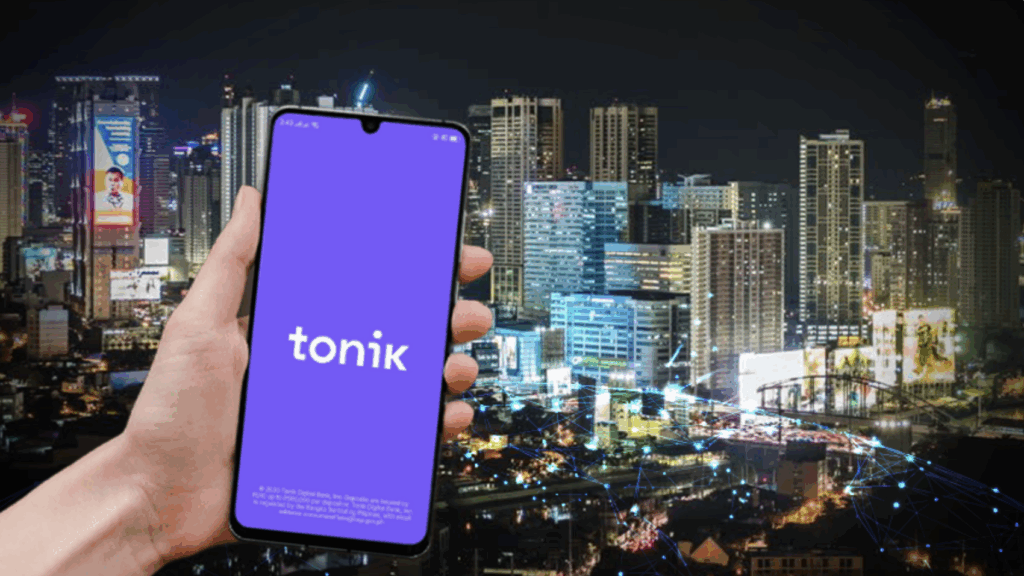
IMAGE CREDIT: Tonik
As of April 2026, Tonik reported a loan portfolio of around USD 110 million, up 2.3 times year-on-year. Its annualized revenue run-rate exceeded USD 60 million, with 99% of revenues coming from lending activities.
The bank also highlighted a net interest margin (NIM) of 51% and a return on risk-adjusted capital (RAROC) of 25%, which it described as among the strongest in the Philippine banking sector.
Its loan-to-deposit ratio stood at 82%, while net lifetime value to customer acquisition cost (LTV/CAC) reached 23x — figures that underscore what the bank describes as a “lending-first flywheel” rather than a deposit accumulation strategy.
Structural advantages behind profitability

Tonik founder and CEO Greg Krasnov
Tonik attributed its profitability to three core factors: AI-driven credit underwriting, diversified loan portfolios, and a structural funding advantage from its BSP digital banking license.
Its lending book spans salary-deduction loans via employer channels, merchant installment products, and unsecured personal loans — spreading risk across multiple segments.
The bank also benefits from low-cost retail deposits, which it says range between 3% and 6%, significantly lower than funding costs for non-bank lenders.
CEO: “Profitability is about what you choose not to do”
Founder and CEO Greg Krasnov said the milestone reflects deliberate strategic restraint rather than aggressive expansion.
“Profitability in digital banking is a function of what you choose not to do. We chose not to chase users as a vanity metric. We built a credit bank with strong unit economics and let the income statement follow,” Krasnov said.
What’s next
Tonik said it will continue scaling its lending portfolio through employer-channel partnerships, merchant networks, and revolving credit products aimed at increasing repeat borrowing and customer lifetime value.
The bank enters its next phase positioning itself as a loan portfolio growth leader in the Philippine digital banking sector.