

For years, the Philippines has been trying to bring more Filipinos into the formal financial system. But for Muslims who want financial products that comply with Islamic principles, the choices have remained relatively limited.
That is beginning to change.
The Securities and Exchange Commission has put in place a clearer set of rules for Sukuk, giving issuers a defined regulatory route to raise funds through Shari’ah-compliant securities and giving investors clearer information about how these instruments work.
The SEC issued Memorandum Circular No. 12, Series of 2026, on February 25, setting out guidelines covering the issuance, registration, disclosure and continuing obligations for Sukuk.
The move gives the Philippines another way to broaden its capital market while creating more options for investors looking for Shari’ah-compliant investments.
It also builds on work that the Bangko Sentral ng Pilipinas (BSP) has been doing to make Islamic banking more accessible and commercially viable.
Sukuk is more than an Islamic bond

IMAGE CREDIT: Magnific
Sukuk is often described as an Islamic version of a bond. The comparison is useful, but it misses an important distinction.
Conventional bonds are debt instruments that generally pay interest. Under Islamic finance, the charging and payment of interest, or riba, is prohibited.
Sukuk are instead structured around ownership or investment interests in underlying assets, services, usufructs or projects that comply with Shari’ah principles.
The returns to investors therefore come from the underlying arrangement rather than conventional interest payments.
That difference affects how Sukuk are structured, issued and disclosed.
Under the SEC’s new rules, issuers may use Shari’ah-compliant structures and other arrangements approved by the Commission. The framework also provides for the use of special purpose entities in Sukuk transactions.
The Philippines has already shown there is investor appetite

IMAGE CREDIT: adobe stock.com
The new SEC rules do not mean the country is starting from zero.
The Philippine government tested international demand for Sukuk in 2023, when it raised US$1 billion through its maiden Sukuk issuance.
That transaction gave the country an early indication that Philippine assets could attract investors in the global Islamic capital market.
What has been missing, however, is a deeper domestic market where Sukuk can become another regular financing option for companies and institutions.
The SEC framework is intended to address part of that gap by establishing clearer rules for issuers and investors.
BSP has been building the Islamic finance side
IMAGE CREDIT: Magnific
The central bank has been laying the groundwork for Islamic finance for several years.
The Islamic Banking Law, or Republic Act No. 11439, established the legal foundation for Islamic banking in the Philippines. The BSP subsequently developed rules covering Islamic banks and Islamic banking units, including Shari’ah governance, reporting and prudential requirements.
One of the more significant recent changes came through BSP Circular No. 1219, issued in October 2025.
The circular amended the prudential rules for Islamic banks and Islamic banking units and made it possible for all categories of banks to apply for authority to operate an Islamic banking unit, subject to the applicable requirements. It also introduced greater flexibility in some capital, liquidity and reporting requirements as the sector develops.
That matters because Islamic finance cannot grow through Sukuk alone.
Banks need to be able to offer Islamic financial products, understand Shari’ah-compliant structures and serve customers who want alternatives to conventional banking.
The BSP has also been working with other government agencies and market participants through its Islamic Finance Coordination Forum, including discussions on developing a domestic Sukuk market. A BSP-led forum in 2025 brought together regulators and industry participants to discuss Sukuk rules, market development and related issues.
The tax and regulatory pieces matter too
Sukuk also needs a tax framework that does not put Shari’ah-compliant structures at a disadvantage.
The Bureau of Internal Revenue addressed this in Revenue Memorandum Circular No. 81-2024, which clarified the tax treatment of Sukuk as an Islamic banking arrangement. The BSP’s own regulatory listing identifies the circular as part of the country’s Islamic banking framework.
The result is a more defined regulatory environment across several parts of the financial system: the BSP for banking and prudential rules, the SEC for capital-market issuance, and the tax authorities for the treatment of Sukuk transactions.
That coordination is important because Sukuk sits at the intersection of banking, securities and Islamic finance.
What the new SEC rules mean for issuers
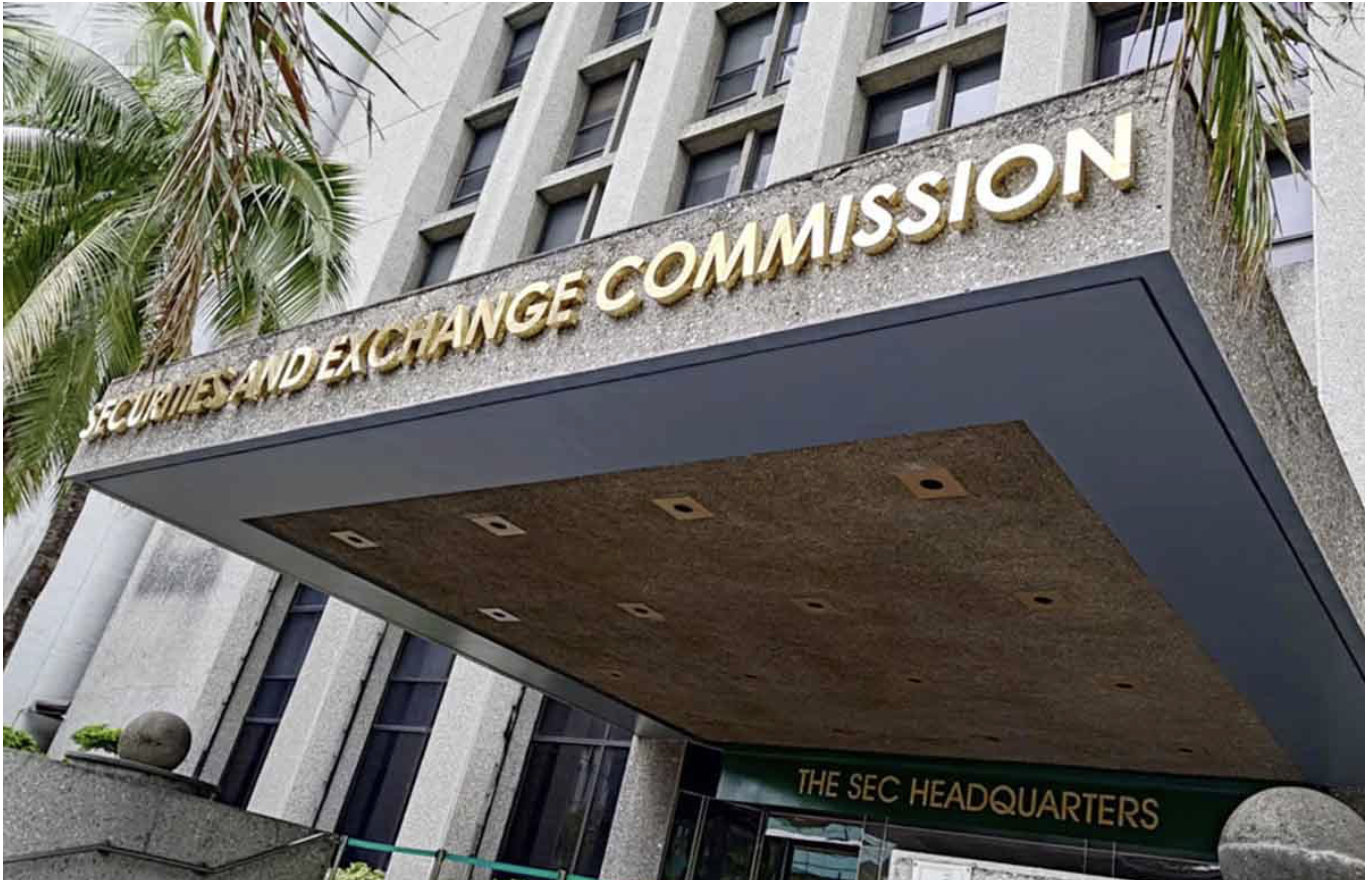
IMAGE CREDIT: SEC
The SEC framework is designed to give potential issuers more certainty about what they need to do before bringing Sukuk to investors.
Among other requirements, issuers must provide disclosures about the Sukuk structure and the underlying assets or arrangements. The rules also address Shari’ah compliance and the responsibilities of the parties involved in the transaction.
For investors, the benefit is greater transparency around an instrument that may be unfamiliar to many in the Philippine market.
That could help make Sukuk more accessible beyond its traditional investor base.
BARMM could have a lot to gain
The development is particularly relevant to the Bangsamoro Autonomous Region in Muslim Mindanao (BARMM), where Islamic finance has the potential to support businesses, infrastructure and investment.
But the market does not have to remain confined to BARMM.
If more issuers begin using Sukuk, Philippine companies could gain another source of funding while investors from countries with established Islamic capital markets could gain another avenue into Philippine assets.
That is potentially significant for a country that has been looking for ways to deepen its capital market and attract a wider range of investors.
The hard part starts now

IMAGE CREDIT: Magnific
Having rules in place does not guarantee that a Sukuk market will take off.
The Philippines still needs companies and institutions willing to issue Sukuk, investors willing to buy them, banks and advisers capable of structuring transactions, and professionals who understand both capital markets and Islamic finance.
Those capabilities take time to develop.
Malaysia and Indonesia have spent years building large Islamic finance markets. The Philippines is much earlier in that process.
But the country now has more of the regulatory infrastructure needed to make the market possible.
The BSP has opened the door wider for banks to participate in Islamic banking. The BIR has clarified the tax treatment of Sukuk. The Philippine government has already demonstrated that its Sukuk can attract international investors. And the SEC now has specific rules governing Sukuk issuance and disclosure.
From financial inclusion to investment inclusion
For Filipino Muslims, the significance goes beyond having another investment product.
It is about having greater access to financial services that are compatible with their religious principles.
For the Philippine financial system, the opportunity is broader.
Sukuk could eventually give companies another way to raise capital, give investors more choices and connect the country to a much larger global Islamic finance market.
The regulatory groundwork is now considerably clearer.
The next test is whether the market can turn those rules into actual transactions.