
The next chapter of the Philippines’ digital payments story may no longer be centered on Metro Manila.
A new study by PayMongo found that interest in accepting digital payments is growing much faster in the provinces, with Northern Mindanao, Western Visayas and the Davao Region posting far stronger growth than the National Capital Region over the past two years.
Using Google Trends data covering the past five years, PayMongo tracked searches for terms such as “accept GCash,” “accept Maya,” “accept QR Ph,” and “accept payments online.”
The findings point to a shift in digital commerce, with businesses outside Metro Manila increasingly looking for ways to accept cashless payments.
Across Central Luzon, Western Visayas, Central Visayas and the Davao Region, search interest for payment acceptance during the first half of 2026 was, on average, 177% higher than in the same period in 2022.
The momentum accelerated further in 2025.
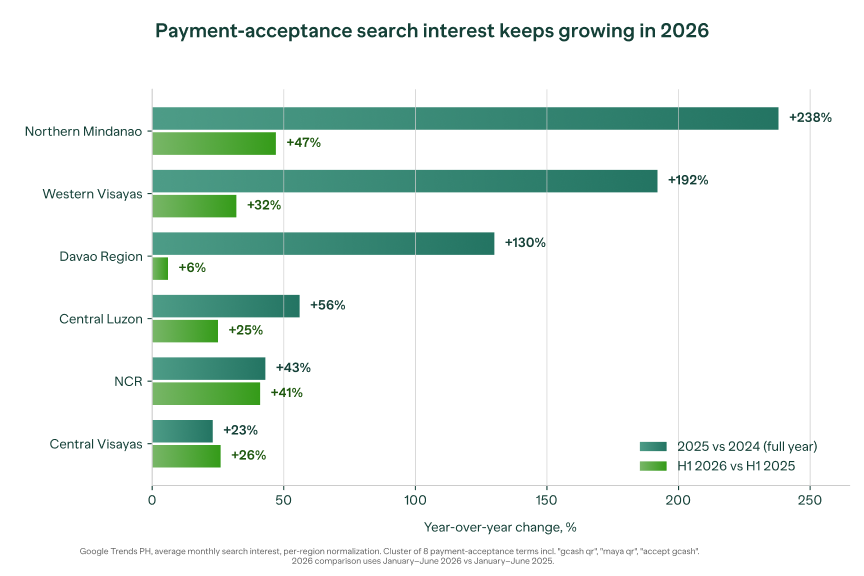
Figure 1. Provincial search interest, indexed to 2022: payment acceptance vs. shopping platforms.
Northern Mindanao recorded a 238% year-on-year jump in payment acceptance-related searches, followed by Western Visayas at 192% and the Davao Region at 130%. Metro Manila, by comparison, posted 43% growth over the same period.
Search interest in “GCash QR“ also reached five-year highs across several regions, peaking in Western Visayas in May this year, Northern Mindanao in October 2025 and the Davao Region in April 2025.
The numbers suggest that businesses outside the capital are becoming more active participants in the country’s cashless economy rather than simply keeping pace with consumer demand.
More Filipinos are selling—not just shopping—online
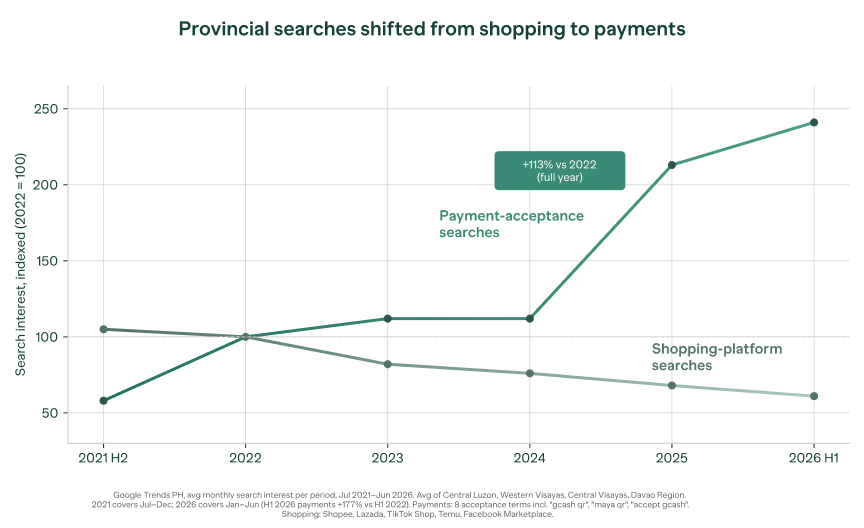
Figure 2. Year-over-year growth in payment-acceptance search interest, 2025 vs. 2024.
One of the study’s clearest findings is that online shopping is evolving rather than slowing down.
Searches for Shopee and Lazada declined by 37% between the first half of 2022 and the first half of 2026. PayMongo said the trend reflects changing consumer behavior more than weakening e-commerce activity, as shoppers increasingly go straight to mobile apps instead of searching for the platforms online.
The decline does not mean Filipinos are shopping less online; rather, the two-marketplace era is giving way to a more fragmented landscape.
Challenger platforms’ share of shopping searches grew 5x since 2022, and the parallel surge in payment-acceptance searches suggests a growing cohort of sellers transacting outside the big marketplaces entirely, perhaps through social channels, their own online stores and in-store QR, where accepting payments directly becomes essential.
At the same time, smaller and newer marketplaces have been gaining ground.
TikTok Shop, Temu and Facebook Marketplace accounted for just around 2% of shopping-platform searches in 2022. Today, that share has climbed to between 8% and 13%, with Eastern Visayas leading at 13%, followed by Central Visayas and the Davao Region at 12% each. Metro Manila stood at 10%.
That shift appears to coincide with growing interest in accepting digital payments, suggesting that more Filipinos are choosing to sell through social media, independent online stores or their own physical shops instead of relying solely on large e-commerce platforms.
PayMongo said the trend is also reflected in activity across its platform. During the first half of 2026, completed transactions across its merchant network increased 89% from a year earlier, while the number of merchants using its services grew 93%.
Entrepreneurship extends beyond Metro Manila

The data also hints at where new businesses are emerging.
In the Davao Region, searches related to marketplace seller tools rose alongside increasing interest in accepting GCash payments — a combination that suggests more residents are setting up online businesses instead of simply shopping online.
Metro Manila is showing signs of renewed entrepreneurial interest as well. Searches for phrases such as “online business ideas” and “how to sell online” increased 59% in the first half of 2026 compared with the same period last year.
Another trend emerged around QR payments.
Search interest in “Maya QR” was barely visible before 2024 but has since climbed steadily in Metro Manila, Central Luzon and Central Visayas. PayMongo said this could indicate that merchants are becoming less tied to a single provider and are increasingly adopting interoperable QR payment options, in line with the Bangko Sentral ng Pilipinas’ QR Ph initiative.
Rather than signalling the end of the country’s digital commerce boom, the data paints a picture of a market that is spreading beyond its traditional centres.
For payment providers, the opportunity is increasingly shifting beyond Metro Manila, as entrepreneurs and businesses across the regions drive the country’s next wave of digital payment adoption.
The full study is available on PayMongo’s website.