
QR Ph payments are no longer just an alternative checkout option for Filipino businesses. They are quickly becoming one of the main ways merchants accept digital payments, especially as more customers grow comfortable with scanning codes through bank apps and e-wallets.
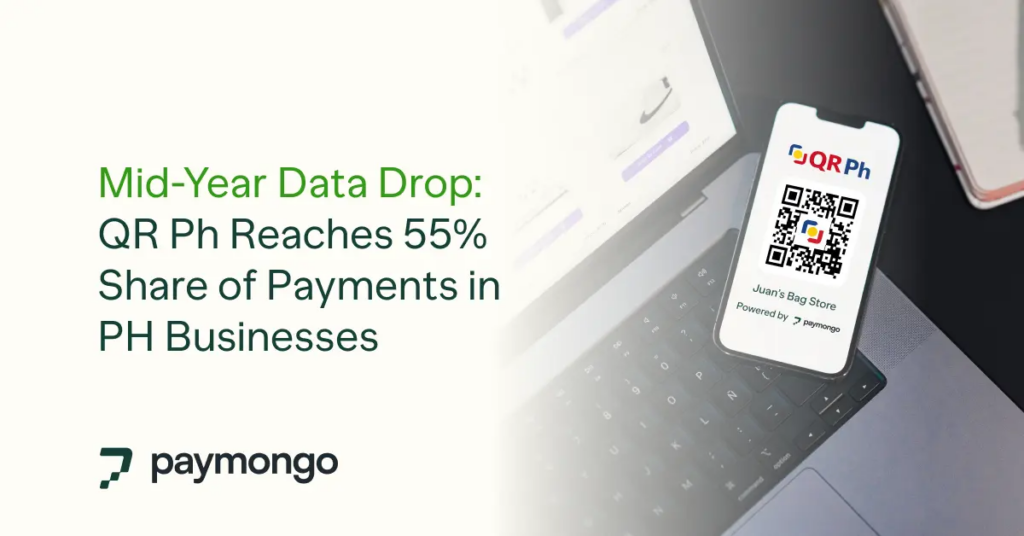
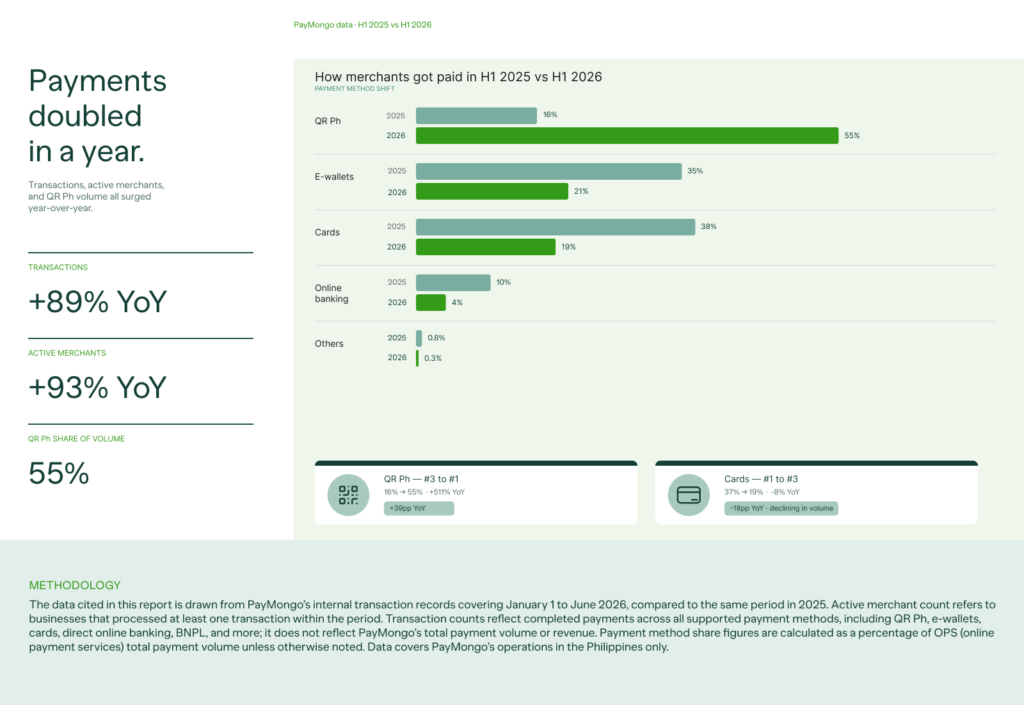
In a press release, PayMongo Group said QR Ph accounted for 55% of all payment volume on its platform from January to June 2026, up from only 16% in the same period last year. The company noted that this represented year-on-year growth of more than 510%, allowing QR Ph to overtake cards and e-wallets as the top payment channel among businesses using PayMongo.
The shift also changed the ranking of other payment methods.
PayMongo said cards, which led the platform in 2025 with a 38% share of payment volume, dropped to 19% this year. E-wallets accounted for 21%, while other payment methods, including online banking and buy-now, pay-later options, made up less than 5%.
For many merchants, the rise of QR Ph points to a practical change in checkout behavior. A single QR code that works across participating banks and e-wallets can be easier to manage than separate payment terminals, wallet-specific codes, or more technical checkout systems.
QR Ph moves ahead of cards and e-wallets
PayMongo’s midyear data showed that QR Ph and e-wallets together accounted for 76% of total payment volume and nine in 10 transactions on its platform. The company said this signals that Filipino merchants are becoming more mobile-first in how they accept payments.
The trend does not mean cards are disappearing. PayMongo said card payments still represented 19% of payment volume, almost matching e-wallets. However, cards accounted for only 7% of total transactions, suggesting they remain more common for larger purchases, corporate expenses, and one-time high-value payments.
QR and wallet-based channels, by contrast, appear to be gaining ground in everyday transactions. These include food orders, utility payments, retail purchases, top-ups, and other smaller payments where speed and convenience matter.
For merchants, this shift can directly affect the checkout experience. If customers are already used to scanning a code through their preferred app, a QR-based payment option may feel simpler than entering card details or going through a longer payment flow.
Why one QR code matters for MSMEs
The rise of QR Ph also reflects the needs of small businesses that may not have the budget, staff, or technical support to build complex payment systems.
PayMongo said its platform processed nearly 10 million completed transactions in the first half of 2026, up 89% from almost 5.2 million transactions in the same period last year. Its active merchant base also grew 93% year-on-year.
The company also pointed to growth in merchant tools that do not require heavy technical work. Shopify merchants using PayMongo grew 18% year-on-year, while PayMongo Pages allowed merchants to collect almost ₱1 billion in payments without building their own checkout systems.
This is important for Philippine MSMEs because many sellers still operate through social media pages, pop-up stores, food stalls, service businesses, and informal ordering channels. For these merchants, accepting digital payments without building an app or website can lower the barrier to going cashless.
QR Ph’s appeal is also tied to interoperability. The Bangko Sentral ng Pilipinas describes QR Ph as an interoperable common QR code that can be scanned and interpreted by participating banks and non-bank electronic money issuers. It can be used for person-to-person transfers and person-to-merchant payments through InstaPay.
In practical terms, this means a merchant does not need to display different QR codes for each payment app if the customer’s bank or e-wallet participates in the QR Ph ecosystem. One customer may pay through a bank app, another through an e-wallet, and another through a different institution, but the merchant can still start with the same QR code.
What merchants should still consider
QR Ph’s growth does not mean every business should abandon other payment methods.
Cards may still matter for high-value purchases, subscriptions, international customers, and corporate transactions. E-wallets can remain useful for customers who prefer app-specific flows. Online banking and BNPL options may also serve specific buyer segments.
PayMongo also said merchants using its in-store QR Ph product more than doubled from a year earlier, while in-store QR Ph transactions grew more than three times year-on-year. This suggests QR Ph is moving beyond website checkouts and becoming part of everyday retail payment behavior.
The stronger takeaway is that QR Ph is becoming harder for merchants to ignore. PayMongo’s data suggests that many Filipino customers are already comfortable with QR-based payments, and many businesses are adapting their checkout options around that behavior.
For Philippine fintech, this puts QR Ph at the center of the payments conversation. What started as a national QR standard is now becoming a practical checkout layer for merchants that want to accept payments across banks and e-wallets with less complexity.