

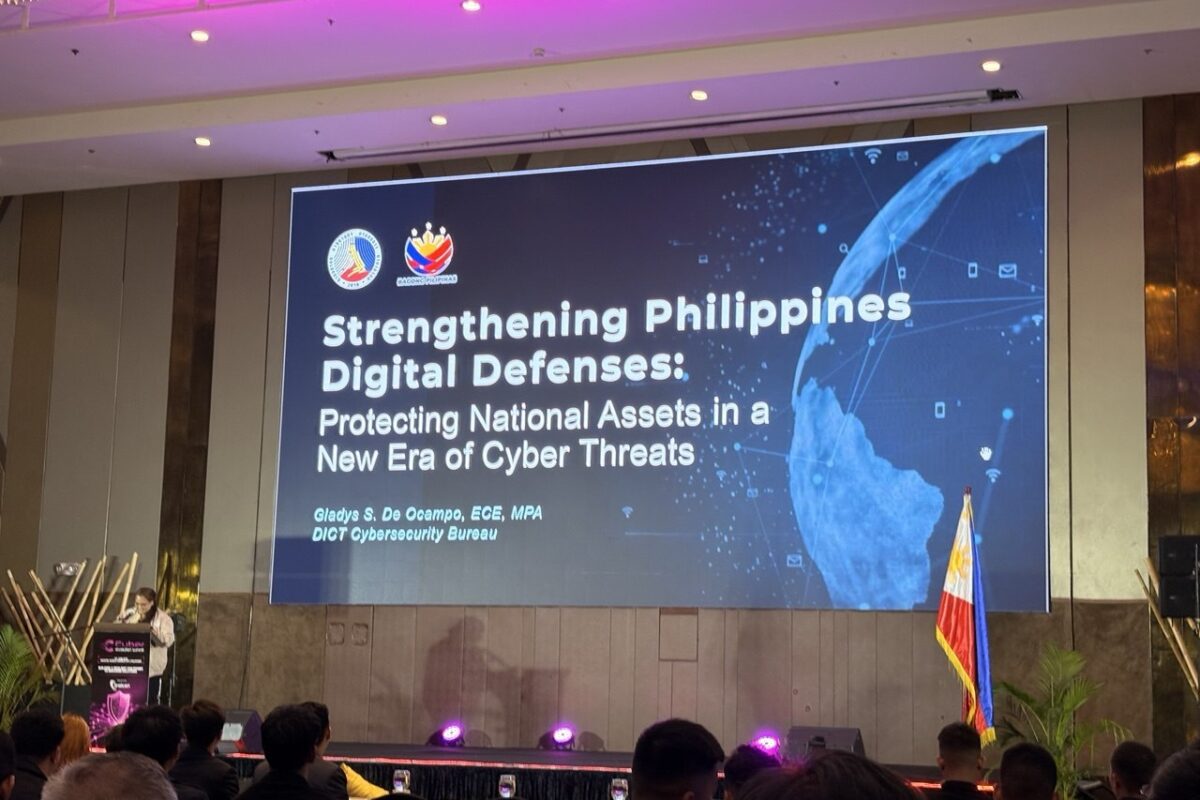
The Cyber Revolution Summit 2026 opened with a strong call from the Department of Information and Communications Technology (DICT) to strengthen the country’s digital defenses as cyber threats continue to evolve.
Delivering the opening keynote, Gladys de Ocampo, Deputy Division Chief of the DICT Cybersecurity Bureau, underscored the need for a coordinated national effort to protect critical infrastructure, government systems, businesses, and citizens in an increasingly digital landscape.

Speaking before cybersecurity professionals, policymakers, and technology leaders, de Ocampo said cybersecurity has become a national concern that extends far beyond information technology.
“Cybersecurity is not a technical issue anymore. It is directly tied to national security, economic continuity, trust, and governance,” de Ocampo said.
DICT pushes cybersecurity as a national priority
During her keynote at Cyber Revolution Summit 2026, de Ocampo emphasized that the country’s digital transformation must be matched with stronger cybersecurity capabilities.
As sectors such as finance, telecommunications, transportation, healthcare, energy, and government become increasingly interconnected, cyber incidents have the potential to disrupt essential services and undermine public confidence.

She explained that safeguarding national digital assets requires proactive planning, risk management, and continuous collaboration between the public and private sectors. Rather than treating cybersecurity solely as an IT function, organizations should recognize it as a key pillar of national resilience and economic stability.
“Cybersecurity today is inseparable from national resilience. A cyber incident affecting one critical sector can cascade into operational disruption, economic issues, and erosion of public trust,” she said.
Whole-of-nation collaboration strengthens cyber resilience
De Ocampo highlighted the National Cybersecurity Plan 2023–2028 as the country’s strategic roadmap for improving cyber resilience. Built on a whole-of-government and whole-of-nation approach, the framework seeks to strengthen cybersecurity governance, expand workforce capabilities, and improve protection across critical sectors.
She noted that building a resilient cyber ecosystem requires participation from government agencies, private enterprises, educational institutions, and the broader public. Collaboration, information sharing, and continuous capability development remain essential as organizations navigate an increasingly complex threat landscape.
“We move towards a whole-of-nation approach because cybersecurity is not just the government’s responsibility. Everyone is a stakeholder when it comes to cybersecurity,” de Ocampo said.
The keynote also reinforced the importance of aligning cybersecurity initiatives with national policies while fostering a culture of accountability, preparedness, and continuous improvement.
Preparing organizations for emerging cyber threats
Looking ahead, de Ocampo outlined several cybersecurity challenges expected to shape 2026. She pointed to the increasing sophistication of ransomware operations, AI-powered phishing attacks, deepfakes, adaptive malware, and software supply chain compromises as threats that require organizations to rethink traditional security strategies.

To strengthen cyber readiness, she encouraged organizations to adopt proactive defense measures, implement zero-trust architectures, conduct regular cybersecurity assessments, and improve threat intelligence sharing. She also stressed that investing in workforce development and cybersecurity awareness is just as important as deploying advanced technologies.
“Threat actors are becoming more organized, persistent, and strategic. Artificial intelligence is enabling more convincing phishing attacks, deepfakes, and automated malware adaptation,” de Ocampo said.
Moving forward
As Cyber Revolution Summit 2026 officially commenced, DICT’s opening keynote underscored the importance of collaboration, preparedness, and continuous innovation in defending the country’s digital future. The summit reinforced that strengthening cybersecurity is a shared responsibility—one that requires coordinated action from government, industry, and the cybersecurity community.
Closing her keynote, de Ocampo emphasized that sustained progress depends on organizations embracing a proactive mindset rather than reacting only after incidents occur.
“Whether implementing the National Cybersecurity Plan, zero-trust principles, or threat intelligence sharing, success depends on coordination, visibility, and continuous improvement,” she concluded.