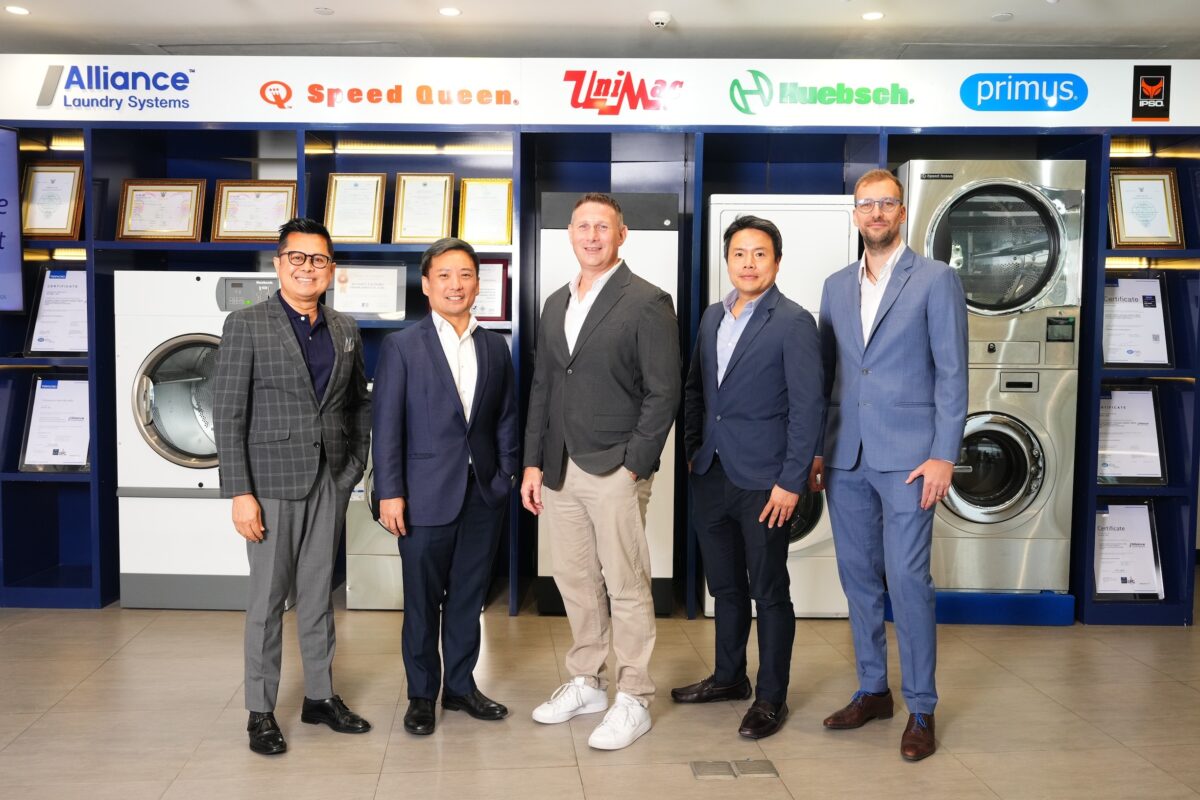
Global commercial laundry equipment manufacturer Alliance Laundry Systems (ALS) has expanded its Thailand manufacturing facility, positioning it as a regional innovation and production hub for next-generation, energy-efficient laundry technologies serving Southeast Asia, including the Philippines.
The 27,000-square-meter facility in Chonburi marks a major upgrade in the company’s Asia-Pacific operations, combining advanced manufacturing systems with a stronger focus on smart, sustainable industrial equipment designed for hospitality operators, healthcare facilities, laundromats, and outsourced laundry services.
Rather than functioning solely as a production site, the facility integrates manufacturing with R&D through its expanded STAR Lab (Thailand Science Technology Research Laboratory). The lab is focused on developing more intelligent laundry systems that reduce water and energy consumption per cycle while improving machine durability — aligning with growing sustainability requirements and rising utility costs across the region.
“For more than 118 years, Alliance Laundry Systems has built our reputation on quality, reliability, and continuous innovation,” said Ben Dobbs, Managing Director for Asia-Pacific at Alliance Laundry Systems (Thailand). “This Thailand facility reflects how we are translating engineering innovation into smarter, more efficient solutions that solve real operational challenges while delivering long-term value.”
ASEAN demand drives shift toward smart industrial laundry systems
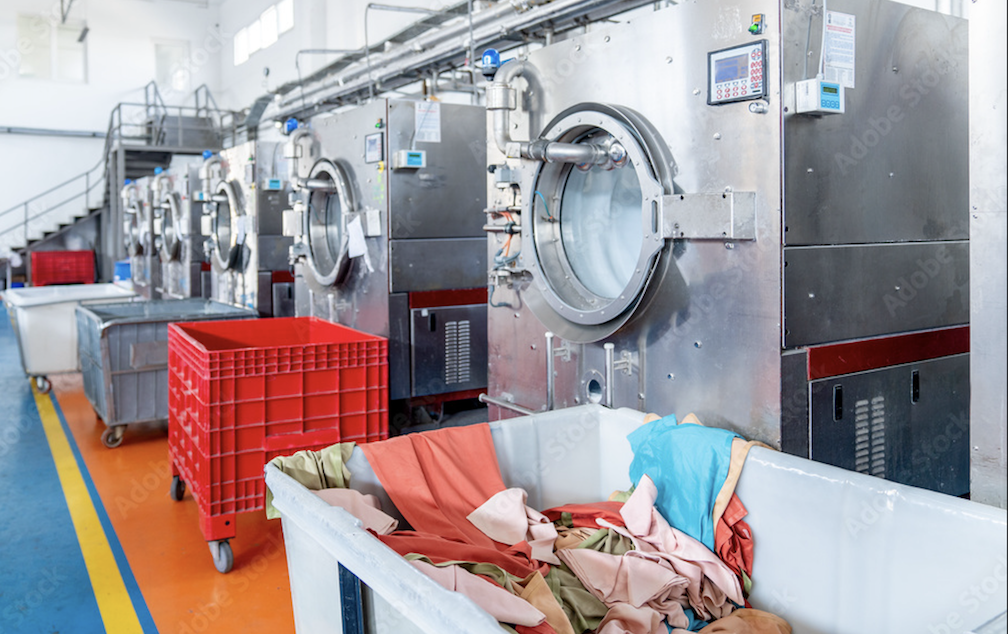
IMAGE CREDIT: Adobestock
The expansion comes as demand grows across ASEAN for more technologically advanced and resource-efficient commercial laundry infrastructure. In the Philippines, this is being driven by the rapid growth of laundromats, hospitality recovery, and the increasing outsourcing of laundry operations by hotels and institutional clients.
These shifts are also encouraging operators to adopt more modern systems that go beyond traditional mechanical performance, incorporating efficiency monitoring, optimized resource consumption, and longer lifecycle engineering — features increasingly associated with “smart industrial” equipment categories.
For small and medium enterprises entering the laundromat space, this shift is also closely tied to digital transformation. Many modern laundromats in the Philippines now operate as cashless businesses, integrating QR payments, mobile wallets, and automated billing systems—reflecting broader fintech adoption across everyday services.
As digital payments platforms expand in the country, laundromats have emerged as one of the more visible “offline-to-online” transitions, where physical services are increasingly supported by embedded financial technology such as e-wallet payments, app-based machine reservations, and usage tracking.
Manufacturing meets innovation in energy-efficient design
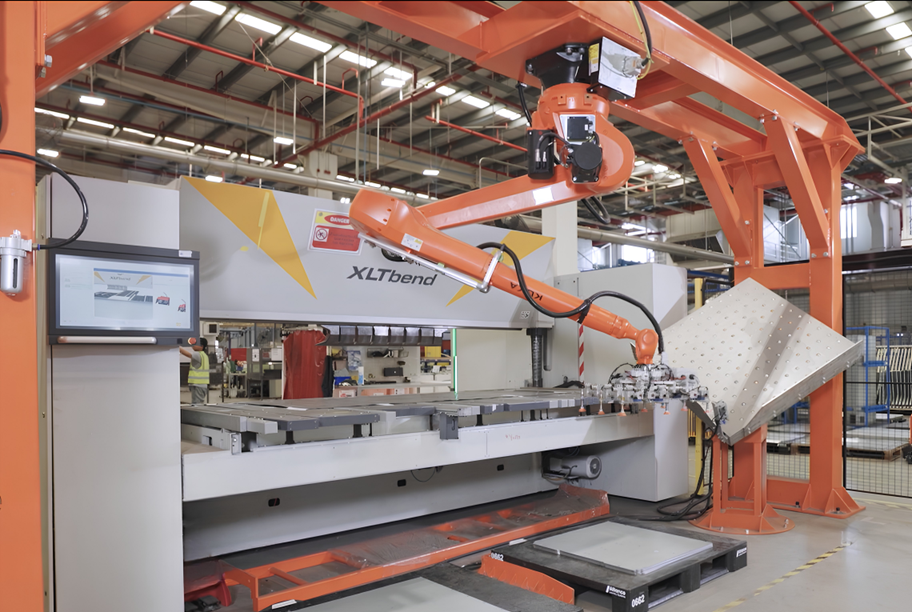
ALS’s new Chonburi facility features advanced equipment to meet rising laundry demand in PH and across Asia-Pacific.
The upgraded Thailand facility is intended to serve as both an export and innovation hub for the region, supporting production of next-generation laundry systems built with precision manufacturing processes, including German-engineered machinery for high-accuracy component fabrication.
According to Alliance Laundry Systems, each system is designed to reduce water usage per cycle, optimize energy efficiency, and extend machine lifespan—key considerations for businesses balancing operational efficiency with sustainability goals.
After-sales ecosystem supports long-term operational tech reliability
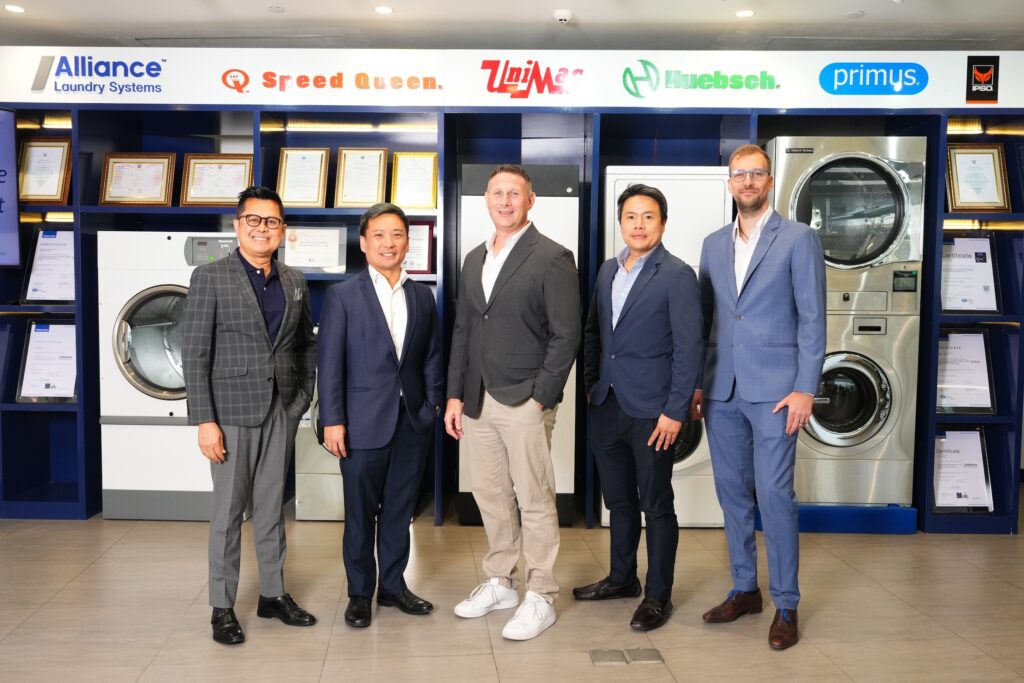
Alliance Laundry Systems (ALS) executives at the Thailand factory opening (from left): Dr. Sukree Kirai, Eddie Tay, Ben Dobbs, Sorapoch Janpattanapong, and Antoine Morel.
In a press release, the company said this after-sales infrastructure is critical for commercial operators, where equipment downtime directly impacts revenue — especially in high-throughput environments such as laundromats, hotels, and healthcare facilities.
Beyond equipment supply, Alliance Laundry Systems is also strengthening its regional after-sales support network, partnering with distributors across Southeast Asia to provide maintenance, training, and spare parts availability.
The company said this ecosystem is critical for ensuring long-term machine reliability and minimizing downtime—an essential factor for laundromat operators and hospitality clients that depend on uninterrupted operations.
“For investors and operators, the purchase price is only part of the equation,” ALS noted. “Long-term efficiency, maintenance support, and operational reliability ultimately determine profitability.”
Outlook: Industrial laundry as “quiet tech infrastructure”
While not traditionally classified alongside digital technologies, the commercial laundry sector is increasingly evolving into a form of “quiet infrastructure tech,” where efficiency, automation, and sustainability engineering play a central role in operational performance.
With its expanded Thailand facility, Alliance Laundry Systems is positioning itself not just as an equipment manufacturer, but as a regional infrastructure provider for a sector increasingly influenced by sustainability targets, digital payments adoption, and SME financing innovation — trends that are particularly pronounced in the Philippine market.