
The Bangko Sentral ng Pilipinas (BSP) has joined central banks and finance ministries across the ASEAN+3 region in reaffirming their commitment to deeper financial cooperation, as policymakers move to strengthen regional buffers against rising global economic risks.
The renewed pledge was made during the 29th ASEAN+3 Finance Ministers’ and Central Bank Governors’ Meeting (AFMGM+3), held on May 3, 2026, on the sidelines of the Asian Development Bank Annual Meeting in Samarkand, Uzbekistan.
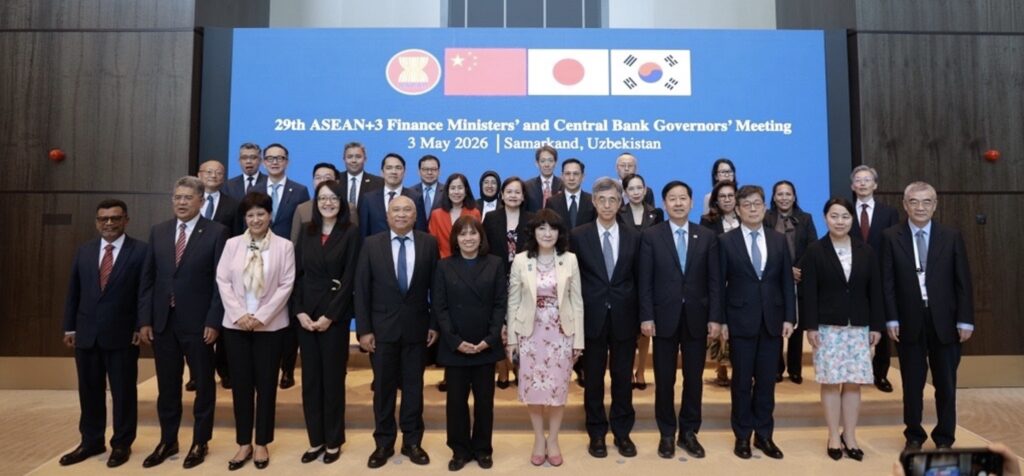
The gathering brought together senior officials from ASEAN member states plus China, Japan, and South Korea, collectively known as ASEAN+3, to review ongoing financial cooperation initiatives and policy frameworks aimed at enhancing regional resilience.
At the center of discussions was the Chiang Mai Initiative Multilateralization (CMIM), the region’s multilateral currency swap arrangement designed to provide liquidity support during times of financial stress.
Policymakers also reviewed the work of the ASEAN+3 Macroeconomic Research Office (AMRO), which continues to play a key role in macroeconomic surveillance and early warning analysis for the region.
Other key updates included progress under the Asian Bond Markets Initiative (ABMI), which aims to deepen local currency bond markets and facilitate cross-border investment flows, as well as ongoing efforts to improve regional cross-border payment systems.
ASEAN+3 strengthens regional financial stability cooperation
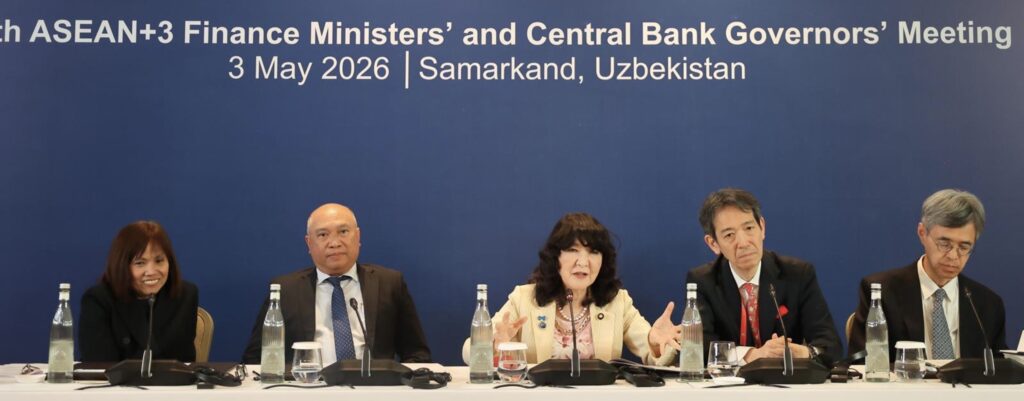
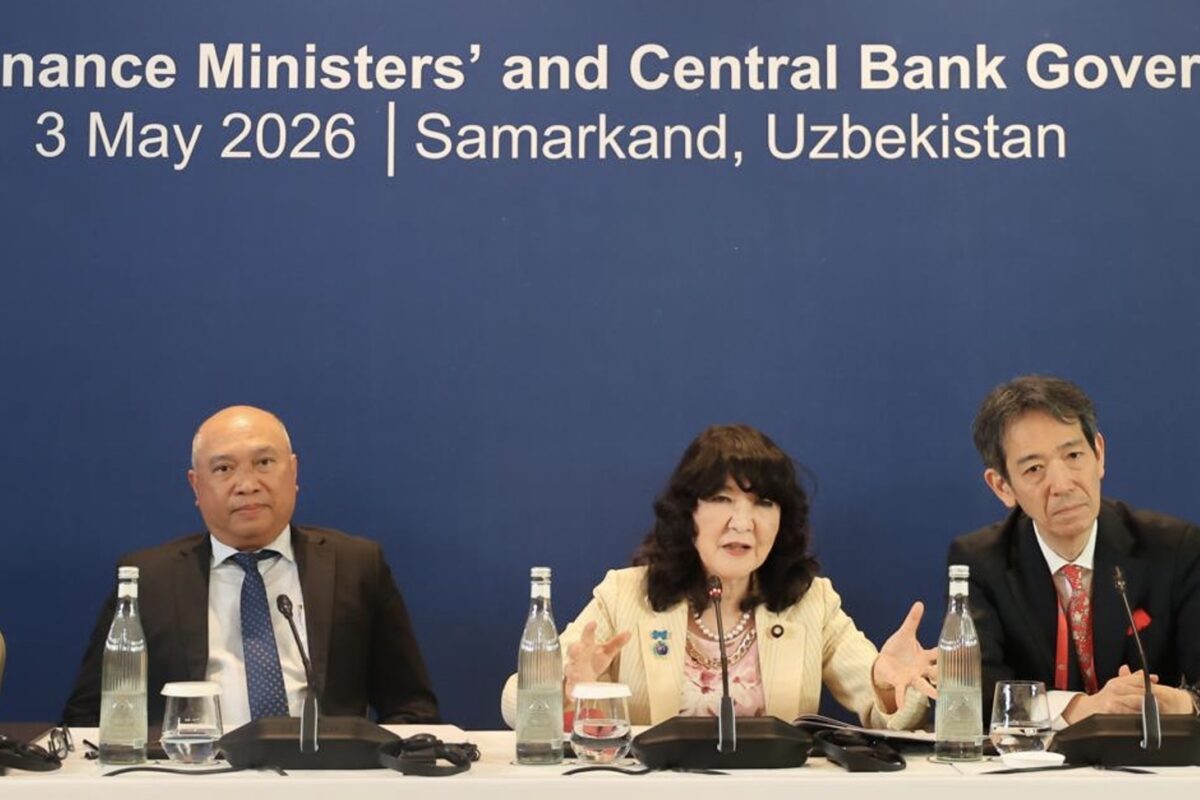
of Finance of Japan Atsushi Mimura, and Bank of Japan Deputy Governor Ryozo Himino.
According to a Joint Statement issued after the meeting, ASEAN+3 economies reaffirmed the importance of these interconnected mechanisms in safeguarding financial stability amid an increasingly complex global environment marked by inflationary pressures, geopolitical uncertainty, and volatile capital flows.
BSP Monetary Board Member Rosalia V. De Leon, who served as ASEAN+3 Co-Chair for the Philippines, emphasized that regional safety nets such as the CMIM, supported by AMRO’s surveillance work and other cooperation frameworks, remain essential pillars of financial stability.
“By advancing these mutually reinforcing pillars, we are not only responding to emerging risks but also fortifying our collective resilience as we navigate an increasingly complex global environment,” De Leon said.
On the sidelines of the main meeting, De Leon also co-chaired the inaugural Central Banking Dialogue (CBD) alongside Bank of Japan Deputy Governor Ryozo Himino. The high-level forum served as a platform for central banks to exchange views on strategic financial stability issues across the region.
This year’s dialogue placed strong emphasis on cross-border payments and regional payment connectivity, reflecting the accelerating shift toward digital financial infrastructure in Asia.
Officials underscored that efficient and interoperable payment systems are becoming increasingly critical — not only for trade and remittances, but also for advancing financial inclusion and ensuring system-wide stability.
As digital transformation reshapes financial systems globally, ASEAN+3 policymakers signaled that regional coordination will remain a key pillar in managing risks and enabling more seamless cross-border financial activity across Asia’s fastest-growing economies.