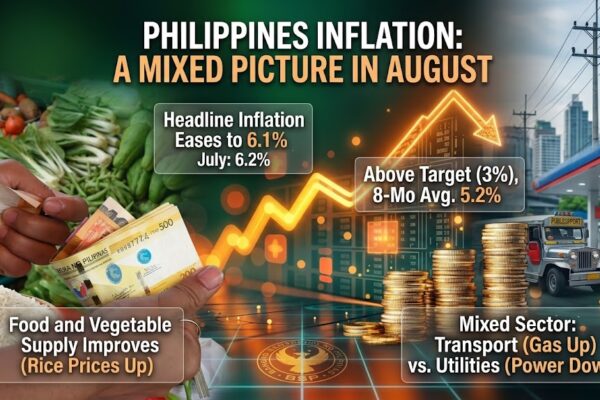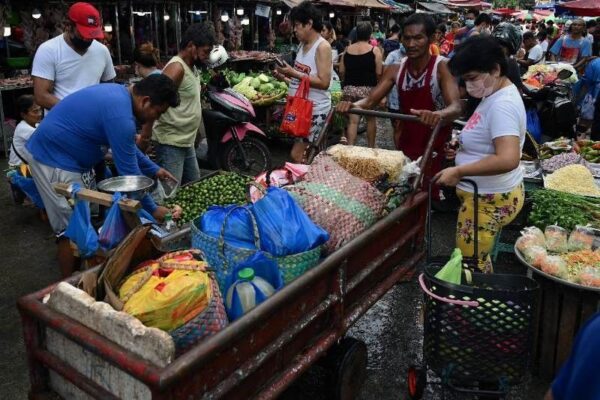

Credit demand in the Philippines is rising as inflation continues to pressure household budgets and consumer spending. It surged to 7.2% in April 2026, sharply higher than 4.1% in March, marking its fastest pace in three years as food, transport, and utility costs climbed significantly.
Higher food and energy costs are pushing more Filipinos to turn to digital lending platforms, buy now, pay later (BNPL) services, and embedded finance solutions to bridge short-term financial gaps.
The latest inflation trends are also reshaping how banks and fintech firms assess borrowers.
As the Bangko Sentral ng Pilipinas (BSP) signals its readiness to intervene to stabilize economic conditions, lenders may need to recalibrate risk models to manage rising repayment uncertainty while sustaining financial inclusion efforts.
Inflation drives higher credit demand
Persistent inflation is changing how Filipinos manage cash flow.
Many households are prioritizing essential expenses such as food, transportation, electricity, and fuel, leaving less room for savings. As a result, credit demand is increasing across both traditional banks and digital lending platforms.

Digital lenders are seeing growing demand due to faster approval processes and more accessible application systems. For consumers grappling with rising living costs, mobile-first lending platforms offer quicker access to emergency funds than conventional bank loans.
BNPL providers are also becoming increasingly attractive to consumers seeking to spread payments for essential purchases.
The trend reflects a broader shift in financial behavior. Rather than borrowing for expansion or discretionary spending, more consumers are turning to credit to sustain day-to-day purchasing power. This shift could influence how lenders assess borrower resilience in a high-inflation environment.
Fintech firms may recalibrate risk models
As credit demand rises, fintech firms and banks may need to strengthen risk management strategies.
Inflation can erode repayment capacity, particularly among borrowers already contending with higher utility and transportation costs. This creates a more complex lending environment for digital finance providers.
Many lenders rely heavily on alternative data and automated credit-scoring systems to assess borrowers. However, inflation-driven changes in spending behavior may reduce the predictive accuracy of legacy risk models.
Fintech firms may need to integrate updated behavioral indicators, income volatility trends, and real-time spending patterns into their systems to maintain portfolio quality.
Embedded finance providers could also face mounting pressure. Merchants offering installment-based payment options may see delayed repayments or higher default rates if inflation continues to squeeze household finances.
This could prompt providers to reassess lending thresholds, repayment terms, and customer qualification criteria.
BSP signals could shape lending activity

The BSP has indicated that it remains prepared to take necessary action to address inflationary pressures if needed.
Any monetary policy adjustment could directly affect lending activity, borrowing costs, and overall credit demand across the country.
Higher interest rates could make borrowing more expensive for both consumers and businesses, potentially slowing loan growth in certain sectors while increasing pressure on highly leveraged borrowers.
At the same time, digital lending providers may continue attracting users because of their accessibility and convenience, even in a tighter financial environment.
Despite these risks, the current landscape may also accelerate innovation in the local fintech sector. Companies that can balance responsible lending with accessibility may strengthen their market position as consumers continue seeking flexible financial solutions during periods of economic uncertainty.
Navigating the next phase of lending
Credit demand in the Philippines is expected to remain elevated as inflation continues to shape consumer behavior and financial priorities.
For banks, fintech firms, and embedded finance providers, the challenge lies in balancing growth with disciplined risk management.
As economic pressures reshape borrowing patterns, lenders that adapt quickly to shifting consumer realities may be better positioned to sustain trust, improve repayment performance, and advance financial inclusion in the evolving Philippine financial landscape.