

Business sentiment in the Philippines turned sharply cautious in March, as rising global oil prices linked to the Middle East conflict weighed on expectations for consumer demand and economic growth, according to the latest Bangko Sentral ng Pilipinas (BSP) survey.
The BSP’s monthly Business Expectations Survey showed the overall confidence index falling to -24.3% in March, a steep reversal from 8.2% in February. The quarter-ahead outlook also deteriorated significantly, dropping to -17.3% from 37.4% in the previous survey.
A negative reading indicates that more businesses are pessimistic than optimistic about economic conditions.
While the 12-month outlook remained in positive territory at 11.7%, it also weakened sharply from 51.1%, reflecting growing uncertainty over geopolitical tensions and persistent inflationary pressures.
Analysts say the downturn in sentiment reflects concerns that higher fuel costs could cascade into broader price increases, dampening household consumption — a key driver of Philippine economic growth.
Hiring intentions also softened. Businesses reported less optimistic plans for employment both in the near term and over the next year, suggesting a potential slowdown in job creation.
However, some firms noted that expansion activities were still underway, largely driven by investments made prior to the escalation of tensions in the Middle East.
BSP monitors inflation risks as caution grows

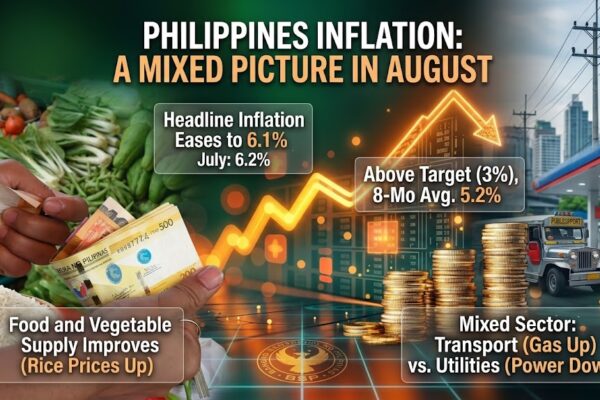
Inflation expectations remain elevated, with businesses forecasting price growth to stay above the BSP’s 3.0% target, though still within the central bank’s ±1.0 percentage-point tolerance band. This suggests that while inflation is expected to ease from previous peaks, price pressures remain sticky.
The BSP said it continues to closely monitor developments in global oil markets and their spillover effects on domestic inflation and economic activity. It added that it stands ready to adjust monetary policy as needed if external shocks lead to sustained price increases.
To cushion affected sectors, the central bank has also issued regulatory guidance allowing financial institutions to extend assistance to borrowers facing heightened financial strain due to external disruptions.
The BSP’s monthly Business Expectations Survey serves as a leading indicator of economic sentiment, offering more frequent insights into how firms are responding to both domestic and global developments.
Policymakers use the data to fine-tune their response to evolving risks.
For now, the latest reading underscores a clear shift: from optimism at the start of the year to growing caution as geopolitical risks and inflation once again take center stage in business planning.