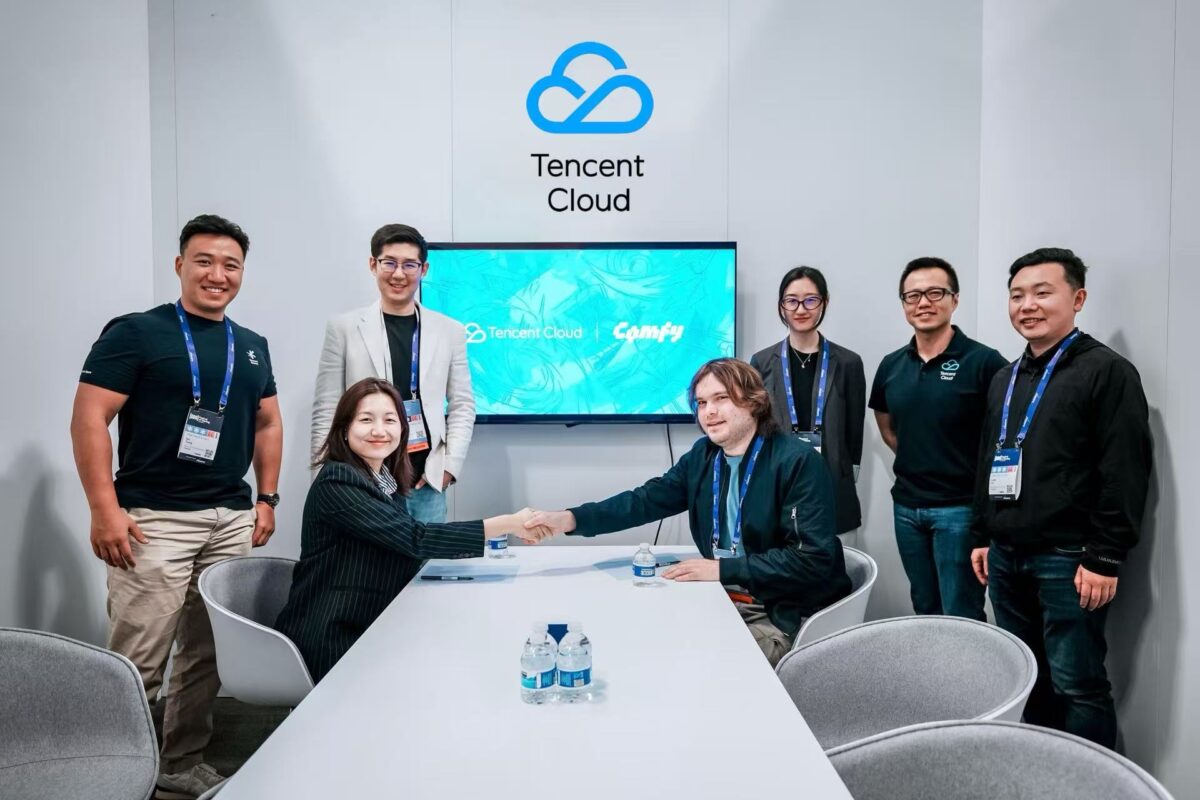
Tencent Cloud has partnered with ComfyUI to bring advanced 3D generation capabilities into one of the world’s largest open-source AI ecosystems, in a move aimed at streamlining content creation workflows for developers and creative professionals.
Announced earlier today (March 30), the collaboration integrates Tencent HY 3D Global into ComfyUI as native partner nodes, allowing users to directly access 3D generation tools within the platform’s visual workflow interface.
The integration enables functions such as text-to-3D, image-to-3D, and sketch-to-3D generation, simplifying the process of converting ideas into production-ready assets.
ComfyUI has emerged as a widely adopted platform for building generative AI pipelines, supporting image, video, and 3D models through a node-based system. The platform has garnered over 105,000 stars on GitHub and supports tens of thousands of custom nodes, with adoption spanning independent creators to enterprise studios.
With Tencent’s APIs embedded, users can also access advanced features such as 3D parts decomposition, which allows complex models to be split into editable components, as well as UV unwrapping and smart topology tools designed to optimize mesh quality for production use. These capabilities are expected to improve efficiency in industries such as product visualization, industrial design, and visual effects.
The partnership reflects a broader trend of integrating AI-driven tools into creative workflows, particularly as demand rises for faster prototyping and scalable content production. By enabling direct 3D asset generation within ComfyUI, Tencent Cloud is positioning its HY 3D Global solution as a more accessible tool for both open-source developers and commercial users.
Fred Sun, General Manager of Tencent Cloud Europe, said, “Partnering with ComfyUI marks a significant milestone in bringing Tencent HY 3D Global capabilities to the global open‑source community. By embedding our advanced 3D APIs into one of the world’s most widely adopted generative AI platform, we are expanding access to professional‑grade 3D tools and accelerating innovation across industries.”
“This collaboration reinforces Tencent Cloud’s commitment to empowering creators, strengthening the AI ecosystem, and shaping the future of digital content creation worldwide,” he further stated.
Jo Zhang, Founding Member and Product Manager of ComfyUI, for his part, said, “ComfyUI has always been driven by a vision to enable creators everywhere to harness the full potential of generative AI.”
“Through our partnership with Tencent Cloud, we can now offer Tencent HY 3D Global as a native capability, unlocking new possibilities for millions of users — from professional studios to the open‑source community. Together, we are building the foundation for next‑generation 3D workflows that will transform product design, entertainment, and digital experiences at a global scale,” he added.
Parallel push into AI-powered 3D marketplaces
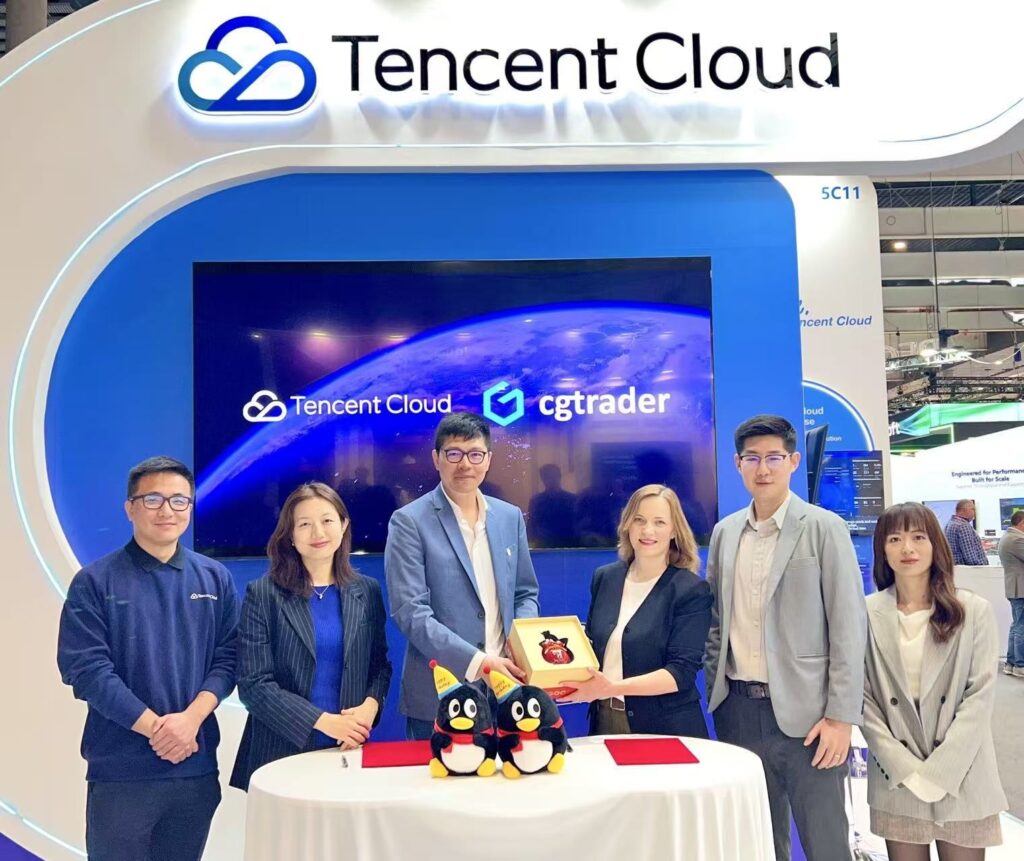
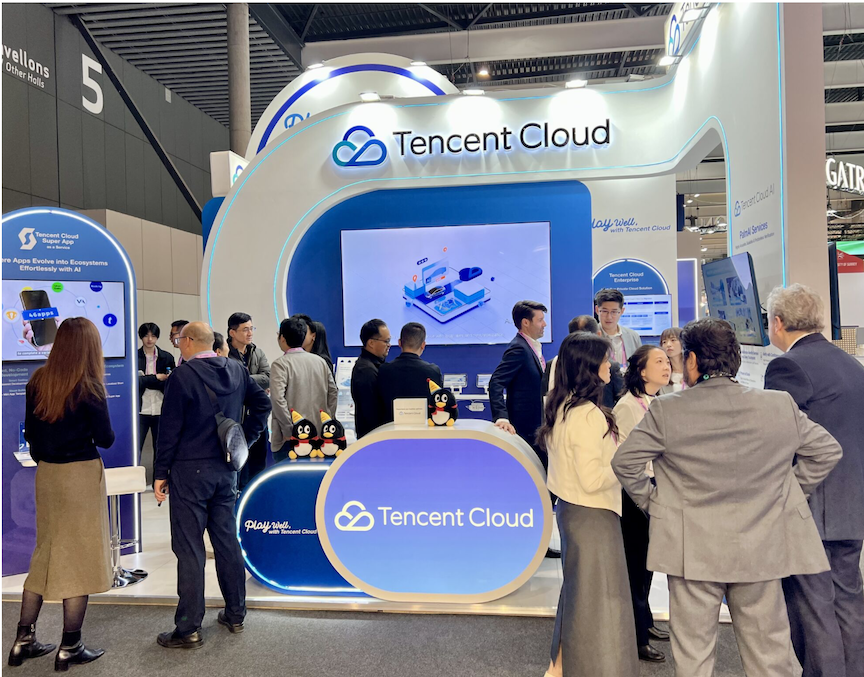
On the other hand, Tencent Cloud is also expanding its footprint in the 3D ecosystem through a separate partnership unveiled at the Mobile World Congress 2026, where it teamed up with CGTrader.
The collaboration will integrate Tencent HY 3D Global into CGTrader’s upcoming AI-powered 3D creation workflow, effectively embedding generative AI capabilities directly into a 3D asset marketplace.
This positions CGTrader as the first platform of its kind to offer a built-in AI creation pipeline, addressing long-standing inefficiencies in how 3D assets are produced, sourced, and scaled.
Taken together, the ComfyUI and CGTrader partnerships highlight Tencent Cloud’s broader strategy of embedding its 3D generation technology across both creation and distribution layers of the ecosystem.
While ComfyUI strengthens workflow-level integration for developers and creators, CGTrader extends this capability into asset marketplaces — potentially enabling faster, end-to-end production and commercialization of 3D content.
The dual approach also strengthens Tencent Cloud’s visibility in the increasingly competitive generative AI space, as cloud providers race to offer more comprehensive, end-to-end creative infrastructure.
As generative AI continues to evolve, partnerships such as these signal a shift toward more unified creative ecosystems — where ideation, modeling, and distribution can increasingly take place within interconnected platforms.
As generative AI continues to evolve, partnerships such as this signal a shift toward more unified, end-to-end creative ecosystems — where ideation, modeling, and production can increasingly take place within a single interface.