

Philippine Blockchain Week 2026 placed trust, transparency, and public governance at the center of the country’s blockchain conversation, as industry and government leaders framed the technology as more than a tool for crypto and Web3 platforms.
The event, held from June 19 to 21 at SMX Convention Center Manila, carried the theme “Decoded and Deployed,” reflecting a wider shift from blockchain as an emerging concept to blockchain as working infrastructure.
At the Future of Trust forum, speakers discussed how blockchain, artificial intelligence, cybersecurity, digital identity, and data infrastructure are increasingly connected by one common issue: public trust.
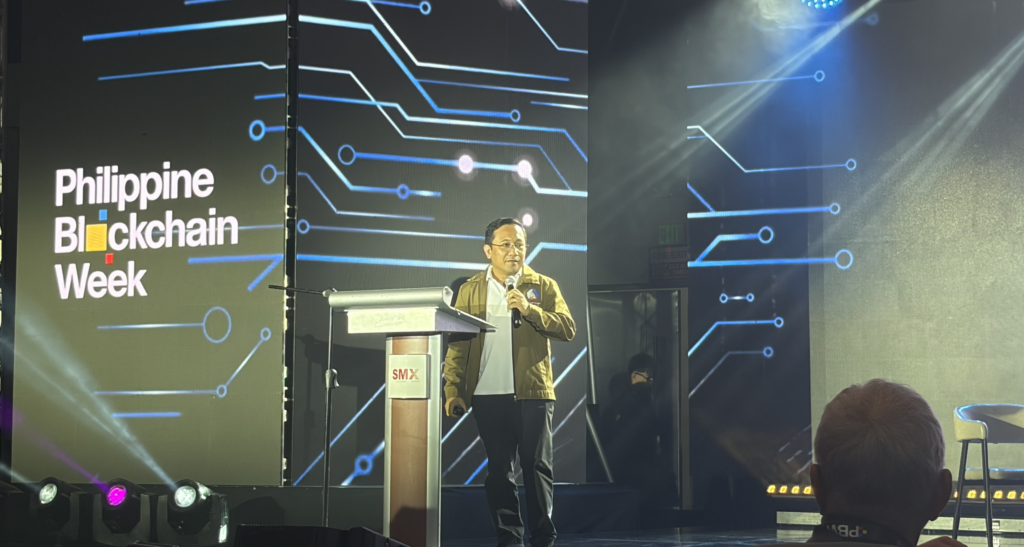
“Technology alone does not create progress. Trust does,” said Donald Lim, president of the Blockchain Council of the Philippines, during his opening remarks.
Blockchain moves beyond crypto
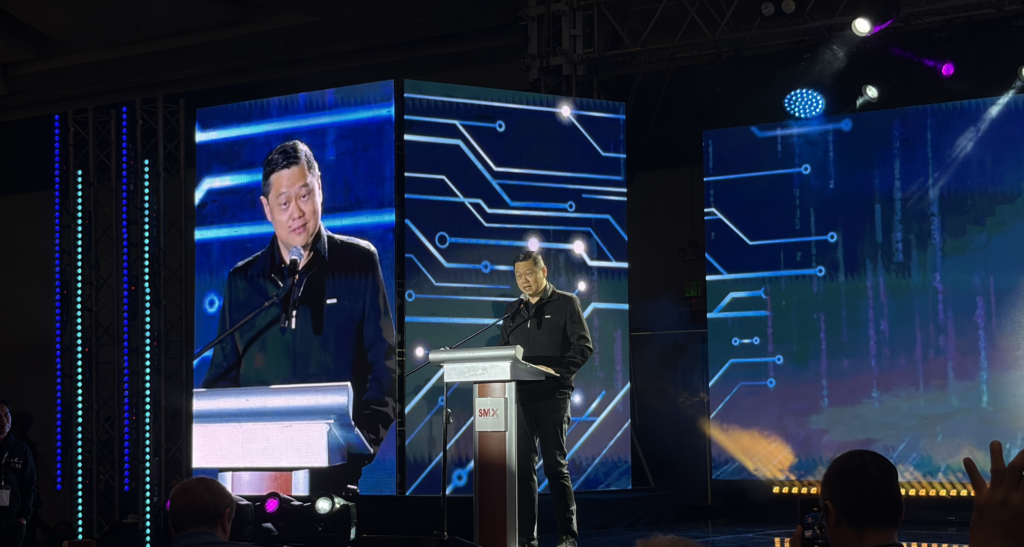
Donald Lim, president of the Blockchain Council of the Philippines
Philippine Blockchain Week 2026 highlighted how blockchain discussions in the country have moved beyond cryptocurrency, gaming, and Web3 speculation.
Janelle Barretto, founder of Philippine Blockchain Week, said her own entry into the blockchain space was not driven mainly by the technology itself.
“What drew me in wasn’t the technology, it was the people,” Barretto said.
She further described the ecosystem as a meeting point for entrepreneurs, regulators, policymakers, academics, builders, and critics who helped move the conversation forward.
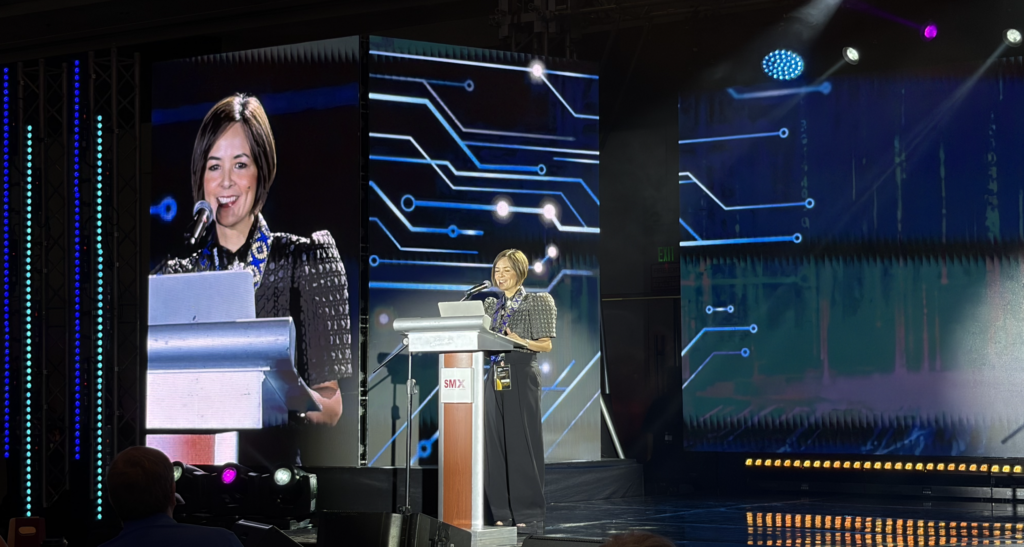
Barretto said her role was to “build the room,” bringing together government, industry, academia, investors, startups, and communities to learn from one another and move forward meaningfully.
That framing was reflected throughout the forum, where blockchain was discussed less as a standalone innovation and more as part of a broader digital trust agenda.
“The Future of Trust is not simply a conference about technology. It’s a conversation about what trust looks like in the digital age,” Barretto said.
For the Philippine fintech and technology sectors, the shift is important. Blockchain is no longer being presented only as a market or investment tool. It is increasingly being discussed as infrastructure that can support public records, identity verification, digital transactions, and institutional accountability.
Integrity chain shows public-sector use case
One of the clearest examples discussed at the forum was Integrity Chain, a blockchain-powered transparency initiative linked to government infrastructure monitoring.
The Department of Public Works and Highways and the Blockchain Council of the Philippines earlier launched the Integrity Chain Portal, a blockchain-powered ledger for DPWH transactions, contracts, and the implementation of foreign-assisted infrastructure projects.
The platform is designed to make project data easier to trace and verify. Information such as budgets, procurement processes, and construction milestones can be digitized and made available to the public.
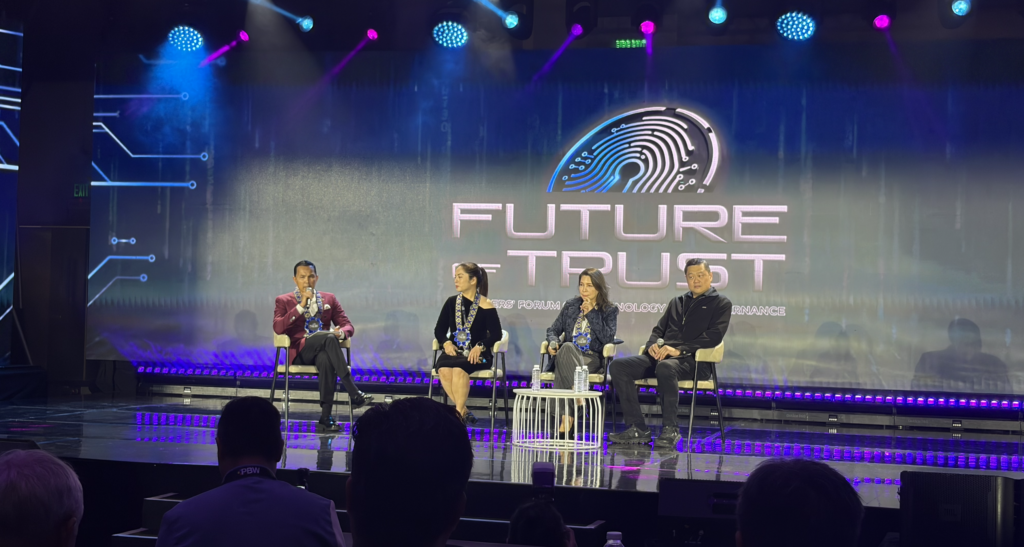
At the forum, Integrity Chain was framed as part of a broader effort to respond to public concerns over fragmented and opaque systems. Speakers said the initiative began with the goal of restoring trust and has since moved from early collaboration to pilot applications and wider public-sector discussions.
The forum also touched on the role of private sector and civil society participants in reviewing available information. In the discussion, the term “evaluators” was used to describe groups that can look at documents and project progress without suggesting that they validate blockchain transactions in the technical sense.
That distinction matters. Blockchain can make records more traceable, but its value still depends on the quality of information entered, the governance rules behind the system, and the ability of citizens and institutions to understand the data.
Budget transparency enters the blockchain conversation
The forum also connected the trust agenda to ongoing discussions around blockchain-based budget transparency.
The proposed CADENA Act, or Citizen Access and Disclosure of Expenditures for National Accountability, seeks to use blockchain technology to record and monitor stages of the national budget process.
Separately, the Department of Information and Communications Technology has promoted the Digital Bayanihan Chain, a blockchain-based initiative intended to support transparency around the 2026 national budget.
These developments reflect a larger policy direction: using emerging technologies not only for speed and efficiency, but also for accountability.
For citizens, the promise is simpler access to information on how public funds are used. For government, the challenge is to make these systems reliable, understandable, and interoperable across agencies. For the technology sector, the opportunity is to build infrastructure that supports both innovation and public confidence.
Digital trust as the next test
The Future of Trust forum also highlighted the importance of digital identity, cybersecurity, and government interoperability in building public confidence.
DICT’s digital government push has focused on reducing repeated manual processes across agencies and improving access to public services through platforms such as eGovPH and the Digital National ID.
David L. Almirol Jr., DICT Undersecretary for e-Government, said consent-based data sharing is central to the government’s digital identity work.
“We’re bringing back the data sharing power to the people,” Almirol said, referring to systems where citizens control how their data is shared across digital services.
However, speakers also acknowledged that technology can create new risks if trust is not built into the system.
Cyber threats, misinformation, impersonation, data misuse, and weak governance can undermine confidence even when the technology itself is advanced.
Lim said AI, cybersecurity, and blockchain are no longer separate conversations because they increasingly revolve around trust.
“Trust is not someone else’s responsibility. It belongs to all of us,” he said.
As Philippine Blockchain Week 2026 showed, the country’s blockchain conversation is entering a more practical phase. The next test will be whether these systems can move from pilot projects and policy discussions into tools that ordinary Filipinos can understand, access, and trust.
—
Disclaimer: This article is for news and informational purposes only and should not be construed as financial or investment advice or an endorsement of any cryptocurrency or platform. Crypto-assets are highly speculative and involve significant risks. Readers should verify the regulatory status of crypto service providers with the BSP and the SEC before making any investment or transaction.