The Securities and Exchange Commission’s (SEC) decision to end its nearly five-year moratorium on online lending platforms (OLPs) opens the Philippine credit market to new local and international players, while creating greater opportunities for underserved segments such as micro, small, and medium enterprises (MSMEs).
The regulator’s policy shift ends a moratorium first introduced in May 2021 following consumer complaints over aggressive collection practices, hidden fees, and predatory interest rates.
During the freeze, prospective digital lenders had to acquire dormant or defunct corporate entities to secure a legal operating footprint.
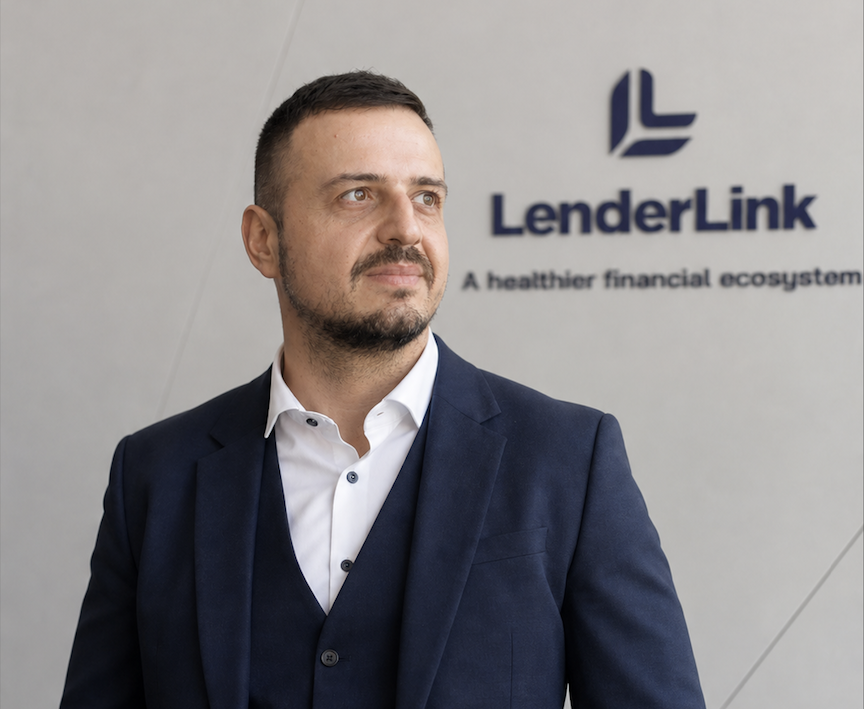
Christo Georgiev, LenderLink Founder and CEO
In an exclusive interview with FintechNewsPH, LenderLink Founder and Chief Executive Officer Christo Georgiev said he expects three categories of new entrants: large international lending companies expanding into emerging markets, companies focused on MSME lending, and informal operators seeking to formalize.
“We expect three categories of new entrants,” Georgiev said in reference to the SEC opening a direct registration pathway. “First, large international companies that have already built profitable lending businesses in their home markets and are expanding into emerging economies.”
He said the MSME lending segment presents one of the biggest opportunities in the market, comparing its current development with consumer lending more than a decade ago.
“I’d argue SME lending today is where consumer lending was 10 to 12 years ago, before the boom of online lending apps,” Georgiev said.
“Allowing more lenders into this space should drive meaningful improvement,” he added.
Georgiev also said the reopening gives previously informal lenders an opportunity to enter the formal market.
“Lifting the moratorium gives lenders previously operating in the black market a path to formalize,” he said. “Not all will take it, but some players operating in the shadows now have the option to get properly licensed.”
“All three categories should be value-adding to the lending landscape as a whole,” he added.
Real-time data can improve lending decisions
Georgiev said access to timely credit information will become increasingly important in helping institutions make better decisions as more lenders enter the market.
For new lenders, this visibility gap can make it harder to assess a borrower’s current credit position, particularly when recent changes in repayment behavior or new loan applications have yet to appear in bureau records.
“Credit bureau data is typically one to three months old,” Georgiev said. “If a borrower was in delinquency but has since repaid, that won’t be visible until the bureau record updates.”
The reverse can also happen, with accounts appearing current even after a borrower has taken on new delinquent obligations elsewhere.
“Decisions based on outdated information tend to be suboptimal,” Georgiev said. “I’d compare it to making a decision based on a newspaper article from two months ago versus a series of tweets from this very minute.”
Real-time information can provide lenders with a more current view of borrower activity, including whether a person has submitted multiple loan applications within a short period.
“Did they submit multiple loan applications within hours? That’s a strong signal their risk profile has shifted,” Georgiev said.
He added that real-time data can also help protect borrowers from taking on more debt than they can manage.
“It also protects borrowers by preventing them from overstretching their finances, so it serves a dual purpose that benefits the entire market,” he said.
As more lenders enter the market, access to shared, real-time credit intelligence could help institutions make more informed decisions while giving the broader lending ecosystem a more current view of borrower behavior.
LenderLink operates a real-time credit data exchange based on a reciprocal “contribute-to-consume” model. New market entrants can contribute live transaction data while accessing real-time credit signals across the network.
As a CIC-accredited Technical Service Provider, LenderLink provides integration pathways that help new lenders meet regulatory reporting requirements while accessing real-time network data.
Strengthening collections and credit education
Beyond underwriting, Georgiev identified collections and credit education as areas where lenders can further strengthen their capabilities.
“Collections, without question. It’s been flagged repeatedly as the area most difficult for lenders and most abused, whether by third-party agencies or lenders themselves,” Georgiev said.
LenderLink’s Collect360 provides lenders with real-time signals on borrower behavior, allowing them to respond when a borrower’s circumstances change.
“LenderLink’s Collect360 addresses this by giving lenders real-time signals on borrower behavior from our network, helping them make the right decision, at the right time, for the right borrower, without changing existing workflows,” he said.
On the customer acquisition side, Georgiev said lenders also need to do more to present offers transparently and educate borrowers about loan terms.
“That’s typically the role of financial marketplaces, which are underdeveloped in the Philippines,” he said.
LenderLink launched “BidaCredit,” a financial literacy and credit education platform paired with a loan marketplace, while member institutions can access its products through LenderLink Hub.
A more connected lending market

IMAGE CREDIT: Adobe Stock
Looking ahead to 2030, Georgiev expects the Philippine online lending industry to evolve as competition increases and lenders become more sophisticated.
“By 2030, I expect the Philippine online lending industry to look fundamentally different from what it is today, and I mean that in a positive way,” he said.
He also expects the market to consolidate as it matures.
“By 2030, I’d expect fewer but stronger players, better products, and more disciplined lending practices,” Georgiev said.
He also sees greater convergence between online lenders and traditional financial institutions.
“The line between ‘online lenders’ and ‘traditional financial institutions’ will blur significantly,” he said. “By 2030, the distinction won’t be about whether you’re online or offline; it will be about the quality of your data infrastructure, the sophistication of your risk models, and how well you serve your customers.”
Georgiev said this evolution will coincide with the Philippines’ move toward greater data sharing and interoperability under the Bangko Sentral ng Pilipinas’ Open Finance Framework.
“Data sharing and interoperability are the foundation of a functioning modern credit market,” he said.
As more lenders enter the market, he said standardized, consent-based data sharing can provide the information infrastructure needed to support a more connected lending ecosystem.
“The BSP’s Open Finance Framework signals that the central bank recognizes this,” Georgiev said. “Standardized, consent-based data sharing across the entire ecosystem — banks, non-bank lenders, e-wallets — is where the market needs to go.”
For Georgiev, the longer-term opportunity is not simply expanding the number of lenders, but creating a lending ecosystem capable of delivering better products and broader financial inclusion.
“And this is where I’m most optimistic: meaningful progress on financial inclusion,” he said. “Not just more people with access to credit, but more people with access to appropriate credit.”
“That’s the economy-defining outcome better data infrastructure enables,” he added.
LenderLink’s role in the next phase of Philippine credit
Beyond the broader market, Georgiev sees LenderLink playing a central role in that evolution by providing the infrastructure that connects an increasingly interconnected financial ecosystem.
“By 2030, I see LenderLink as the connective tissue of the Philippine credit ecosystem, the network that banks, non-bank lenders, cooperatives, and financial service providers all participate in to share and access credit intelligence in real time, with borrower consent,” he said.
The company’s longer-term vision extends beyond credit data to other financial information infrastructure, including identity verification, income estimation, and fraud detection.
“The vision has always been bigger than credit — it’s about the information infrastructure a modern, inclusive financial system requires,” Georgiev said.
“If we get this right, and I believe we will, the Philippines won’t just catch up to more developed credit markets,” he added. “It will set the standard for how emerging economies build financial data infrastructure from the ground up.”
—
Editor’ note: This is Part 1 of a two-part series on the reopening of the Philippine online lending market. Part 2 will look more closely at the broader changes underway in the lending ecosystem, including lender preparedness, MSME access to credit, and how data infrastructure could shape the industry’s next phase.