

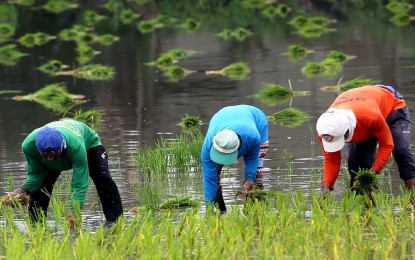
Small farmers and fisherfolk whose livelihoods were hit by recent flooding may borrow up to ₱35,000 without interest or collateral under a government calamity financing program.
The Agricultural Credit Policy Council has simplified access to its AGRI-RECOVER calamity loan, as recent typhoons and the southwest monsoon continue to cause billions of pesos in agricultural losses.
Under the Calamity Loan Component of AGRI-RECOVER, qualified small farmers and fisherfolk may borrow up to ₱35,000 and repay the loan over a period of up to three years, according to the Department of Agriculture.
The financing carries zero interest and does not require collateral.
The loan is intended to provide working capital that affected borrowers can use to restart farming, fishing and other livelihood activities disrupted by disasters.
What are the requirements for the ₱35,000 AGRI-RECOVER loan?
ACPC has reduced the stated application requirements to two.
Applicants must be registered with the Registry System for Basic Sectors in Agriculture or RSBSA and have a valid bank or financial account where approved loan proceeds can be deposited.
The program, however, is intended for qualified small farmers and fisherfolk affected by calamities. Meeting the two stated requirements should therefore not be interpreted as an automatic guarantee of approval or of receiving the maximum ₱35,000.
The DA announcement did not specify how the final loan amount for each borrower will be determined.
Can borrowers receive the AGRI-RECOVER loan on the same day?
The streamlined process is intended to allow approved loans to be credited to a borrower’s account on the same day they are approved.
This does not mean that submitting an application guarantees that the money will be released within the same day. The same-day provision applies to the crediting of funds after approval.
Agriculture Secretary Francisco Tiu Laurel Jr. said faster access to financing can help farmers and fisherfolk resume production sooner after a disaster.
The financing comes as severe weather continues to cause significant damage to Philippine agriculture.
As of September 6, the DA’s Disaster Risk Reduction and Management Operations Center estimated agricultural damage from three typhoons and the enhanced southwest monsoon at ₱4.13 billion, affecting 97,589 farmers and fisherfolk and more than 81,000 hectares of agricultural areas. The latest DA assessment placed rice losses alone at about ₱2.04 billion.
AGRI-RECOVER is already being offered in affected regions
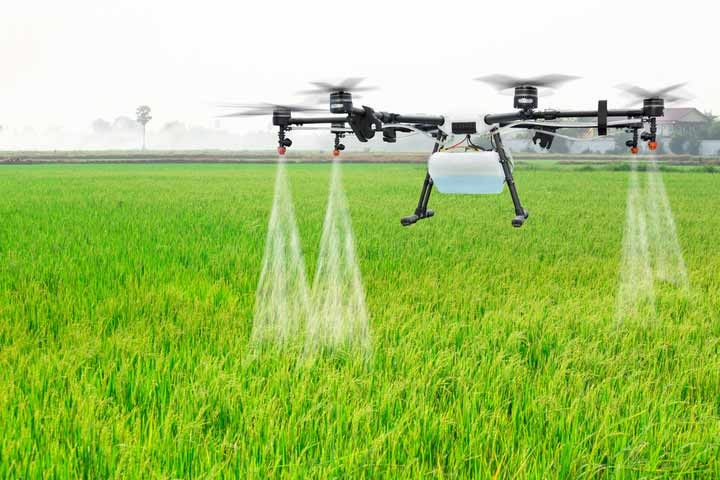
IMAGE CREDIT: AgriDom
The calamity financing is also being promoted in areas dealing with significant agricultural damage.
In the Cordillera Administrative Region, farmers and fisherfolk affected by continuing rains were being advised that they could apply for AGRI-RECOVER, according to DA-CAR figures reported by the Philippine News Agency on September 7.
Agricultural damage and losses in the region had reached ₱456.94 million as of September 6, affecting around 2,052 hectares of crop production areas.
Crops accounted for ₱436.94 million of those losses, with high-value crops responsible for more than ₱400 million.
DA-CAR said it had verified reported damage and was preparing rehabilitation and recovery measures for affected agricultural sectors, while available seed reserves were also being distributed to farmers.
What if a farmer already has an ACPC loan?
AGRI-RECOVER also provides options for existing ACPC borrowers whose livelihoods have been affected by flooding.
Depending on program guidelines, affected borrowers may be eligible for loan restructuring or refinancing, as well as a possible moratorium on debt-service payments.
These measures are separate from the new calamity loan and should not be interpreted as automatic debt forgiveness.
The DA said the goal is to give borrowers additional financial room while their farms, fishing activities and other sources of income recover.
How do farmers apply for AGRI-RECOVER?
The DA’s September 5 announcement did not specify a nationwide application portal or provide a complete list of banks, cooperatives or other institutions currently accepting AGRI-RECOVER applications.
Farmers and fisherfolk interested in the program should therefore confirm the application channel and availability of the calamity loan with ACPC, their local agriculture office or the appropriate DA regional office before submitting their requirements.
ACPC previously distributed disaster financing through partner lending institutions under its older Survival and Recovery or SURE program.
However, the agency’s existing SURE information still lists an older ₱25,000 loan ceiling, so those terms should not automatically be assumed to apply to the newer ₱35,000 AGRI-RECOVER facility.
For borrowers affected by recent flooding, the new program substantially reduces the documents they need to prepare. But applicants should still verify their eligibility and the actual application process in their area before expecting the loan to be released.