The Philippine Chamber of Commerce and Industry (PCCI) is pushing for closer collaboration between businesses and universities as the country rethinks what Filipino college students should learn before entering a labor market increasingly shaped by digital technology, artificial intelligence, and automation.
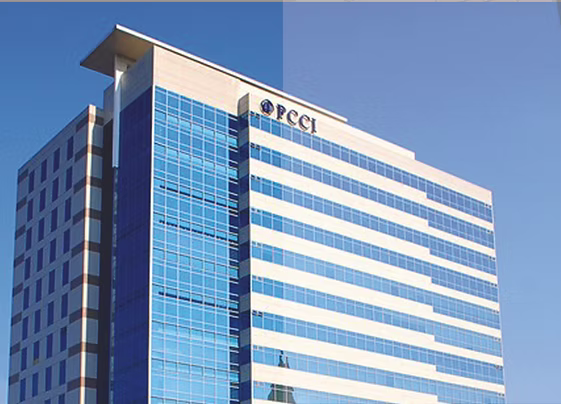
The business group said the proposed restructuring of the General Education curriculum should help eliminate repetitive competencies and strengthen learning outcomes while preserving critical thinking, ethics, and the broader skills traditionally associated with liberal education.
The discussion comes as the Philippine government simultaneously tries to prepare more Filipinos for technology-driven work. The Department of Information and Communications Technology (DICT) has set a target of generating 8 million digital and digitally enabled jobs by 2028, highlighting the growing importance of digital capabilities beyond traditional information technology roles.
Digital skills are moving beyond tech jobs
The changing nature of work is making digital literacy increasingly relevant even for graduates who do not pursue careers in software development or information technology.

A June 2026 study by the Asian Development Bank found that demand for digital skills has spread across occupations in Asia and the Pacific, with technology increasingly becoming part of jobs that previously required relatively limited digital capabilities. Demand for AI-related skills has also accelerated as businesses adopt new tools in their operations.
For the Philippines, that shift raises a broader question about whether higher education can adapt at the same pace as employers.
DICT’s National ICT Development Agenda targets at least 85% of Filipinos aged 15 to 64 having foundational to advanced digital skills by 2028, showing that digital readiness is becoming a wider workforce priority rather than a requirement confined to the technology sector.
PCCI wants industry involved before 2028
PCCI raised the issue during a roundtable organized by the PCCI Human Resources Development Foundation through its Education Cluster, bringing together educators, policymakers, business leaders, and other stakeholders to discuss the proposed changes to the General Education curriculum.

PCCI President Perry Ferrer said the review presents an opportunity to better prepare graduates for an increasingly competitive and innovation-driven economy.
“Let us take this opportunity to prepare our future leaders, our future unicorns,” Ferrer said.
The reference to future unicorns also reflects a challenge extending beyond employability. Developing a stronger startup and fintech ecosystem requires a pipeline of graduates capable of adapting to new technologies, identifying business opportunities, solving problems, and working across rapidly changing industries.
CHED curriculum review opens a wider debate
The Commission on Higher Education has been consulting stakeholders on the proposed reframing of General Education, opening a broader discussion on what should remain part of college-level learning and how universities can respond to changing workforce demands.
Implementation of the revised curriculum has been deferred to 2028, according to PCCI, giving businesses, universities, students, and policymakers additional time to influence the final framework.
For PCCI, that period should be used to identify where existing competencies overlap and how learning outcomes can better respond to what employers actually require without reducing higher education to job-specific training.
From college classrooms to the digital economy
PCCI plans to consolidate recommendations from the roundtable and present them to the government during the 52nd Philippine Business Conference & Expo on October 13 and 14, 2026.
The outcome could have implications beyond the education sector. As the Philippines tries to expand its digital economy, fintech ecosystem, startup community, and AI capabilities, the availability of workers who can combine digital knowledge with critical thinking and adaptability will increasingly determine how quickly those industries can grow.
As Ferrer put it, the curriculum being designed today will ultimately help define the workforce businesses will be hiring from tomorrow.