

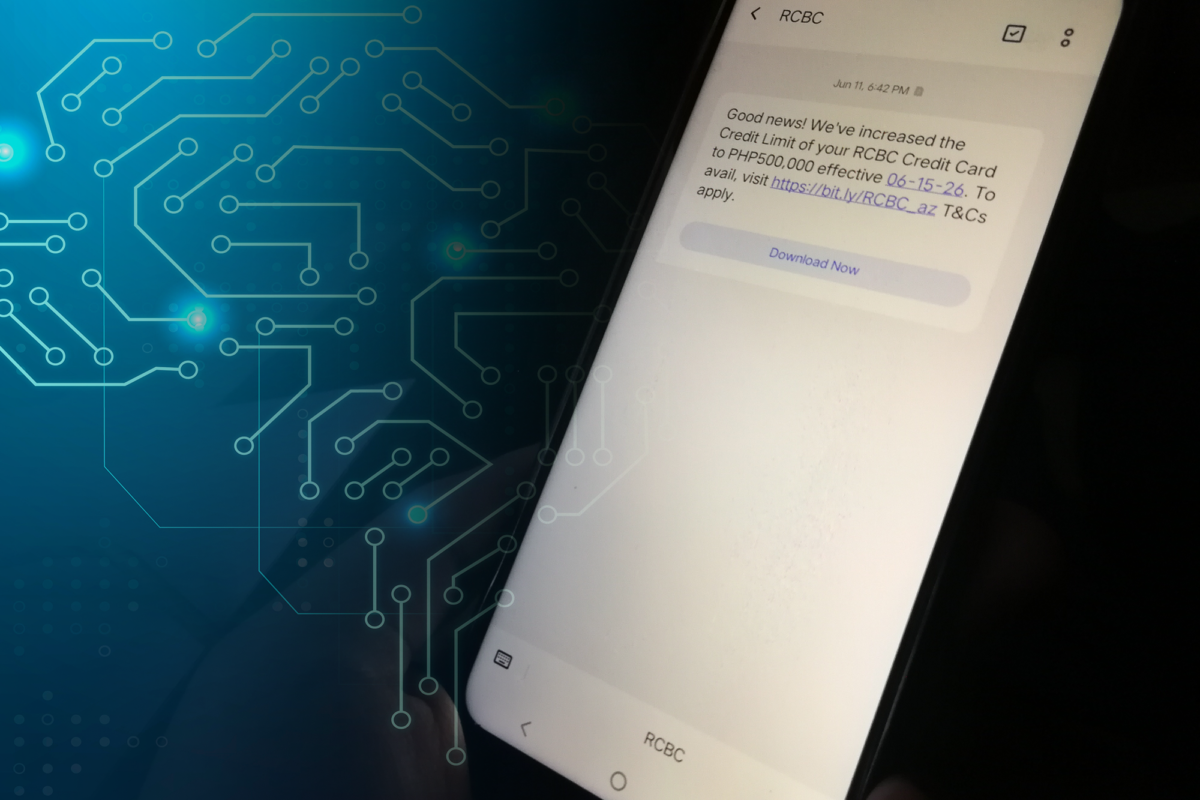
Not long ago, scam messages were relatively easy to spot.
They were often filled with grammatical errors, came from unfamiliar numbers, and promised unbelievable rewards — from winning a lottery you never entered to inheriting millions from someone you’ve never met.
Today, those red flags are disappearing.
Messages now sound natural. Fake investment videos feature what appear to be well-known personalities. Phone calls mimic the voices of bank representatives or even family members. Some scams are so convincing that victims do not realize they’ve been deceived until their bank account or e-wallet has already been emptied.
Artificial intelligence has not created the scam economy, but it has transformed how quickly and convincingly fraudsters can operate.
For a country like the Philippines, where digital banking, QR payments, e-wallets, and online lending continue to gain traction, the risks are growing just as quickly as digital financial adoption.
A growing target for financial scammers

AI technologies like deepfakes can replicate a person’s facial features almost perfectly. (IMAGE CREDIT: Magnific)
The Philippines has become one of Southeast Asia’s fastest-growing digital payments markets.
Millions of Filipinos now use GCash, Maya, GoTyme Bank, SeaBank, OwnBank, Tonik, UnionDigital Bank, and traditional banks’ mobile applications for everyday transactions, from paying bills and transferring money to investing and borrowing online.
That convenience has also created an attractive environment for cybercriminals.
The combination of widespread smartphone use, heavy social media engagement, and increasing reliance on digital financial services gives fraudsters more opportunities to identify potential victims and craft believable scams.
Unlike traditional cyberattacks that rely on hacking systems, many modern scams focus on manipulating people. AI simply makes that manipulation more efficient.
Scams are becoming personal
Perhaps the biggest change brought by generative AI is personalization.
Instead of sending the same message to thousands of people, criminals can now create convincing messages tailored to individual victims within seconds.
Large language models allow scammers to write fluent Filipino or English messages that imitate banks, delivery companies, government agencies, or even friends and relatives. Gone are the awkward grammar mistakes that once made phishing attempts easier to recognize.
Some campaigns even combine leaked personal information with AI-generated messages, making scam attempts appear surprisingly authentic.
For financial institutions, this presents a growing challenge because many scams now resemble legitimate customer communications.
Deepfakes are entering financial fraud
Deepfake technology has evolved beyond viral internet videos.
Scammers now use AI-generated videos and cloned voices to falsely portray celebrities, government officials, and financial experts endorsing investment opportunities that do not exist.
The technique has become increasingly common in fraudulent cryptocurrency and investment schemes promoted on social media.
Victims often assume that a familiar face automatically means credibility. Instead, many of these videos are entirely synthetic.
Voice cloning has also become increasingly accessible.
With only a short audio sample taken from public videos or social media posts, criminals can generate convincing replicas of someone’s voice.
Imagine receiving a phone call that sounds exactly like a family member urgently asking for financial help — or someone claiming to represent your bank’s fraud department requesting your one-time password.
Those scenarios are becoming increasingly realistic.
Social engineering is becoming automated
Fraud has always relied on psychology. AI simply allows scammers to scale those tactics.
Instead of manually chatting with dozens of potential victims, criminals can deploy AI-powered conversational agents capable of maintaining hundreds of simultaneous conversations.
Some investment scams now create entire fake online communities filled with AI-controlled accounts pretending to discuss profitable trades or successful investments.
Security researchers sometimes refer to these coordinated operations as “The Truman Show Scam” because victims unknowingly interact with an environment populated largely by fake identities designed to create trust and social proof.
The objective remains the same: convince victims that everyone else is making money so they should invest as well.
Fake identities are becoming harder to detect

Another growing concern is synthetic identity fraud.
Rather than stealing a real person’s identity outright, criminals increasingly combine genuine personal information with AI-generated documents, photographs, and profiles to create entirely new identities.
These fake identities can be used to open financial accounts, apply for loans, or bypass digital onboarding processes.
As Philippine banks and fintech companies continue expanding digital account opening, verifying whether an applicant is a real person becomes even more important.
Many financial institutions are now investing in AI-powered identity verification and behavioral analytics to detect these increasingly sophisticated attempts.
Online lending scams remain a concern
Digital lending has expanded financial access for many Filipinos, but it has also attracted bad actors.
Unscrupulous lending applications have long been criticized for abusive collection tactics, including contacting borrowers’ relatives, publicly shaming customers, or threatening them through text messages and social media.
AI also has the potential to make these practices even more aggressive and convincing.
Instead of sending generic reminders, automated systems can generate personalized messages designed to pressure borrowers emotionally, while cloned voices and AI chatbots may eventually become part of future collection strategies.
As regulators review proposals to transfer supervision of online lending from the Securities and Exchange Commission to the Bangko Sentral ng Pilipinas, consumer protection is expected to become an even bigger priority.
Fighting AI with AI
Financial institutions are increasingly responding with the same technology being used against them.
Banks and fintech firms now deploy AI to monitor unusual transactions, detect behavioral anomalies, identify mule accounts, and flag suspicious payment patterns before money leaves customer accounts.
The Bangko Sentral ng Pilipinas has also encouraged supervised financial institutions to strengthen cybersecurity capabilities as fraud becomes more sophisticated.
Technology companies are also expanding efforts to detect AI-generated content and remove fraudulent advertisements before they reach consumers.
Meanwhile, the Department of Information and Communications Technology, the National Telecommunications Commission, the Cybercrime Investigation and Coordinating Center, and the Philippine National Police continue coordinating efforts to investigate online fraud and remove malicious content.
How consumers can protect themselves
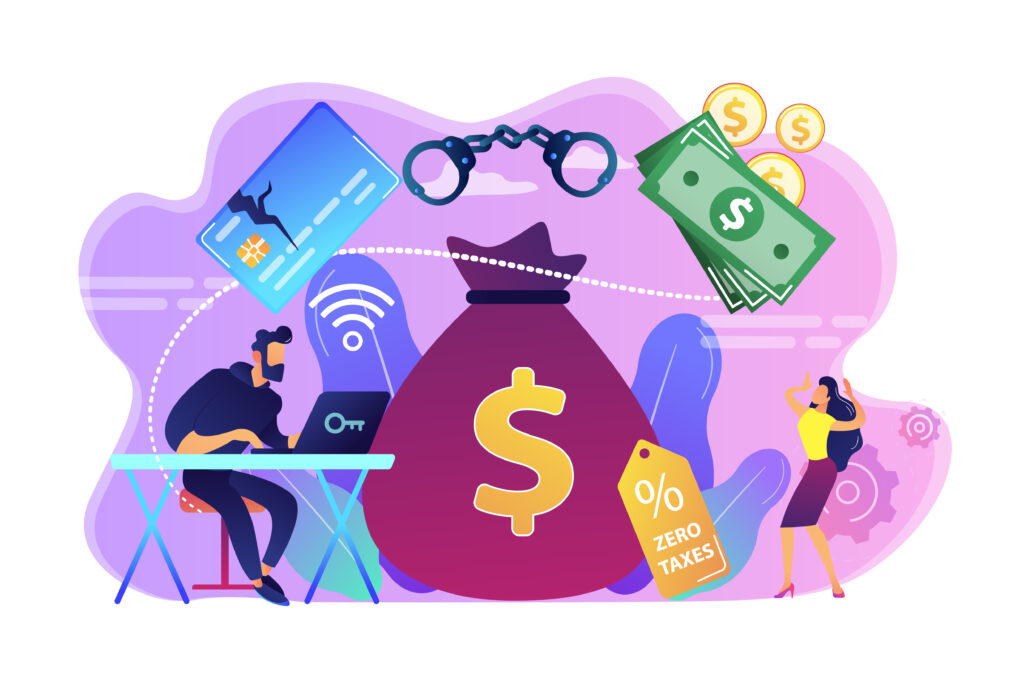
Investment scams on the rise. (IMAGE CREDIT: Magnific)
Technology alone will not solve the problem. Consumers remain the last line of defense.
Before acting on unexpected financial requests, experts recommend slowing down and independently verifying the information.
Banks and e-wallet providers do not ask customers to share one-time passwords, PINs, or full login credentials through calls, text messages, or social media.
Unexpected requests involving investments, emergency fund transfers, or account verification should always be confirmed through official customer service channels.
Users should also pay close attention to website addresses, sender information, and signs of manipulated audio or video, particularly when public figures appear to endorse financial products.
Trust is becoming the new battleground
The Philippine fintech sector has made remarkable progress in expanding financial inclusion.
Digital wallets, online banking, instant fund transfers, and digital lending have made financial services accessible to millions of Filipinos. At the same time, every innovation also creates new opportunities for abuse.
Artificial intelligence is making scams faster to produce, cheaper to operate, and far more convincing than the phishing emails and text messages of just a few years ago.
The challenge for regulators, financial institutions, and technology companies is no longer simply protecting systems from hackers. It is protecting people’s trust in the digital financial ecosystem itself.
As AI continues to reshape financial services, it is also redefining financial crime. The race between innovation and fraud is accelerating — and the winners may ultimately depend not only on better technology, but also on better-informed consumers.