Cash remittances from Overseas Filipinos (OFs) rose to US$3.02 billion in January 2026, marking a 3.5 percent increase from the US$2.92 billion recorded in January 2025, according to the Bangko Sentral ng Pilipinas (BSP).
The steady growth underscores the continued role of overseas workers in supporting the Philippine economy at the start of the year.
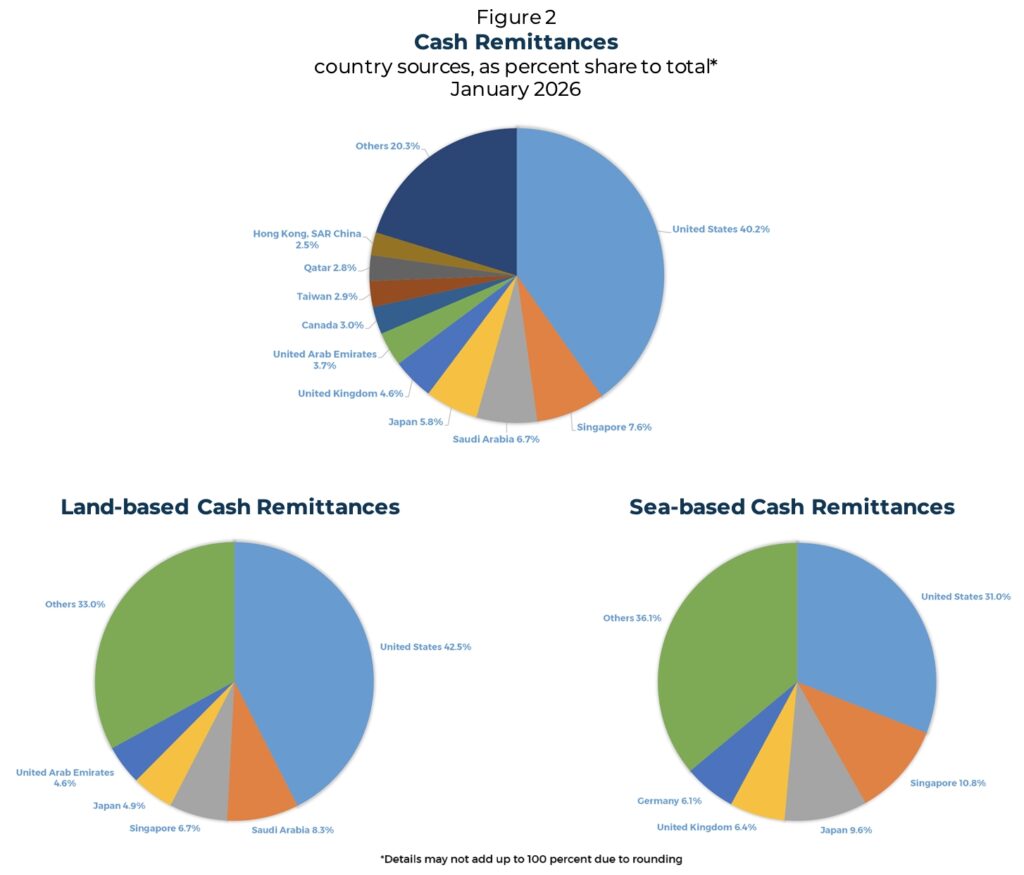
The United States remained the largest source of cash remittances to the Philippines during the month, followed by Singapore and Saudi Arabia, reflecting the strong presence of Filipino workers in these economies.
Analysts note that remittance flows from these countries often remain resilient even amid global economic uncertainties.
When broader transfers are considered, personal remittances — which include money sent through banks and other formal channels, transfers via informal networks, and remittances in kind — also posted solid growth.
Personal remittances reached US$3.36 billion in January 2026, up 3.5 percent from US$3.24 billion recorded in the same month last year.
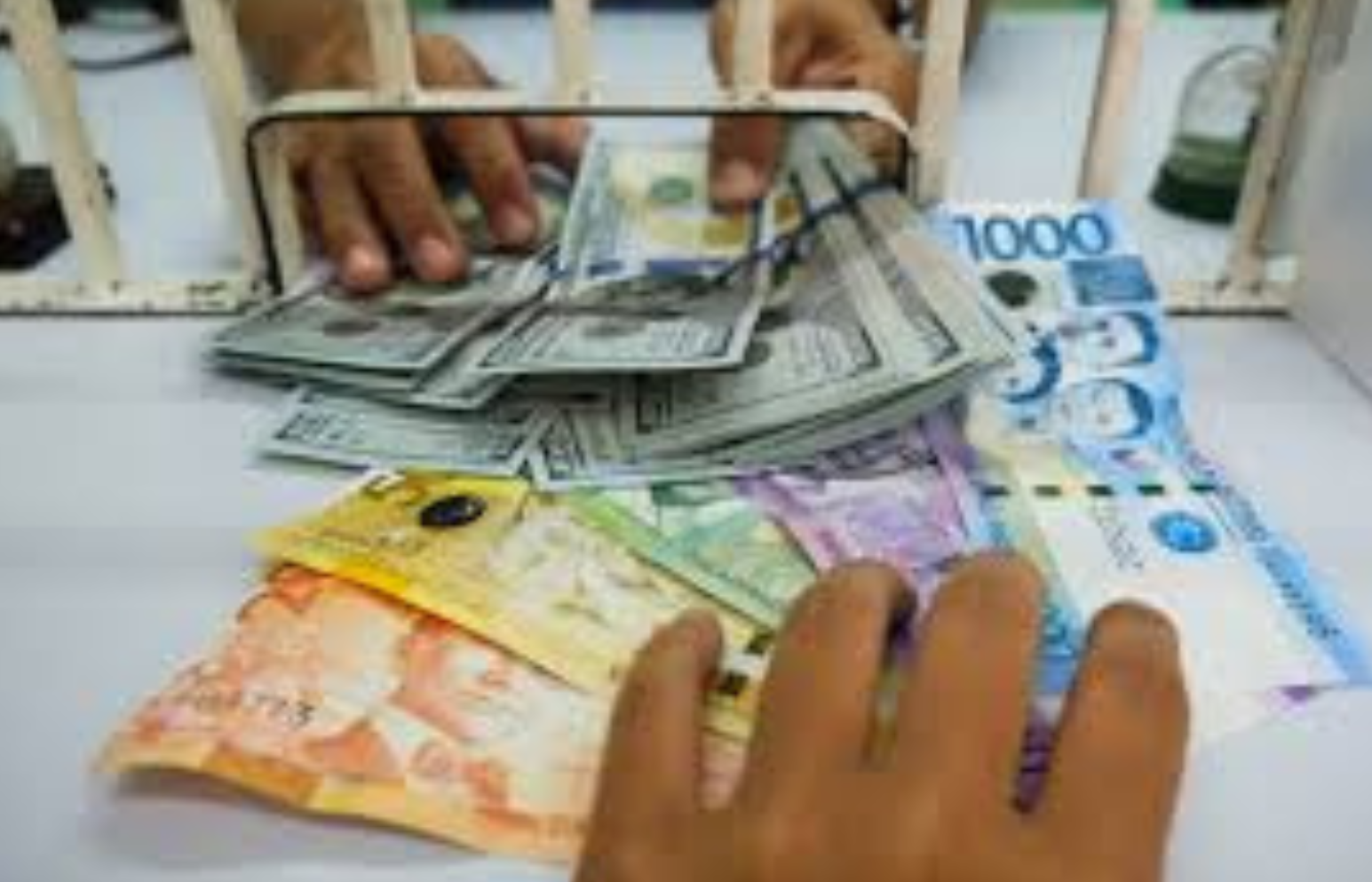
Overseas Filipino remittances continue supporting Philippine economy
IMAGE CREDIT: filipinolive.com
Remittances remain a key pillar of the Philippine economy, helping sustain household consumption and providing financial support to millions of families across the country.
Economists have long noted that the steady inflow of funds from Filipinos working abroad also helps stabilize the country’s external accounts.
However, the central bank noted that data on remittance sources have certain limitations. Many remittance centers abroad route transactions through correspondent banks, most of which are based in the United States.
As a result, some transfers originating from other countries may still be recorded as coming from the U.S.
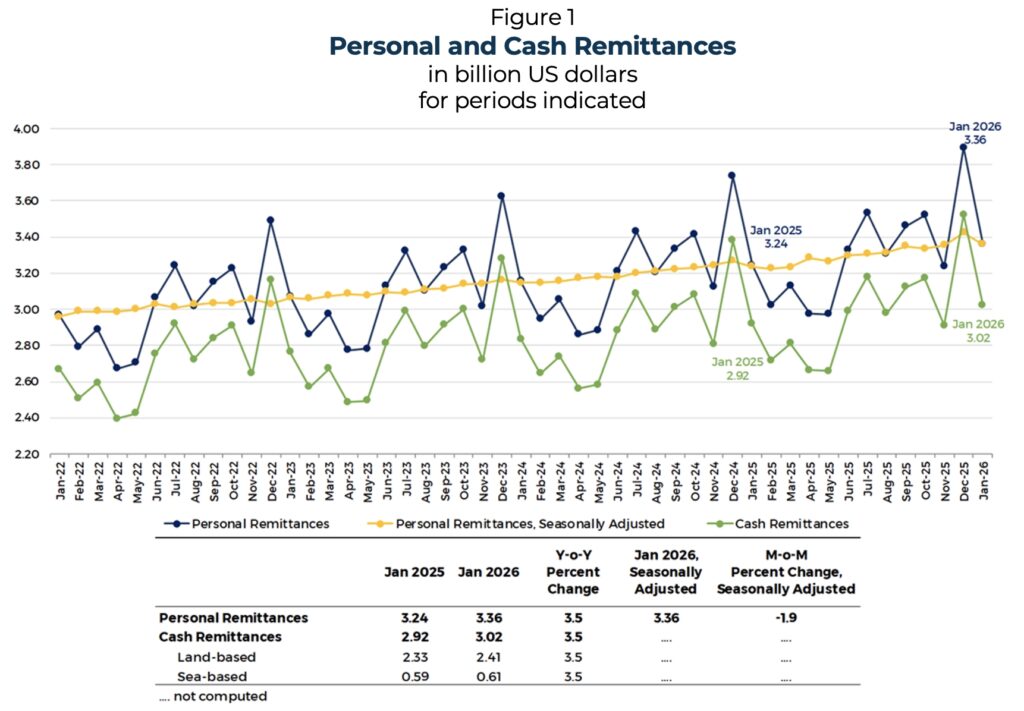
IMAGE CREDIT: Bangko Sentral ng Pilipinas
In addition, remittances 1 sent through money couriers are typically attributed to the country where the courier’s main office is located, rather than the actual country where the funds were sent.
This reporting structure tends to reinforce the United States’ position as the top recorded source of remittances.
Despite these technical factors, the latest figures highlight the continued economic impact of overseas Filipinos and the sustained growth of remittance flows entering the Philippines.
—
1 There are some limitations on the remittance data by source. A common practice of remittance centers in various cities abroad is to course remittances through correspondent banks, most of which are located in the U.S. Also, remittances coursed through money couriers cannot be disaggregated by actual country source and are lodged under the country where the main offices
are located, which, in many cases, is in the U.S. The countries are listed in order of their share of cash remittances, i.e., from highest to lowest.