

“The Philippines’ economic prospects are bright. We will probably be the fastest-growing country in the ASEAN region in the next two years and the second-fastest in the Asia-Pacific region, after India,” beamed Benjamin Diokno, former BSP chief and now Secretary of Finance.
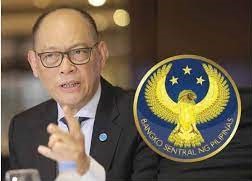
Diokno said that in spite of higher public debt, the country’s overall economic level remains manageable. Its solid macro-fundamentals also augur well for robust growth in the near term.
As proof, he pointed to a recent report listing down countries that had the highest risk to default on their obligations this year — and the Philippines was not on it. The report also stated that some countries had higher levels of debt-to-Gross Domestic Product (GDP) than the Philippines’ ratio, which, as of the end of the first quarter of this year, stood at 63.5 percent.
“The debt-to-GDP ratio is not the sole criterion that matters. The economic fundamentals of the country should also be considered,” Diokno said. “The demographic profile of the country also matters — young or aging? Resiliency also matters — how did it perform in previous crises? Is the economy dependent on many or limited sources? Also, what is the quality of political institutions — democratic or authoritarian?” he asked.
Diokno then continued to explain that the Philippines’ macro fundamentals are faring well. “The fiscal and monetary authorities are in control. The debt-to-GDP ratio is manageable.”
Still according to him, what would help stabilize our economy the most is the country’s banking system. “The banking system is sound and more than adequately capitalized. Our non-performing loan ratio, which is low, continues to fall. The banking industry has actually built in enough buffers.”
“Our external sector remains robust. Gross international reserves (GIR) are more than enough and there is a steady structural inflow of foreign exchange. The remittances of overseas Filipino workers, the Business Process Outsourcing (BPO) receipts, and rising exports are all good,” the finance chief added.
“Politically, there has always been a smooth transfer of power. The new president and vice president — who belong to the same party — were overwhelmingly voted into office. Compare that with other countries,” he added.
In a press briefing held earlier this year, Diokno reported that the country’s debt-to-GDP ratio will end at 61.8 percent by 2022, further up from the 16-year-high of 60.5 percent in 2021. The share of the national government’s outstanding obligations to the economy has also been projected by Development Budget Coordination Committee (DBCC) to gradually fall until it has reached 52.5 percent by the time President Ferdinand “Bongbong” Marcos is gone in 2028.
Diokno further said that the 60-percent-of-GDP threshold set for public debt sustainability was already passé as the pandemic-induced global recession has bloated debts worldwide, not only in the Philippines.