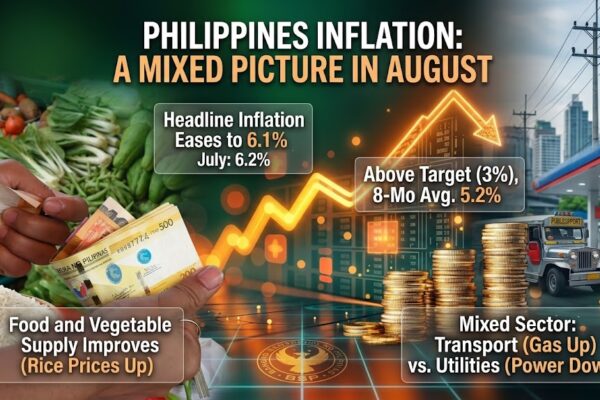

Inflation in the Philippines eased in May 2026, with headline inflation slowing to 6.8 percent from 7.2 percent in April.
According to latest data from the Bangko Sentral ng Pilipinas (BSP), this was driven largely by lower domestic prices of selected petroleum products.
The May reading came in below the central bank’s forecast range of 7.1 percent to 7.9 percent for the month, signaling a modest easing of price pressures after several months of elevated inflation.
Despite the monthly improvement, average inflation from January to May remained at 4.5 percent, still above the BSP’s 3.0 percent full-year target, indicating that inflationary pressures continue to linger in the broader economy.
For lower-income households, inflation for families in the bottom 30 percent income group slightly eased from 8.5 percent in April to 8.4 percent in May, reflecting persistent but gradually softening cost pressures on essential goods and services.
Oil prices, taxes, harvest ease inflation pressures

IMAGE CREDIT: Freepik
The BSP attributed the slowdown mainly to weaker global oil prices, which translated into lower domestic petroleum costs. Additional relief came from the suspension of excise taxes on liquefied petroleum gas (LPG) and kerosene, along with a slower increase in rental prices.
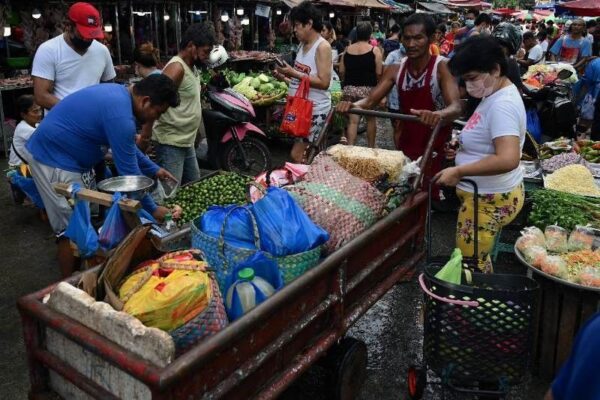
Transport costs also eased, helping temper price increases in key food commodities such as vegetables and fish. Improved supply conditions further contributed to lower meat prices during the month. Meanwhile, rice prices remained elevated compared to last year but recorded a month-on-month decline in May, supported by the recent dry season harvest.
On a seasonally adjusted basis, headline inflation declined sharply from 3.0 percent in April to -0.6 percent in May, suggesting a notable short-term easing in price momentum.
However, underlying price pressures remain evident. Core inflation, which excludes volatile food and energy items, edged higher to 4.1 percent in May from 3.9 percent in April, indicating that broader inflation dynamics continue to persist beyond fuel and food fluctuations.
BSP pledges steady action to anchor inflation
IMAGE CREDIT: BSP
The BSP reiterated its commitment to maintaining price stability, stating that it will take necessary policy actions to ensure inflation returns to its 3-percent target over the medium term.
The central bank has consistently emphasized its readiness to adjust monetary policy settings as needed to anchor inflation expectations and support macroeconomic stability.
Economists note that while the recent slowdown offers some relief to consumers, sustained improvements will depend on global commodity trends, domestic supply conditions, and the pace of demand recovery in the coming months.
As inflation gradually moderates, attention is now turning to whether the easing trend can be sustained without compromising underlying economic growth momentum.