

While digital payment adoption in the Philippines hits record highs, a widening operational divide is quietly putting pressure on enterprise finance departments.
Modern consumers now expect seamless checkout experiences — from QR Ph scans to e-wallet transfers — yet many back-office systems remain tethered to fragmented settlement schedules and manual reconciliation workflows.
The scale of this shift is undeniable.
Data from the Bangko Sentral ng Pilipinas (BSP) shows that digital payments comprised 64.69% of retail transaction volume in 2025, up from 57.45% in 2024. Total transfers through state-led payment rails InstaPay and PESONet hit ₱24.7 trillion during the same period, equivalent to roughly 90% of the nation’s nominal GDP.
However, behind the high-level growth lies a notable divergence between retail users and corporate operations.
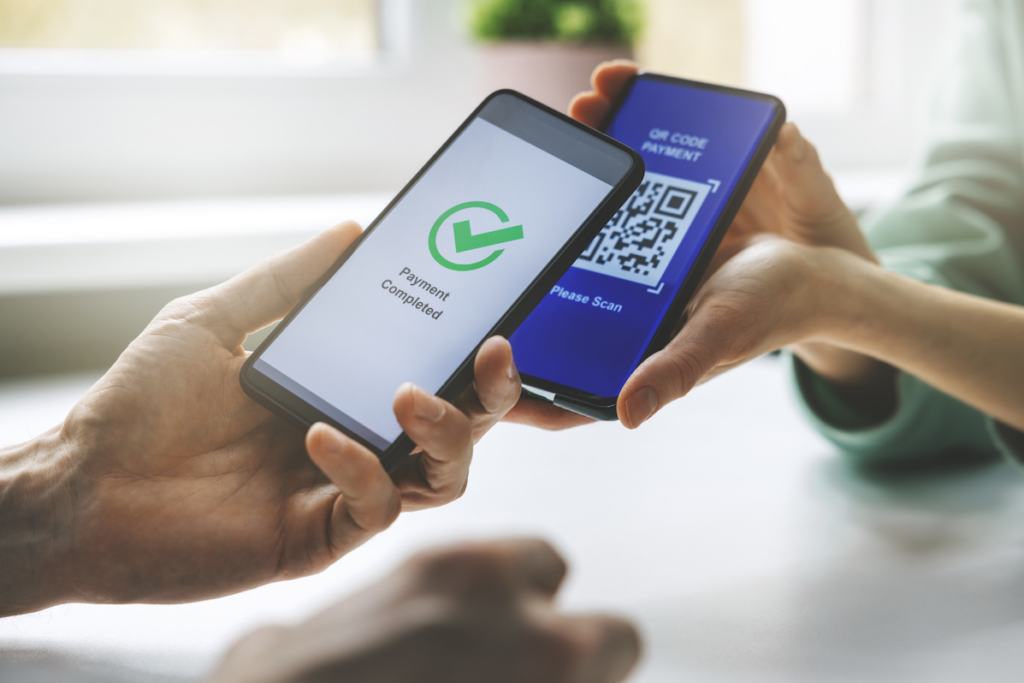
In 2025, digital payments made by individual consumers reached 74.91% of total transaction volume. In contrast, corporate payment digitalization sat at just 18.75%—a slight decline from the 19.8% recorded the previous year. This discrepancy expanded the digital adoption gap between individual consumers and commercial entities to 56 percentage points.
This structural mismatch creates a persistent downstream challenge for corporate finance officers, treasurers, and enterprise decision-makers.
Fragmented settlement channels force slow manual reconciliation
Accepting multi-channel digital payments — whether via cards, direct bank transfers, e-wallet platforms, or over-the-counter partners — often forces internal teams to manually cross-reference disconnected reports, varied settlement windows, and distinct merchant portals before closing the books.
Payments infrastructure provider SwiftPay highlights this friction point as the “reconciliation gap” — the latency between a transaction’s initial authorization and its final, ledger-accurate recording within enterprise resource planning (ERP) software.
For growing businesses, processing high volumes through manual matching exposes finance departments to three core operational risks:
- Liquidity latency: Delays between customer checkout and verified ledger visibility obscure real-time cash positions, impacting working capital management.
- Manual overhead: High-value finance talent spends excessive working hours sorting transactional data rather than driving strategic planning.
- Audit and compliance risks: Discrepancies in manual data entry increase exception-handling costs and elevate exposure to fraud, particularly as compliance standards like ISO 20022 mandate richer transaction metadata.
As transaction volumes scale, industry experts note that the primary challenge for Philippine enterprises is transitioning from basic payment acceptance to unified post-payment automation.
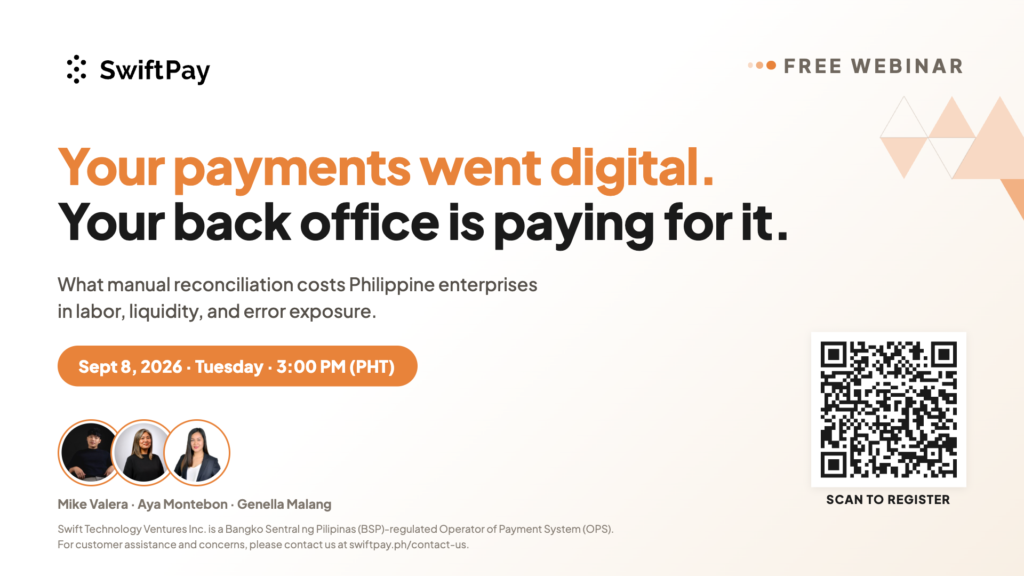
To address these back-office operational hurdles, SwiftPay is hosting an industry briefing titled “Your payments went digital. Your back office is paying for it.”
Scheduled for September 8, 2026, at 3:00 PM PH time, the webinar will feature Aya Montebon, Chief Marketing Officer at SwiftPay, and Genella Malang, Sales Director at SwiftPay, alongside moderator Mike Valera.
The panel will outline strategies for enterprise CFOs and treasury teams to modernize reconciliation infrastructure without tearing down existing core systems.
Enterprise decision-makers can reserve a spot for the virtual briefing by visiting SwiftPay’s event registration portal.