

As startups face mounting pressure to launch products faster, manage costs more efficiently, and navigate an increasingly complex technology landscape, Amazon Web Services (AWS) is betting that artificial intelligence can help remove some of the biggest barriers to growth.
In a recent blog post, Jason Bennett, Vice President and Global Head of Startups and Venture Capital at AWS, announced the launch of two AI-powered capabilities designed specifically for startup founders: AWS Startup Advisor and a new suite of agentic migration tools aimed at simplifying cloud and AI workload migrations.
The announcement signals a broader shift in how major cloud providers are positioning themselves in the age of generative AI. Rather than serving solely as infrastructure providers, companies like AWS are increasingly embedding AI directly into the startup-building process, helping founders make technical decisions, optimize cloud spending, and accelerate development without requiring large engineering teams.
According to Bennett, AI has dramatically shortened the journey from idea to execution, allowing startups to move from prototype to revenue more quickly than ever before. However, challenges such as infrastructure complexity, cloud cost management, security requirements, and migration projects continue to slow many startups as they scale.
“We’ve spent the last few years telling founders that AI changes everything. Now we’re proving it, starting with how you build on AWS,” Bennett wrote.
AWS Startup Advisor brings solutions architecture to founders
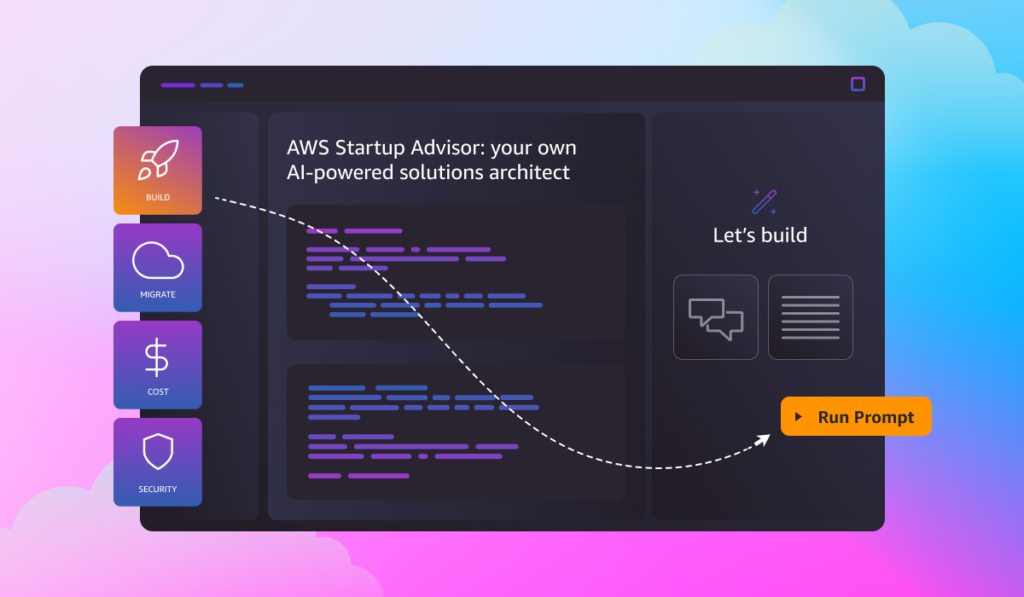
At the center of the announcement is AWS Startup Advisor, an AI-powered assistant designed to function as a virtual solutions architect for startups.
The tool leverages expertise from thousands of AWS Solutions Architects and operational patterns derived from billions of interactions across more than 350,000 startups running on AWS. It learns about a startup’s architecture, development stage, and AWS usage, enabling it to provide tailored recommendations rather than generic guidance.
Available through startups.aws and integrated into developer environments such as VS Code, Cursor, Kiro, and Claude Code, the advisor helps founders set up cloud infrastructure, establish security baselines, monitor AWS spending, and identify cost optimization opportunities.
For early-stage startups, particularly those without dedicated cloud architects or senior DevOps engineers, the tool could help reduce costly infrastructure mistakes that often consume valuable runway.
The platform can automatically recommend identity and access management configurations, monitor AWS Activate credits, flag unusual spending patterns, and provide security guidance appropriate to a startup’s stage of growth.
The move effectively democratizes access to expertise that was previously available primarily through AWS consultants, solutions architects, or experienced engineering teams.
AI agents take on cloud migration projects
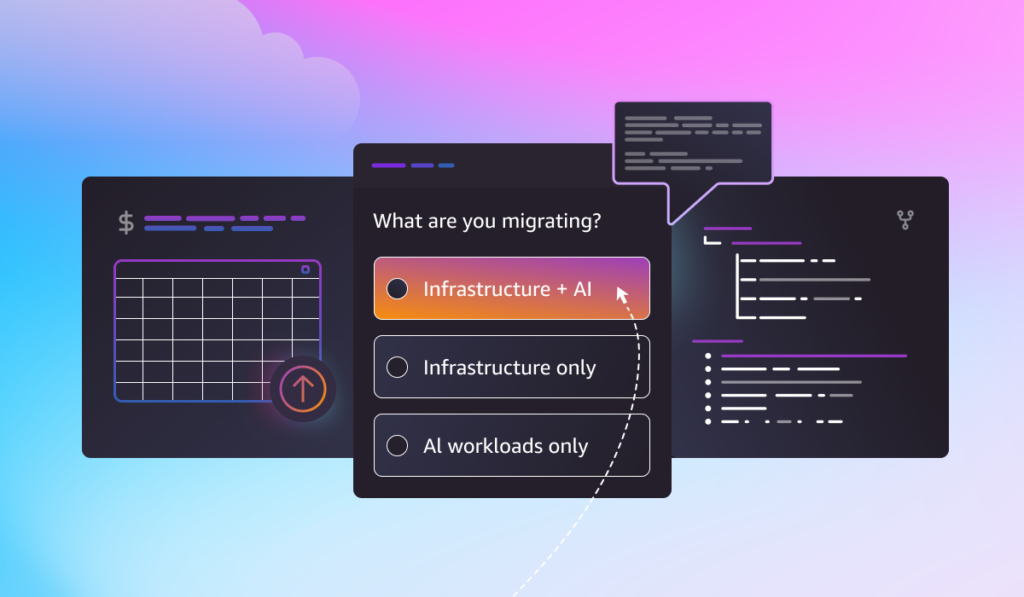
AWS also unveiled new AI-powered migration capabilities designed to simplify one of the most challenging aspects of scaling technology businesses: moving workloads between cloud environments.
The migration platform enables startups to upload infrastructure data and billing information, allowing AI agents to generate detailed migration plans that include architecture diagrams, Terraform templates, service mappings, cost projections, and step-by-step implementation guides.
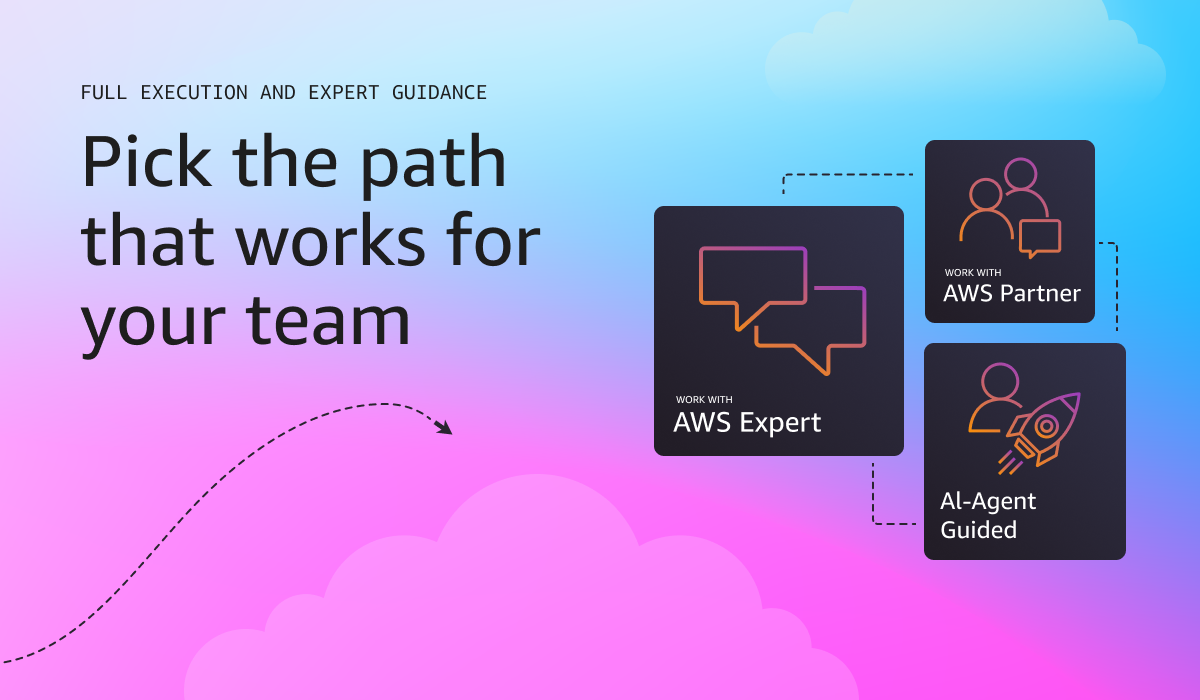
According to AWS, founders can choose between AI-guided migration, assistance from AWS experts, or end-to-end implementation through certified AWS partners.
The company said the new capabilities support migrations from Google Cloud Platform services to AWS offerings, including Kubernetes workloads, databases, and storage systems. The tools can also help organizations migrate AI inference workloads from platforms such as OpenAI, Anthropic, and Gemini to Amazon Bedrock.
Historically, cloud migrations have required months of planning and specialized engineering expertise. By automating much of that process, AWS appears to be lowering switching costs for startups that may have initially launched on alternative cloud platforms but are now seeking enterprise-scale infrastructure.
Why it matters for Philippine startups
The launch could have particular relevance for the Philippine startup ecosystem, where fintech companies, digital banks, e-wallet operators, and emerging SaaS firms are balancing growth ambitions with limited resources and increasing regulatory expectations.
Many local startups continue to face three persistent challenges: a shortage of experienced cloud and DevOps talent, tighter fundraising conditions, and the need to comply with increasingly sophisticated security and risk-management requirements.
For fintech companies, infrastructure decisions are especially critical.
The Bangko Sentral ng Pilipinas (BSP) has continued to strengthen cybersecurity and fraud-management expectations across the financial sector, pushing digital financial service providers to adopt more advanced security controls, monitoring systems, and authentication frameworks.
In this environment, automated guidance on cloud security, permissions management, and AI workload monitoring could help startups establish stronger compliance foundations earlier in their development cycle.
The cost-management features of AWS Startup Advisor may also appeal to founders seeking to extend runway in a funding environment where investors have become increasingly selective. By helping startups avoid over-provisioning cloud resources and aligning infrastructure costs with actual usage, AI-powered optimization tools could reduce operational waste during critical growth stages.
The platform may also help address the ongoing shortage of specialized cloud architects and senior DevOps engineers in the Philippines. As local technology professionals increasingly pursue global remote opportunities, many startups struggle to recruit experienced infrastructure talent.
By embedding AI-powered engineering guidance directly into developer workflows, AWS is effectively providing smaller teams with access to architectural expertise that would otherwise be difficult or expensive to secure.
A strategic push for the next generation of AI startups
Beyond helping founders build applications faster, the announcement reflects AWS’s broader competitive strategy.
The migration tools specifically target workloads currently running on competing cloud platforms and AI ecosystems, including Google Cloud Platform, OpenAI, Anthropic, and Gemini. This suggests AWS is not only simplifying migration but actively positioning Amazon Bedrock and the broader AWS ecosystem as long-term destinations for AI-native startups.
For emerging fintech firms exploring opportunities in areas such as embedded finance, open banking, digital lending, and AI-powered financial services, the ability to deploy and scale infrastructure more quickly could become a meaningful competitive advantage.
However, industry observers note that while AI-powered migration tools can significantly reduce operational complexity, founders should also consider long-term architecture flexibility. As businesses become increasingly integrated into a specific cloud ecosystem, transitioning away in the future may become more complex.
For founders, particularly those with limited technical resources, the promise is straightforward: spend less time managing infrastructure and more time building products.
And in an increasingly competitive startup environment, that may be one of the most valuable advantages AI can offer.
The newly announced capabilities are now available through the AWS startup platform, where founders can access AWS Startup Advisor on the web and generate migration plans for eligible workloads.
While the tools are positioned as a way to reduce technical complexity and accelerate startup growth, they also reflect a broader shift in the cloud industry. Increasingly, providers are embedding AI directly into infrastructure management, software development, and migration workflows, transforming what were once highly specialized engineering functions into automated, AI-assisted processes.
For startups, particularly those operating in fast-growing sectors such as fintech, the implications could extend beyond productivity gains. Faster deployment cycles, improved cost visibility, and easier access to enterprise-grade infrastructure may help smaller teams compete more effectively in an increasingly digital economy.
At the same time, founders will need to weigh the benefits of speed and automation against longer-term considerations such as architecture flexibility, cloud dependency, and vendor concentration. As AI becomes more deeply integrated into how startups build and scale technology, the challenge will be balancing operational efficiency with strategic control over their technology stack.
The launch of AWS Startup Advisor and its new migration capabilities underscores how cloud providers are evolving from infrastructure vendors into active participants in the startup ecosystem — offering not just computing resources, but increasingly the guidance and automation needed to turn ideas into scalable businesses.