



inDrive has climbed into the Top 4 most downloaded travel apps in the Philippines, signaling growing local demand for platforms that go beyond ride-hailing and into full-scale mobility and service ecosystems.
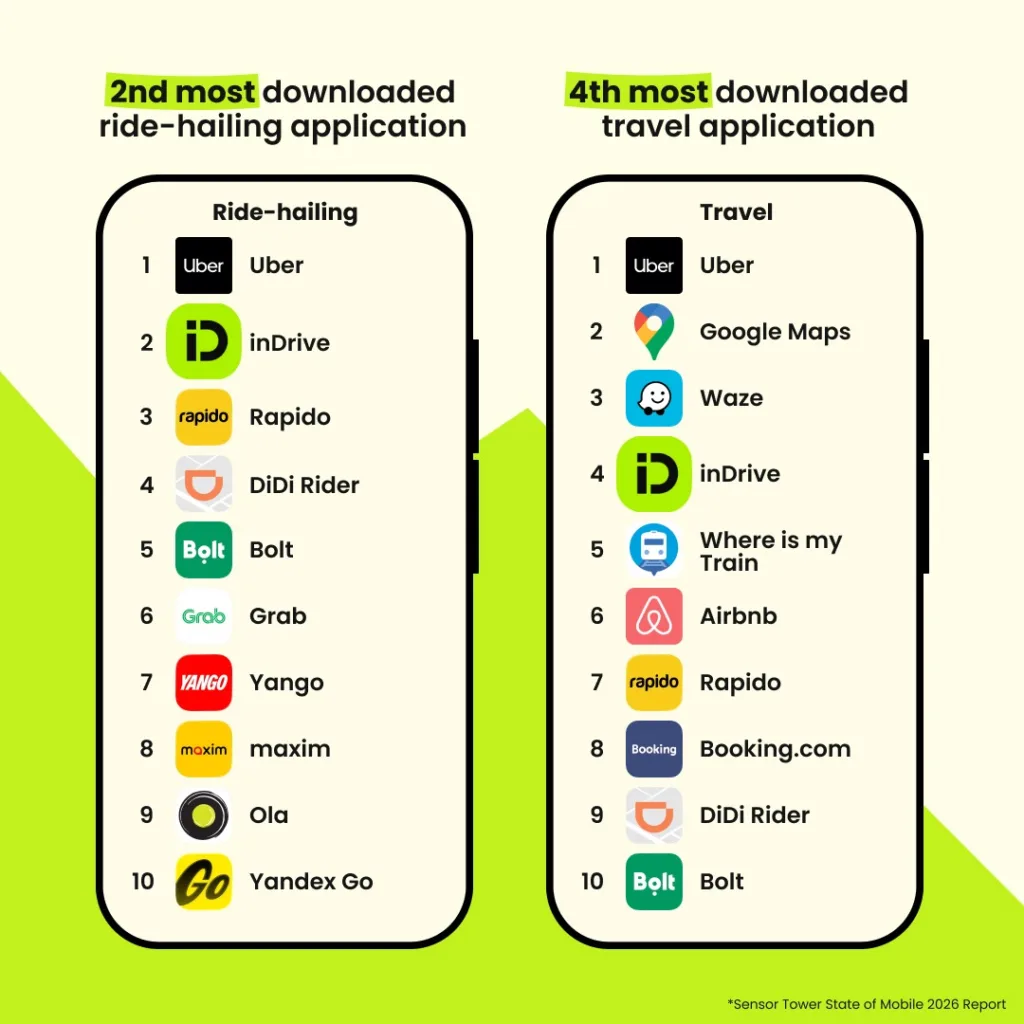
Data from Sensor Tower shows that inDrive logged more than four million installations in the country in 2025 alone, placing it fourth among travel apps nationwide. The ranking also reinforces the company’s global momentum: inDrive remained the world’s second most downloaded ride-hailing app for the fourth consecutive year and rose from fifth to fourth place among top travel apps worldwide.
For the Philippine market, the numbers point to more than just popularity. They reflect rising user appetite for what inDrive calls its “mobility super app” vision—an evolution that mirrors trends in Philippine fintech, where platforms increasingly bundle payments, lending, commerce, and logistics into single apps.
“This recognition reflects the trust people place in our platform,” said Arsen Tomsky, noting that the company remains focused on fairness, transparency, and user choice as it expands into new services.
From ride-hailing to revenue engines

Globally, inDrive has begun widening its business model beyond transport.
One of its key expansions is inDrive.Ads, an in-app advertising platform now live in 20 countries, including the Philippines. The move creates a new, high-margin revenue stream that allows the company to keep its take rates among the lowest in the ride-hailing sector — an approach that aligns with fintech’s push toward diversified, platform-based income.
“Diversifying our business with a high-margin stream like Ads is an important step,” Tomsky said. “This new line gives us more flexibility to fund affordability at scale.”
For the local market, inDrive.Ads also positions the app as a new digital channel for brands — blending mobility data, user behavior, and location-based demand, a model increasingly familiar in Philippine fintech and e-commerce ecosystems.
Sofia Guinto said the advertising feature supports the company’s broader advocacy on fairness. “Through this, we can maintain fares that are both affordable for passengers and lucrative for our drivers, while creating equal opportunities for more people and brands,” she said.
Super app ambitions meet fintech logic

Beyond advertising, inDrive has rolled out intercity transport, courier and grocery delivery, and even financial services in select international markets — services powered by artificial intelligence and predictive analytics to improve mapping, ETA accuracy, and personalization.
This layered expansion reflects a familiar playbook in Philippine fintech: build daily-use services first, then introduce payments, credit, and business tools on top of an existing user base. While not all of inDrive’s offerings are live locally yet, its global roadmap positions the Philippines as a strategic market for future rollouts.
With Filipino consumers already comfortable using super apps for banking, shopping, and transport, inDrive’s rapid climb in downloads suggests that mobility platforms are now competing not just with other ride-hailing apps—but with fintech-style ecosystems that promise convenience, affordability, and multiple services in one place.
What comes next
Throughout 2026, inDrive says it will continue rolling out new features and expanding its user base as it works toward becoming a full mobility super app.
In a press release, the company has stressed that all updates will remain anchored on its core principles of fairness, opportunity, and real-world user needs.
As competition heats up among transport and fintech platforms alike, inDrive’s Top 4 ranking in the Philippines highlights a broader shift: that travel apps are no longer just about getting from point A to point B — they are becoming financial, commercial, and data-driven platforms in their own right.
In a market where super apps are fast becoming the default digital gateway, inDrive’s performance suggests that mobility may be the next major on-ramp to the Philippine fintech economy.