

The Philippines’ external debt [1] slightly declined in the first quarter of 2026, while key indicators of external sector stability remained broadly sound, according to preliminary data released by authorities.
According to the latest report from the Bangko Sentral ng Pilipinas (BSP), outstanding external debt fell to US$147.35 billion as of end-March 2026, down marginally from US$147.65 billion in the previous quarter.
Despite the decline being modest, policymakers noted that overall debt levels remain manageable and consistent with the country’s medium-term fiscal and external financing framework.
Debt as a share of gross domestic product (GDP) also improved slightly, easing to 30.0% from 30.3% in the prior quarter. The improvement came even as economic growth moderated, suggesting continued resilience in the country’s external position.
Liquidity buffers remained strong. Short-term external debt based on remaining maturity (STRM) [2] declined to US$25.50 billion, while gross international reserves (GIR) stood at US$106.64 billion.
This translates to a GIR-to-STRM coverage ratio of 4.18 times, indicating the Philippines retains ample capacity to meet near-term foreign currency obligations.
The ratio also compares favorably with emerging market peers, [3] underscoring a relatively robust external liquidity position.
External debt stable amid global tightening pressures
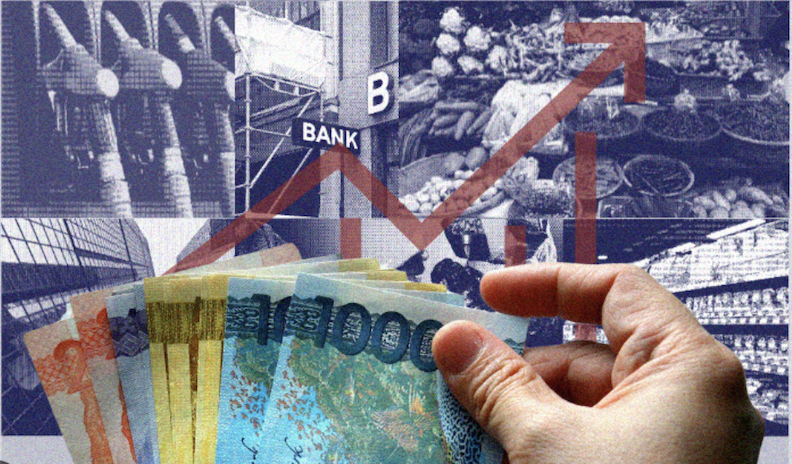
IMAGE CREDIT: Magnific
The debt service ratio, [4] which measures the country’s ability to meet external obligations using export and income receipts, remained at a moderate 9.5%, slightly higher than the 8.5% recorded a year earlier due to increased principal repayments.
Authorities said the level remains within manageable bounds and continues to reflect adequate foreign exchange earnings to service debt obligations.
On a quarter-on-quarter basis, the slight decline in external debt was mainly attributed to reduced non-resident holdings of Philippine debt securities. This trend reflects more cautious investor sentiment and tighter global financing conditions for emerging markets during the period, as global interest rates remained elevated and risk appetite softened.
On a year-on-year basis, however, external debt still edged higher from US$146.74 billion in end-March 2025. The increase was driven primarily by new borrowings from the National Government and the private sector, used to support development programs, infrastructure financing, and trade-related activities.
Despite these movements, authorities emphasized that the country’s external debt profile remains resilient. The overall structure continues to be supported by strong reserves, stable debt servicing capacity, and prudent liability management.
Market observers note that the latest figures suggest the Philippines is navigating a period of global financial tightening without significant stress on its external accounts. While external borrowing remains a key funding source for growth initiatives, strong reserve buffers continue to provide an important cushion against external shocks and currency volatility.
—
[1] Borrowings owed by residents to non-residents.
[2] STRM debt is composed of loans with original maturities of one (1) year or less plus amortizations on medium- and long-term accounts falling due within the next 12 months.
[3] Based on end-December 2025 GIR-to-STRM debt ratios of the Philippines (4.13) and emerging economy peers.
[4] Debt Service Ratio relates principal and interest payments (or debt service burden) to XGSI (receipts from exports of goods and services and primary income) as a measure of adequacy of the country’s foreign exchange (FX) earnings to meet maturing obligations. It is computed as debt service burden over XGSI, multiplied by 100. A lower ratio is desirable as it means a smaller portion of XGSI is used to repay external debt. This allows more resources to be allocated toward economic growth and improves the country’s FX buffers against external shocks.