

The Bangko Sentral ng Pilipinas (BSP) has issued new guidance clarifying the implementation of its rules on non-deliverable foreign exchange (FX) derivative transactions, while also releasing its latest inflation outlook for May 2026.
In Memorandum No. M-2026-022, the BSP clarified the intent of Circular No. 1212 dated 11 April 2025, particularly in relation to non-deliverable FX derivative transactions such as non-deliverable forwards (NDFs) involving the sale of foreign exchange against the Philippine peso to non-resident financial institutions.
In a press release, the central bank emphasized that NDF transactions should be tied to underlying legitimate economic activity and must be supported by appropriate documentation. The clarification aims to ensure consistent interpretation among supervised financial institutions and to reinforce compliance with existing regulatory standards governing FX derivative markets.
According to the BSP, the issuance of the memorandum is intended to promote a common understanding among banks regarding the policy objectives of the earlier circular, which was issued in 2025.
The guidance is part of the BSP’s broader efforts to strengthen transparency, risk management, and integrity in foreign exchange-related transactions in the Philippine financial system.
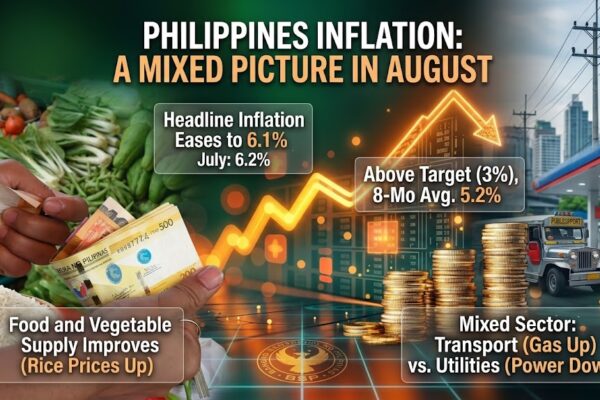
Alongside the regulatory clarification, the BSP also released its month-ahead inflation forecast, projecting inflation for May 2026 to settle within the range of 7.1 percent to 7.9 percent.
Food, peso pressures drive inflation outlook

IMAGE CREDIT: BSP
The BSP said upside price pressures during the period were mainly driven by higher prices of key food items, including rice, vegetables, and meat, as well as the continued depreciation of the Philippine peso. These factors contributed to sustained cost pressures on consumer goods and imported commodities.
However, the central bank noted that these upward pressures were partially offset by several mitigating factors. These included recent rollbacks in domestic fuel prices, lower prices of fish, and slightly reduced electricity rates, which helped ease overall inflation momentum for the month.
The BSP continues to monitor domestic and global developments that may affect price stability, including supply-side risks and external market conditions. It reiterated its commitment to maintaining an appropriate policy stance to ensure inflation remains consistent with its target over the medium term.