
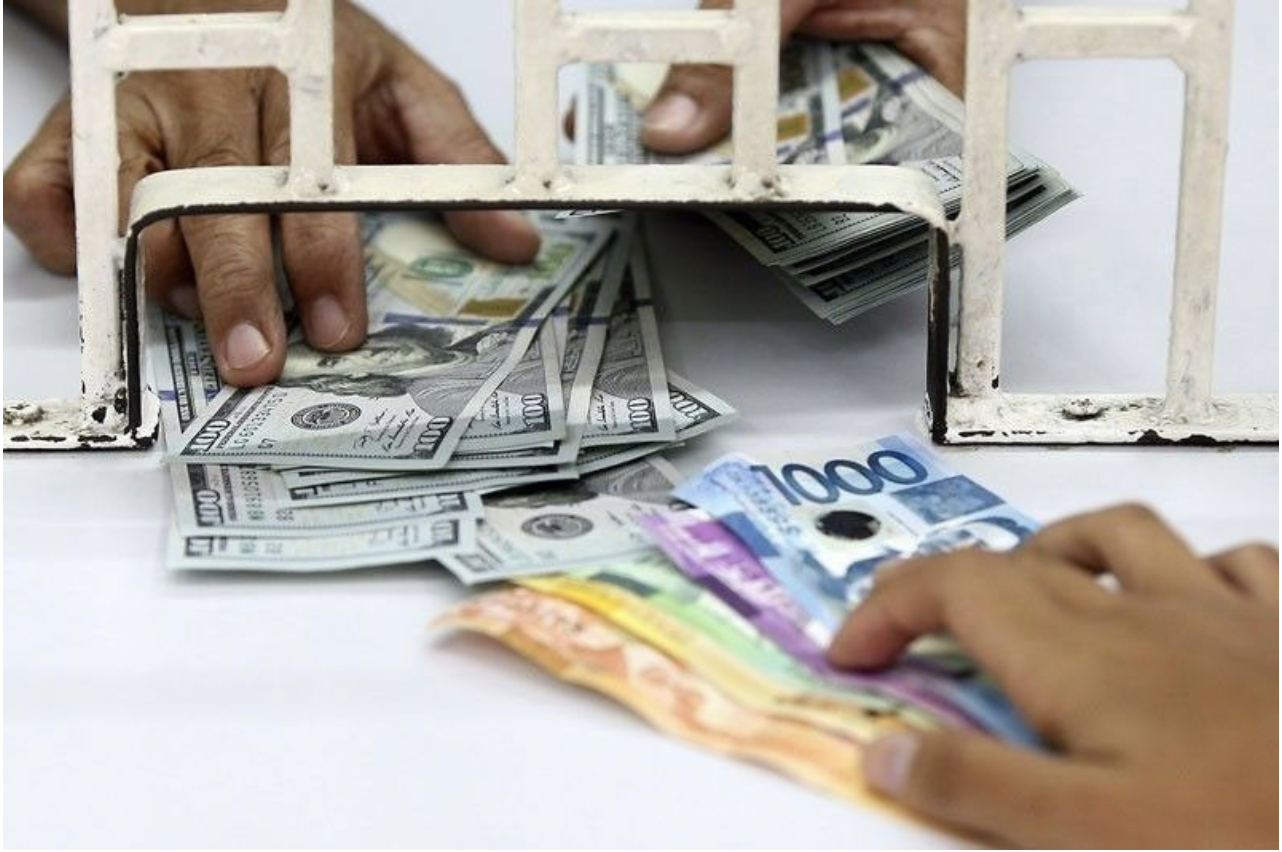
Cash remittances from Overseas Filipino Workers (OFWs) reached US$2.7 billion in April 2026, according to preliminary data released by the Bangko Sentral ng Pilipinas (BSP), underscoring continued resilience in inflows despite shifting global economic conditions.
Latest BSP data shows that the figure highlights the sustained contribution of Filipino workers abroad to household consumption and domestic financial stability, even as labor markets in key host countries continue to face uneven recovery and persistent inflationary pressures.
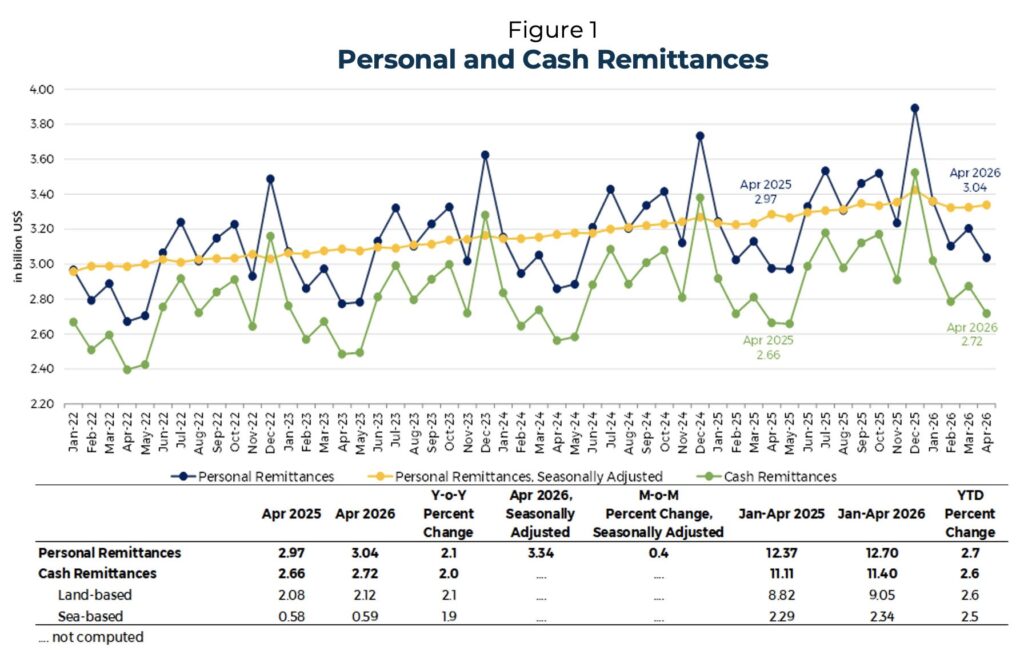
IMAGE CREDIT: BSP
The United States remained the largest source of remittance inflows for the month, followed by Singapore and Saudi Arabia, highlighting the continued geographic concentration of Filipino overseas workers in major labor markets.
However, authorities note that data by origin reflects the location of remitting or correspondent banks rather than the actual source of income, particularly in the case of U.S.-based transfers.
Seasonally adjusted personal remittances — which include cash sent through formal banking channels, informal remittance channels, and remittances in kind — also recorded an increase during the period.
This signals continued financial support from overseas Filipinos to families in the Philippines, particularly for daily consumption, education, healthcare, and debt obligations.
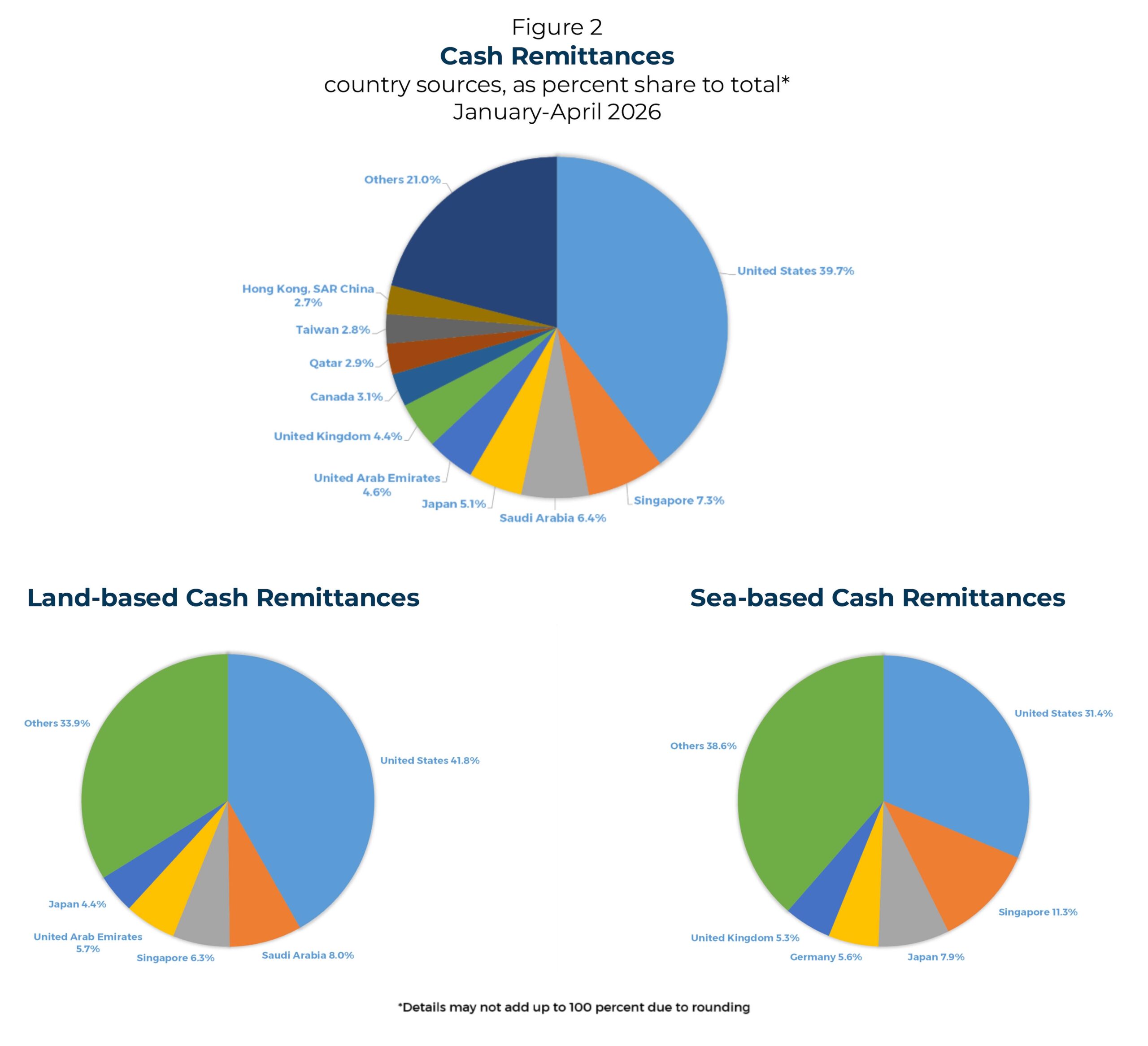
IMAGE CREDIT: BSP
Remittances have long served as a key pillar of the Philippine economy, providing a stable inflow of foreign exchange and helping cushion households from economic volatility.
The latest data suggests that despite global uncertainties, including inflationary pressures and labor market adjustments in host economies, OFs continue to prioritize financial support for dependents back home.
Economists have consistently noted that remittance inflows tend to be relatively resilient even during periods of global slowdown, as overseas Filipino workers often maintain essential employment in sectors such as healthcare, domestic work, maritime services, and hospitality.
Remittances remain key economic stabilizer
The April 2026 figures further reinforce this trend, showing that cash remittances remain a critical source of liquidity for millions of Filipino households. These inflows not only support consumption but also contribute to savings, education spending, and small business capital for many families.
At the same time, the continued reliance on a concentrated set of remittance corridors—particularly the United States, Singapore, and Saudi Arabia—highlights the importance of maintaining stable labor agreements and financial transfer channels across key host countries.
While digital remittance platforms and fintech solutions have helped improve accessibility and lower transfer costs in recent years, the underlying structure of remittance flows remains closely tied to traditional labor migration patterns.
As global economic conditions continue to evolve, analysts expect remittance inflows to remain a key stabilizing factor for the Philippine economy, particularly in supporting household resilience and domestic demand.
The sustained growth in personal remittances also highlights the broader role of overseas Filipinos not only as contributors to foreign exchange earnings but also as a financial lifeline for millions of families across the country.