


As artificial intelligence evolves from experimental tools into autonomous systems capable of reasoning and acting, Amazon Web Services (AWS) is positioning the Philippines not just as a market — but as a long-term innovation partner by betting on Filipino talent.
At a recent media outlook briefing, AWS Philippines head Precious Lim underscored how the company’s decade-long presence in the country has expanded beyond enterprise cloud adoption into Filipino talent development, public-sector transformation, and real-world AI impact.

“This is actually our 10th year for AWS in the Philippines, and we are celebrating a decade of innovation in the country,” Lim said. “Even before that, we’ve been working with lighthouse customers across banking, telco, fintech, and government to build and innovate on AWS.”
With AWS set to mark its official 10-year milestone in 2026, the company says its next phase will be shaped by people, skills, and purpose-driven technology.
Building cloud skills at national scale
One of AWS’s most far-reaching investments in the Philippines is the Filipino talent development.
Since 2017, AWS has trained more than 100,000 Filipinos through free learning platforms such as AWS Skill Builder, AWS Educate, and AWS Academy. This is reinforced by a rapidly growing grassroots cloud community of over 30,000 members nationwide.
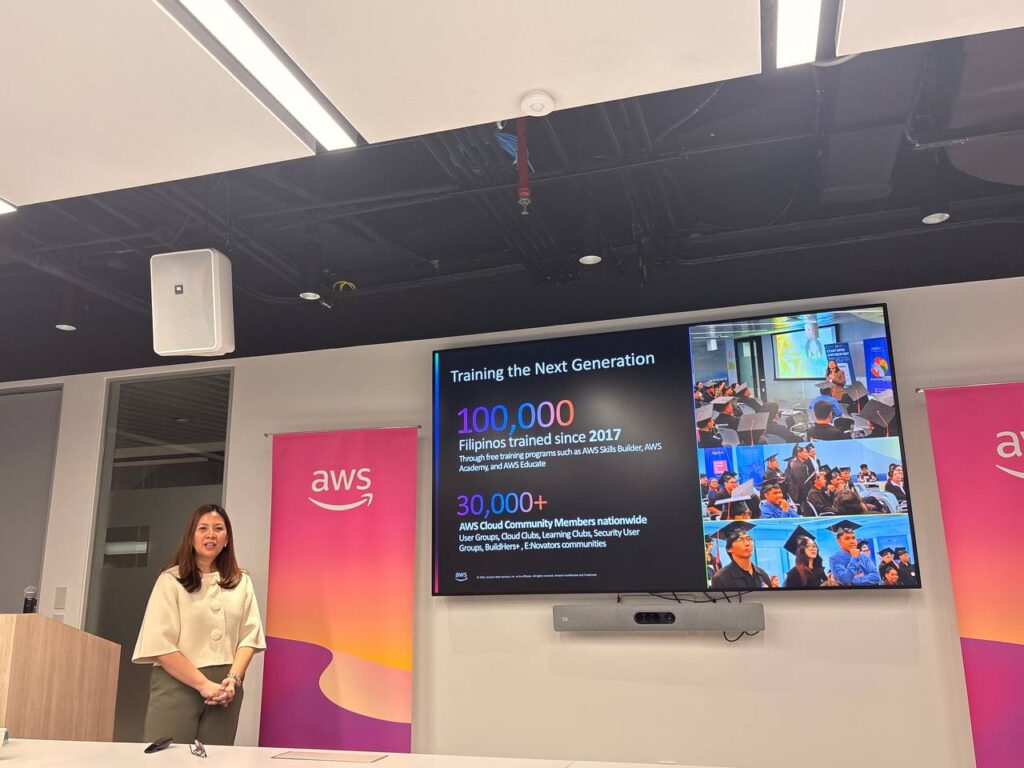
“To support digital tech resilience, talent and people are super important,” Lim emphasized. “That commitment to enabling Filipinos will continue to be there.”
These community-led groups — independent of AWS — span students, professionals, and startups across Metro Manila, Cebu, Davao, Bacolod, and Baguio.
Cloud in the classroom and beyond
AWS is also deepening its footprint in Philippine higher education.
At Ateneo de Manila University, the recently launched BUILD (Business Insights Laboratory for Development) program gives students access to an AWS-powered innovation sandbox.
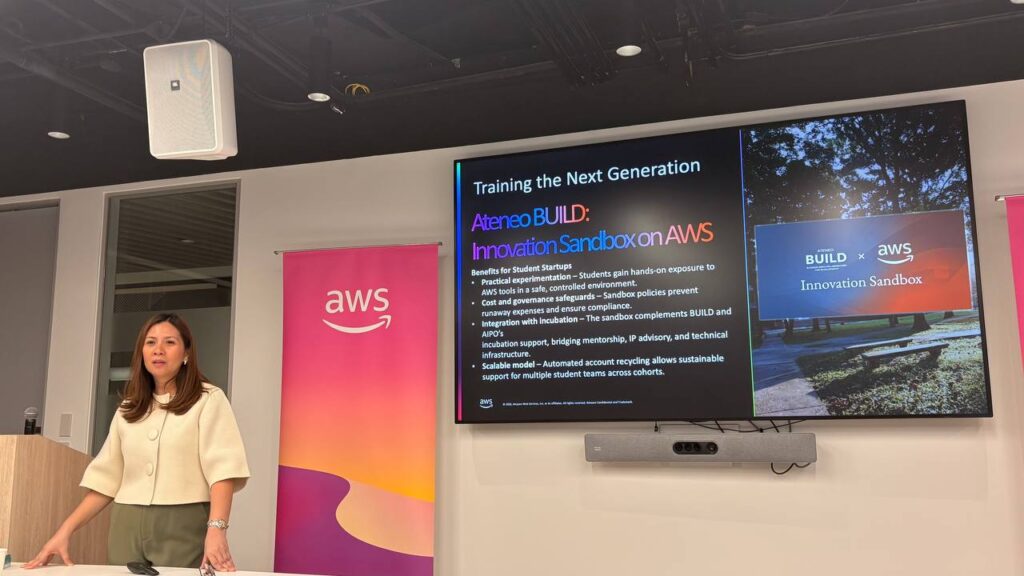
“We’re providing an innovation sandbox so students are free to experiment, build on their ideas, and leverage AWS services — with security guardrails set by the school,” Lim said.
The same sandbox model has also been adopted by the Department of Science and Technology (DOST) for AI-focused experimentation, signaling stronger alignment between government, academia, and industry.
Government services powered by the cloud
AWS’s role in the public sector increasingly touches everyday Filipino life.
One example is its collaboration with the Technical Education and Skills Development Authority (TESDA), whose Skills Passport mobile app runs on AWS infrastructure and reaches millions nationwide.
“Through the app, learners can store their TESDA certificates, search for jobs, and even access an AI-powered assistant,” Lim explained. “Soon, AWS Skill Builder content will also be available directly in the app.”
AWS is also working with TESDA-affiliated institutions to deliver hands-on cloud labs using AWS curriculum, helping learners move from theory to job-ready skills.
Cloud as a tool for public protection
In late 2025, AWS partnered with the Department of Social Welfare and Development (DSWD) to modernize its Minors Traveling Abroad (MTA) system using Amazon Connect.
The cloud-based platform enables parents to track permit applications through voice and digital channels—improving response times and transparency.
“This is about safeguarding children,” Lim said. “With Amazon Connect, DSWD is seeing reduced wait times, faster resolution, and improved citizen satisfaction.”
The system supports government efforts to prevent child trafficking and illegal adoption.
From generative AI to agentic systems
While many organizations are still experimenting with generative AI, AWS says the industry is already shifting toward agentic AI —systems that can reason, learn from proprietary data, and act autonomously.
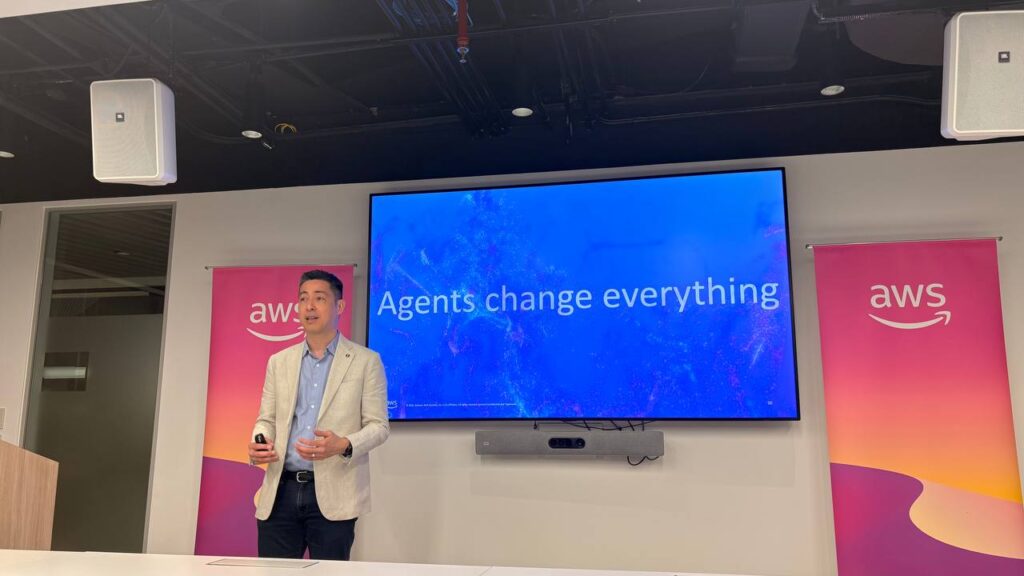
“Generative AI is powerful, but it’s reactive — it waits for a prompt,” Joel Garcia, Technology Lead for Strategic Initiatives, Amazon Web Services, ASEAN explained. “AI agents are different. They can reason, break down tasks, integrate with APIs, and actually perform work for us.”
He added that the technology has rapidly evolved into multi-agent systems capable of handling complex enterprise tasks such as IT remediation and full-stack application deployment.
Meeting customers where they are
Recognizing that organizations are at different stages of their AI journey, AWS has expanded its Marketplace to include curated, pre-built AI agents from global partners.
“Customers can be builders, or they can be buyers,” Lim said. “That’s why AWS Marketplace offers ready-to-deploy AI agents that customers can ground in their own proprietary data.”
Partners available through the marketplace include Anthropic, Salesforce, Accenture, ServiceNow, and Snowflake.
A decade in — and just getting started
As AWS looks ahead to its next decade in the Philippines, the company’s strategy is clear: invest in infrastructure, grow Filipino talent, and embed AI into systems that matter most.
“We will continue to invest in the Philippines,” Lim said. “And we will continue listening—to our customers, to government, and to the ecosystem—on what infrastructure and innovation are needed in-country.”
With AI adoption accelerating and agentic systems on the horizon, AWS’s expanding role suggests that the Philippines is not just consuming advanced technology — but actively shaping how it is applied.