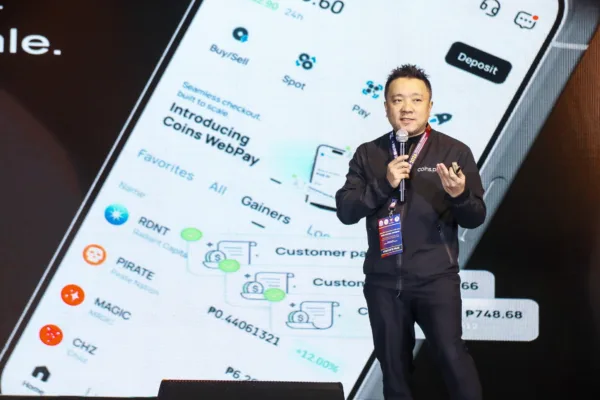




VASP moratorium policy in the Philippines has been extended by the Bangko Sentral ng Pilipinas (BSP), reinforcing what industry observers describe as a deliberate shift toward a risk-first approach to crypto oversight.
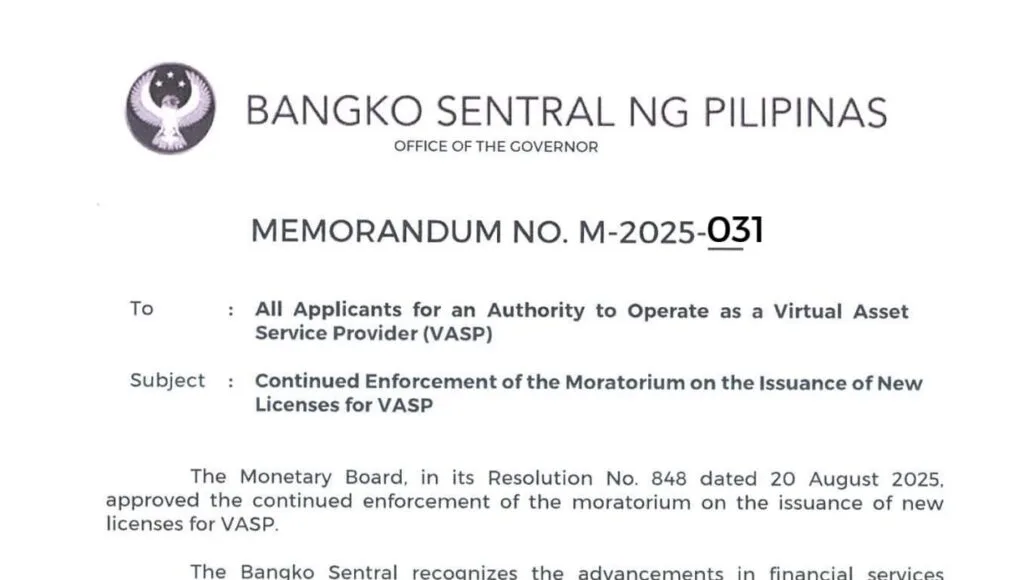
The decision means no new players will be admitted into the BSP’s Virtual Asset Service Provider (VASP) framework for now, even as global crypto markets attempt to stabilize after years of volatility, high-profile collapses, and regulatory tightening abroad.
At stake is not just market entry, but the direction of crypto policy in the Philippines — and what the pause means for the 17 licensed VASPs already operating, including major consumer-facing platforms such as Coins.ph and GCash.
A shift toward supervision over expansion
The VASP moratorium Philippines policy was first introduced as part of the BSP’s broader reassessment of crypto-related risks. Rather than expanding the pool of licensed operators, the regulator has opted to focus on supervising and strengthening oversight of existing entities.
BSP officials have consistently framed digital assets not as prohibited, but as high-risk instruments that require proportional regulation. Under current rules, VASPs must comply with anti-money laundering standards, consumer protection safeguards, cybersecurity controls, and capital requirements similar to those imposed on other regulated financial institutions.
By freezing new licenses, the central bank appears to be prioritizing regulatory depth over market breadth.
The message to the industry is clear: consolidation and compliance come before expansion.
Why the moratorium matters now
The extension comes at a time when global regulators are tightening oversight of crypto platforms following major exchange failures and liquidity crises in recent years.
While the Philippines did not experience a domestic crypto collapse on the scale seen elsewhere, local investors were exposed to global platforms that later unraveled.
The BSP’s approach suggests an effort to preempt systemic vulnerabilities before they escalate.
Unlike jurisdictions that moved from permissive to punitive after crises emerged, the Philippines is attempting to recalibrate mid-cycle — keeping licensed operators active while preventing an influx of new entrants that could stretch supervisory capacity.
The moratorium also reduces the risk of regulatory arbitrage, where firms seek jurisdictions perceived as easier to enter.
Impact on the 17 licensed VASPs
For the 17 licensed players, the pause creates a different competitive landscape.
On one hand, it shields incumbents from immediate competition. New startups cannot secure BSP authorization while the moratorium is in place, effectively protecting market share for existing operators.

On the other hand, heightened scrutiny may raise compliance costs. With no new entrants to evaluate, regulators can devote more attention to monitoring transaction flows, cybersecurity posture, liquidity management, and consumer disclosures among current license holders.
For companies like Coins.ph, one of the country’s longest-running crypto platforms, regulatory certainty provides operational continuity. Meanwhile, GCash, which offers crypto services through its app ecosystem, benefits from regulatory clarity but remains subject to tighter reporting and risk controls.
The moratorium does not signal deregulation. It signals intensified supervision.
A “risk-first” regulatory philosophy
The BSP has repeatedly emphasized that financial innovation must not compromise financial stability. In the case of digital assets, this translates into a layered approach:
- Strict onboarding and KYC requirements
- Ongoing AML monitoring
- Technology risk management standards
- Clear consumer risk disclosures
Rather than banning crypto activity outright, the central bank is containing it within a controlled perimeter.
This aligns with the BSP’s broader digital finance strategy, which encourages innovation in payments and digital banking but under defined guardrails. Digital banks, for example, were also subject to a temporary licensing pause in earlier years while regulators evaluated market capacity and systemic implications.
The VASP moratorium Philippines framework reflects a similar pattern.
What it signals to potential entrants

For startups hoping to enter the crypto market, the extension introduces uncertainty around timelines. While the BSP has not permanently closed the licensing window, it has made clear that any reopening will depend on supervisory readiness and market conditions.
This could shift entrepreneurial focus toward partnerships with existing licensed VASPs rather than standalone applications.
It may also push some firms to explore non-custodial models or technology service roles that do not require direct VASP licensing, although these structures remain subject to evolving interpretations.
The longer the moratorium persists, the more it may shape market structure — favoring established, capitalized players over early-stage challengers.
Consumer protection as the anchor
For retail users, the pause could offer a measure of reassurance.
Crypto adoption in the Philippines has been driven by remittances, trading activity, play-to-earn gaming, and speculative investing. However, volatility and platform failures abroad exposed retail investors to sudden losses.
By limiting the number of regulated platforms and tightening oversight, the BSP appears to be reinforcing consumer safeguards.
The regulator has repeatedly reminded the public that crypto assets are not legal tender and are not insured by the Philippine Deposit Insurance Corp. This framing positions crypto as a high-risk investment product rather than a payments substitute.
The moratorium reinforces that distinction.
Is this a temporary pause or a structural reset?
The critical question is whether the extension represents a temporary supervisory pause or a longer-term structural reset of the Philippine crypto market.
Several scenarios are possible:
- Gradual reopening with stricter criteria. The BSP could eventually lift the moratorium but impose higher capital thresholds or tighter operational requirements.
- Tiered licensing. The regulator may introduce differentiated categories based on custody, trading, or technology services.
- Prolonged freeze. If global instability persists, the moratorium could remain in place for an extended period.
What appears unlikely is a return to rapid licensing expansion.
A measured balancing act
The Philippines has historically positioned itself as open to fintech innovation while maintaining prudential discipline. The VASP moratorium Philippines policy underscores that balancing act.
Rather than signaling hostility toward crypto, the BSP’s stance suggests a preference for containment and supervision over unchecked growth.
For incumbents, the next phase will be defined less by aggressive expansion and more by regulatory compliance, operational resilience, and trust-building.
For would-be entrants, the path forward may require patience — or collaboration.
And for regulators, the challenge remains the same: allow innovation to develop without allowing risk to outrun oversight.
As global crypto markets continue to evolve, the Philippines appears to be choosing caution over acceleration — not by shutting the door, but by controlling how wide it opens.