

AMD (NASDAQ: AMD) recently received the prestigious “2024 Corporate Innovation Award” from the Institute of Electrical and Electronics Engineers (IEEE) during a May 3 ceremony in Boston. The award recognizes AMD for pioneering the development and deployment of chiplet architecture designs for high-performance and adaptive computing.
AMD was among the first companies to leverage the benefits of chiplet architecture at scale to deliver significant advances in processor performance, efficiency and flexibility, extending the historical performance gains of Moore’s Law.
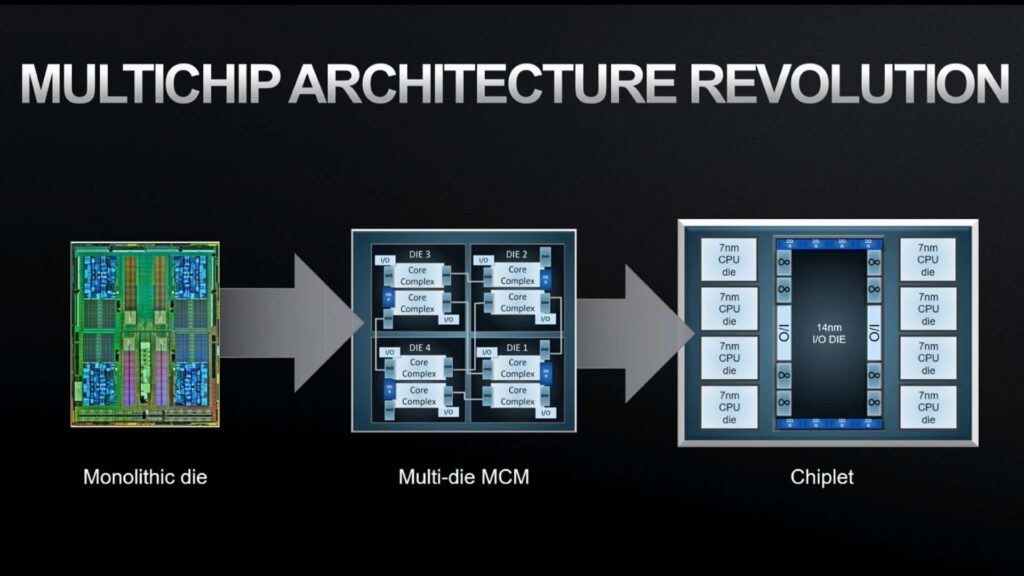
IMAGE CREDIT: https://www.pcgamesn.com/
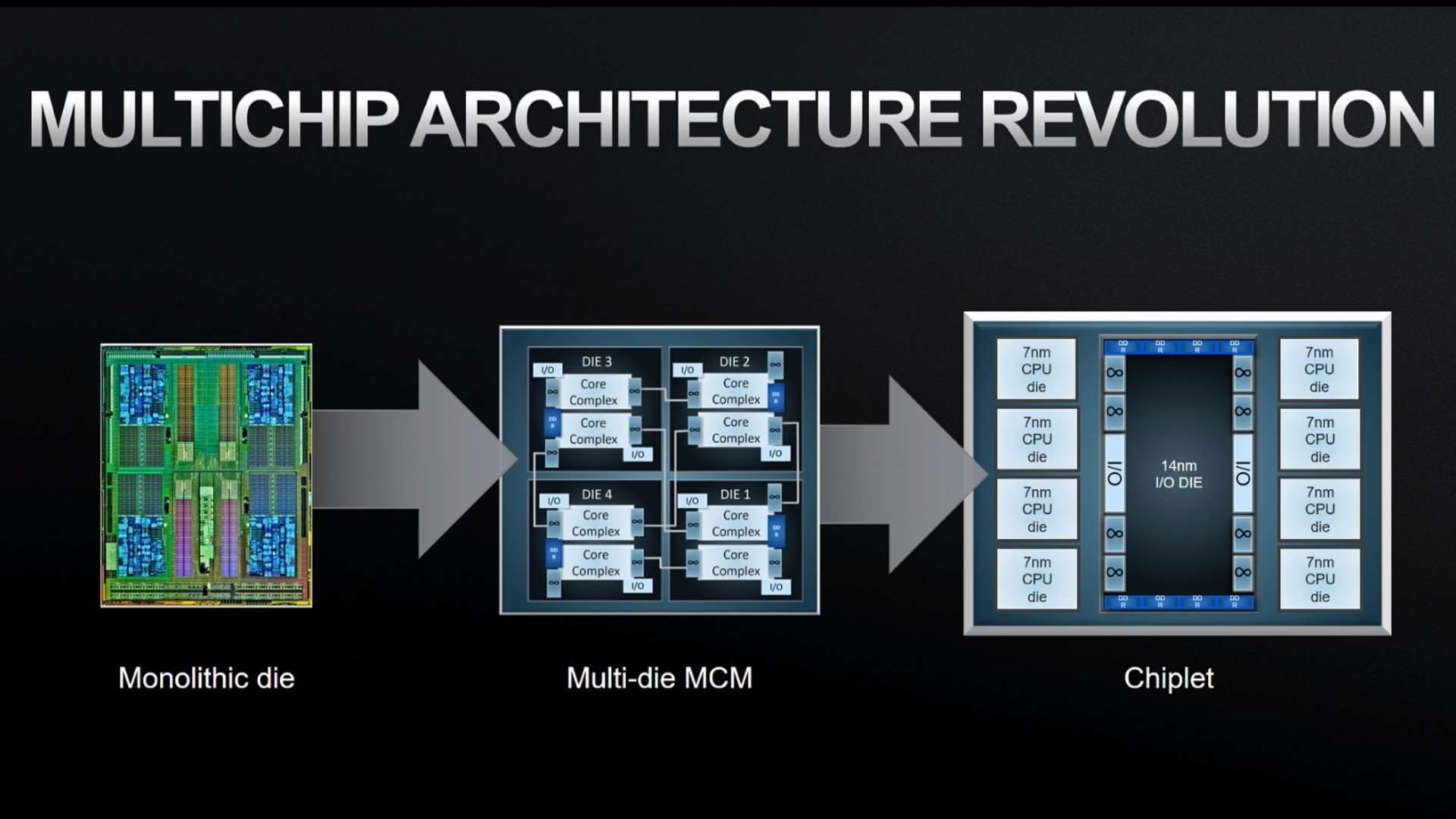
In 2018, AMD introduced the first processor to feature a revolutionary chiplet-based x86 CPU design, the second-generation AMD EPYC™ server processor powered by the “Zen 2” core architecture.
Since then, AMD has incorporated chiplet architectures across its leadership product portfolio, including AMD Ryzen™ CPUs for PCs, AMD EPYC processors for data centers and AMD Instinct accelerators for high-performance computing (HPC) and AI.
“Several years ago, our passionate, world-class engineering teams began addressing the scaling challenges of traditional chip design,” said Mark Papermaster, executive vice president and chief technical officer at AMD.
“Everyone takes modular architecture for granted now, but during that time, it was radical thinking. Its success is as much a feat of engineering as a testament to the power of teams with diverse skills and expertise working together, despite uncertainty and risk, toward a common vision,” he added.
AMD engineered the new processor design approach by distributing traditionally monolithic SoC designs into multiple smaller “chiplets.” This revolutionary shift allowed AMD to accelerate time-to-market with highly performant, energy-efficient, and cost-effective chips that leveraged common designs for multiple markets.
The company’s leadership in driving chiplet design and innovation at scale continues to extend gains in computing performance and efficiency, enabling the industry to better address some of the world’s most challenging problems.
For example, chiplet-based AMD EPYC processors are in use within the Frontier supercomputer, the world’s first exascale supercomputer that is helping scientists to develop innovative technologies for energy, medicine, and materials.
For nearly a century, the IEEE Awards Program has paid tribute to researchers, inventors, innovators, educators, and practitioners whose exceptional achievements and outstanding contributions have made a lasting impact on technology, society, and the engineering profession.
Each year, the IEEE Awards Board recommends a small number of extraordinary individuals for IEEE’s most prestigious honors.
This is the second time AMD has received this award; in 2005 IEEE recognized the company for innovations in the evolution of the x86 microprocessors and its extension to a 64-bit architecture, which is the foundation of modern data centers and PCs.