The Philippine financial sector is entering a major cybersecurity transition as banks, e-wallets, and digital lenders prepare for the Bangko Sentral ng Pilipinas (BSP)‘s planned phase-out of SMS-based one-time password (OTP) by mid-2026.
What was once considered a reliable second layer of protection is now increasingly viewed as one of the weakest links in digital banking security.
The shift comes amid a surge in cyber fraud cases driven less by technical hacking and more by social engineering attacks, SIM swap schemes, phishing campaigns, and identity-based fraud targeting mobile users.
As previously reported in FintechNewsPH, executives from ADVANCE.AI have warned that the BSP’s OTP phase-out signals a broader structural reset in how trust and identity verification will work across the Philippine digital finance ecosystem.
For years, SMS OTPs became the default authentication layer for banks and fintech apps because they were simple, familiar, and relatively inexpensive to deploy. But fraud tactics evolved faster than the security systems built around them.
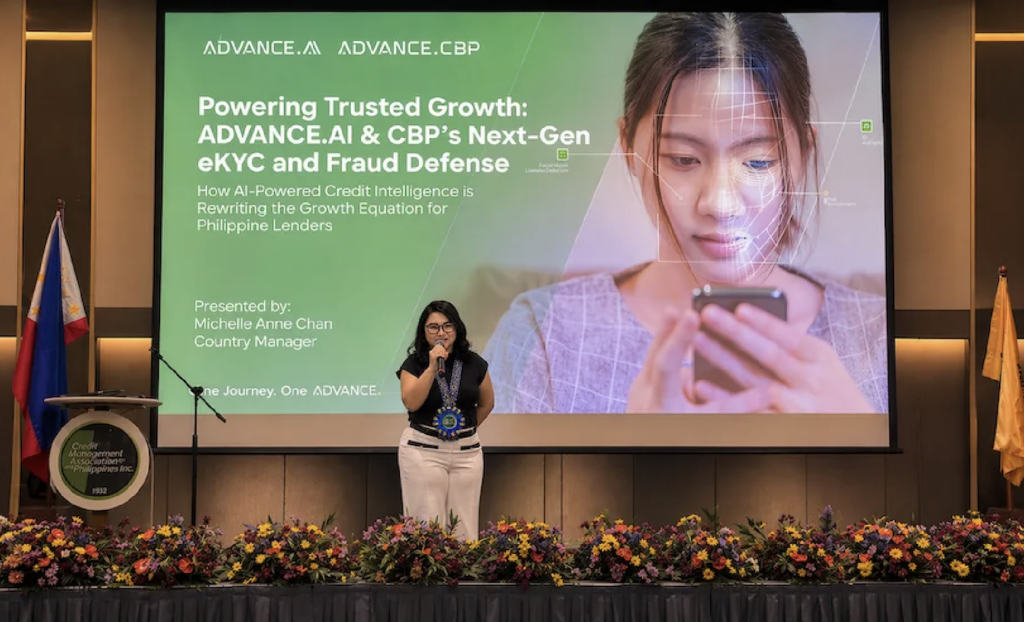
Michelle Anne Chan, Country Manager of ADVANCE.AI, delivering her speech at an event
“The BSP’s move is a direct response to how fraud itself has evolved,” said Michelle Anne Chan, Country Manager of ADVANCE.AI Philippines, in an exclusive interview with FintechNewsPH. Organized fraud groups are now exploiting identity verification gaps rather than directly breaching banking infrastructure. Cybersecurity experts say the problem is no longer just stolen passwords, with attackers increasingly targeting the customer identity layer itself.
This shift in threat dynamics is also reflected in how cybersecurity specialists are reassessing the role of traditional authentication methods.
According to ManageEngine Chief IT Security Evangelist Subhalakshmi Ganapathy, OTPs are no longer enough to secure digital banking transactions because fraudsters can intercept or manipulate authentication codes through phishing and SIM-related attacks. This changing threat landscape is forcing financial institutions to redesign how users log in, authorize payments, and recover accounts.
From OTPs to identity-centric security
Rather than relying on a single authentication method, banks are now moving toward layered and adaptive security systems. These include:
- Facial biometrics and liveness detection
- Device intelligence
- Behavioral analytics
- Passkeys and passwordless authentication
- In-app verification systems
- Risk-based authentication triggered by unusual activity
The goal is to verify the actual user instead of simply validating access to a phone number or SIM card.

IMAGE CREDIT: Freepik
Several institutions are also exploring “silent authentication” technologies that work in the background without requiring customers to manually enter OTPs.
Earlier this year, PLDT Enterprise and 8×8 launched Silent Mobile Authentication in the Philippines, allowing systems to verify users through mobile network and SIM-based signals instead of SMS codes.
Industry players say the transition is not only about security but also about improving customer experience.
Many banking users have long complained about delayed OTP delivery, expired codes, weak mobile signals, and login interruptions. Biometrics and adaptive authentication systems aim to reduce that friction while strengthening fraud prevention.
Why the transition will not be easy

IMAGE CREDIT: Shutterstock
Despite growing urgency, replacing OTP infrastructure remains a major operational challenge for many banks and fintech companies.
Legacy banking systems were not originally designed for biometric authentication or AI-driven fraud detection. Integrating newer security technologies often requires expensive infrastructure upgrades and coordination across compliance, onboarding, customer service, and fraud monitoring teams.
The shift also introduces new risks.
Cybersecurity specialists warn that account recovery may become the next major weak point in digital banking security. As banks strengthen login authentication, attackers are increasingly targeting recovery flows used when customers lose devices, forget credentials, or change mobile numbers.
This means financial institutions must rethink not only how users access accounts but also how they securely regain access without exposing themselves to fraud.
Security becomes central to digital banking growth
IMAGE CREDIT: BSP
The BSP’s OTP phase-out order arrives at a critical moment for the Philippine financial industry.
Digital banking adoption continues to accelerate as more Filipinos rely on app-based financial services for savings, payments, lending, and remittances. The BSP is also reviewing new digital banking license applications as competition intensifies across the sector.
But as digital finance scales, trust is becoming just as important as convenience.
Financial institutions are now under pressure to prove they can protect users from increasingly sophisticated cyber threats without creating excessive friction in the customer journey.
Industry observers say the banks that succeed in the post-OTP era will likely be those capable of balancing three priorities simultaneously: security, speed, and user trust.
The June 2026 deadline may still be months away, but the redesign of Philippine digital banking security has already begun.