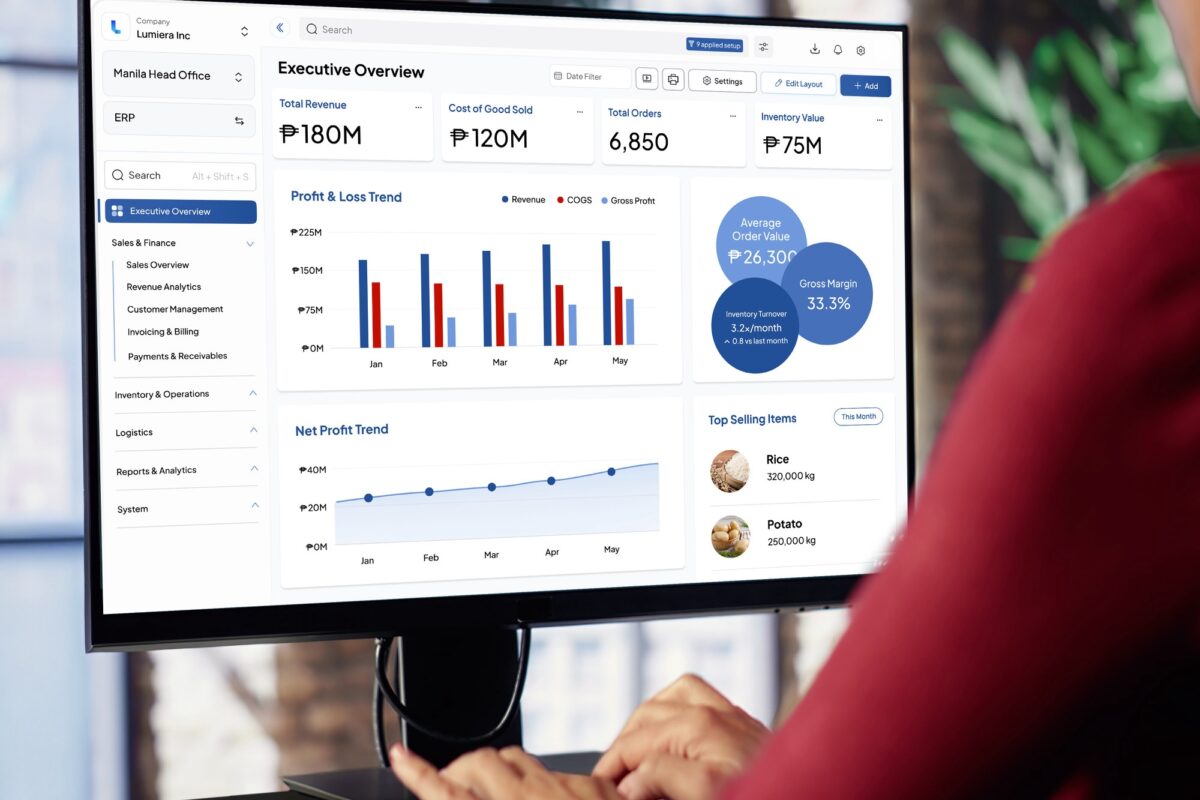
As Filipino businesses accelerate digital adoption, enterprise software providers are being pushed to deliver solutions that reflect not just global standards, but local realities.
According to the CPA Australia Asia-Pacific Small Business Survey, 69% of Philippine SMEs that invested in technology in 2024 reported improved profitability — well above the regional average of 56%. The data underscores a growing demand for systems that can support both efficiency and compliance in a fast-evolving market.
Against this backdrop, HashMicro is positioning its AI-native enterprise resource planning (ERP) platform as a solution designed specifically for how Philippine organizations operate, scale, and grow.
Bridging the gap left by global ERP systems

IMAGE CREDIT: shutterstock
Many global ERP platforms entered the Philippines built around Western business structures, often requiring local firms to adapt their workflows to fit the software.
In practice, this has led to persistent friction, especially among SMEs.
Approval processes may not reflect how decisions are typically made within Filipino organizations, where consensus-building often precedes final sign-off. Compliance requirements tied to agencies such as the Bureau of Internal Revenue (BIR), Social Security System (SSS), PhilHealth, and Pag-IBIG Fund are also frequently treated as add-ons rather than core features.
Beyond these gaps, legacy systems often struggle with usability and flexibility. Businesses report clunky interfaces, duplicated data entry across modules, and continued reliance on spreadsheets to bridge system limitations — leading to inefficiencies, delays, and increased risk of errors.
Over time, these challenges can translate into higher operational costs, particularly when companies turn to third-party consultants for extensive customization just to make systems work in a local context.
Designing for local workflows and compliance
HashMicro says its experience in the Philippine market has informed how its platform is built — from approval hierarchies to compliance integration.
Rather than retrofitting features, the platform embeds local regulatory requirements directly into workflows.
Tax deadlines, contribution tracking, and statutory reporting are integrated into day-to-day operations, allowing businesses to stay compliant without managing separate processes.
The system is also designed with mobile-first usage in mind, reflecting the Philippines’ high mobile penetration. Features such as role-based dashboards and localized approval chains aim to mirror actual reporting structures within organizations.
Embedding AI to address adoption challenges

ERP adoption remains a persistent challenge, particularly for small and medium-sized businesses. Systems are often implemented at significant cost, only for teams to bypass them due to complexity or poor usability.
HashMicro’s approach centers on integrating artificial intelligence directly into the platform through its built-in assistant, Hashy AI. Rather than functioning as a separate tool, the AI operates within existing workflows — surfacing relevant information, guiding users through processes, and reducing the learning curve.
This means tasks such as processing requests or tracking approvals can be performed with minimal training, potentially improving system adoption across different roles and levels of technical familiarity.
Supporting growth without heavy implementation costs
HashMicro’s AI-native ERP platform offers a full suite of modules covering finance, human resources, inventory, procurement, and other core functions. It is designed to scale alongside business growth, with implementation handled without reliance on external consultants or prolonged customization cycles.
HashMicro also emphasizes local support, positioning its team as familiar with the nuances of Philippine compliance and operations — from handling BIR audits to resolving discrepancies in government filings.
For businesses transitioning from legacy systems or disconnected tools, the company frames its platform as an alternative that combines enterprise-grade functionality with localized design.
“We have been in this market long enough to know what works here and what does not. That knowledge is in the product — how approval flows are built, how compliance is handled, and how the AI assists real teams doing real work,” said Ricky Halim.
As digital transformation continues to accelerate, the ability of enterprise platforms to adapt to local market conditions may become a defining factor in how effectively businesses capture the benefits of technology investments.