As industrial facilities grow smarter and more connected, so do the risks that come with them. From sprawling warehouses to highly automated factory floors, businesses are now grappling with how to secure environments that generate massive volumes of real-time data.
Japan-based IT solutions provider Fujisoft is stepping into this space with a new approach — one that leans heavily on artificial intelligence to strengthen physical security while keeping operational efficiency intact.
The company recently demonstrated an AI-powered site security system built on the AMD Embedded+ platform, signaling its push toward more intelligent, high-performance surveillance solutions designed for modern industrial environments.
Moving beyond motion detection
IMAGE CREDIT: Fujisoft
Traditional security systems often rely on basic motion detection, which can lead to frequent false alarms and missed threats. Fujisoft’s system aims to address these gaps through AI-driven image recognition, enabling more accurate identification of potential security incidents.
By analyzing visual data in real time, the system can distinguish between routine activity and genuine threats — an increasingly important capability as facilities deploy more cameras and sensors across their operations.
Fujisoft completed a demonstration unit in 2025 and is now refining the technology ahead of a wider rollout, suggesting that commercial deployment may not be far off.
Powered by integrated AI and edge computing

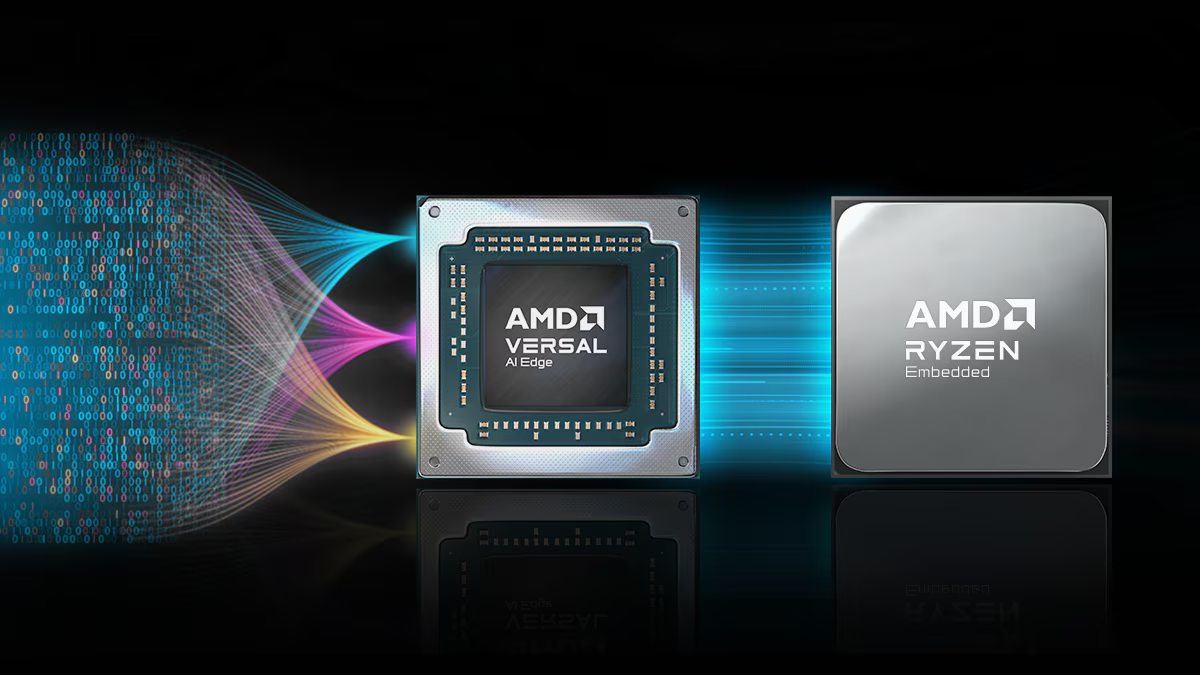
At the heart of the system is AMD Embedded+ architecture, which combines a Ryzen Embedded processor with a Versal adaptive system-on-chip (SoC) on a single board. This integrated design allows for high-speed AI inference and low-latency processing directly at the edge—where data is generated.
The platform’s programmable I/O capabilities also enable it to support a wide range of sensors, making it adaptable to different industrial use cases. By consolidating multiple computing functions into one architecture, the solution reduces design complexity and can help lower deployment costs.
According to the IT solutions provider, this integration also accelerates time to market — an important factor as demand grows for scalable and responsive security systems.
Addressing real-world operational challenges

Naoya Yanagitsubo, a manager at Fujisoft, said the system was shaped by ongoing discussions with customers facing evolving security and operational challenges.
He noted that combining adaptive computing with traditional x86 processing allows the company to leverage both hardware and software strengths, positioning the solution to better meet the needs of increasingly complex environments.
A growing role for AI in physical security
Fujisoft’s development reflects a broader industry trend: the convergence of AI, edge computing, and physical security. As enterprises continue to digitize operations, the ability to process and act on data instantly — without relying solely on cloud infrastructure — is becoming a competitive advantage.
For sectors such as manufacturing, logistics, and critical infrastructure, smarter security systems are no longer optional. They are quickly becoming a core component of digital transformation strategies.
With its latest demonstration, Fujisoft is signaling where the market may be heading next: toward intelligent, adaptive security systems that not only monitor environments but actively understand them.