


Vertiv’s extreme densification, gigawatt-scale deployments, and “data center as a unit of compute” redefine infrastructure planning
Data center design and operations are entering a new phase as artificial intelligence workloads push facilities to unprecedented levels of density, scale, and complexity, according to a new report from Vertiv (NYSE: VRT), a global provider of critical digital infrastructure.
In its Vertiv™ Frontiers report, the company outlines how AI — particularly high-performance computing (HPC) and large language models — is accelerating a fundamental rethink of how data centers are powered, cooled, and built.
The report identifies a set of macro forces reshaping the industry, from extreme densification and gigawatt-scale deployments to the growing need to treat the data center as a single, integrated “unit of compute.”
“The data center industry is rapidly evolving how it designs, builds, operates, and services facilities in response to the density and speed demanded by AI factories,” said Scott Armul, Vertiv’s Chief Product and Technology Officer.
“Cross-technology forces are driving higher-voltage DC power architectures, advanced liquid cooling, and new approaches such as on-site energy generation and digital twins — capabilities that are becoming critical as AI scales,” he added.
Four forces reshaping the data center
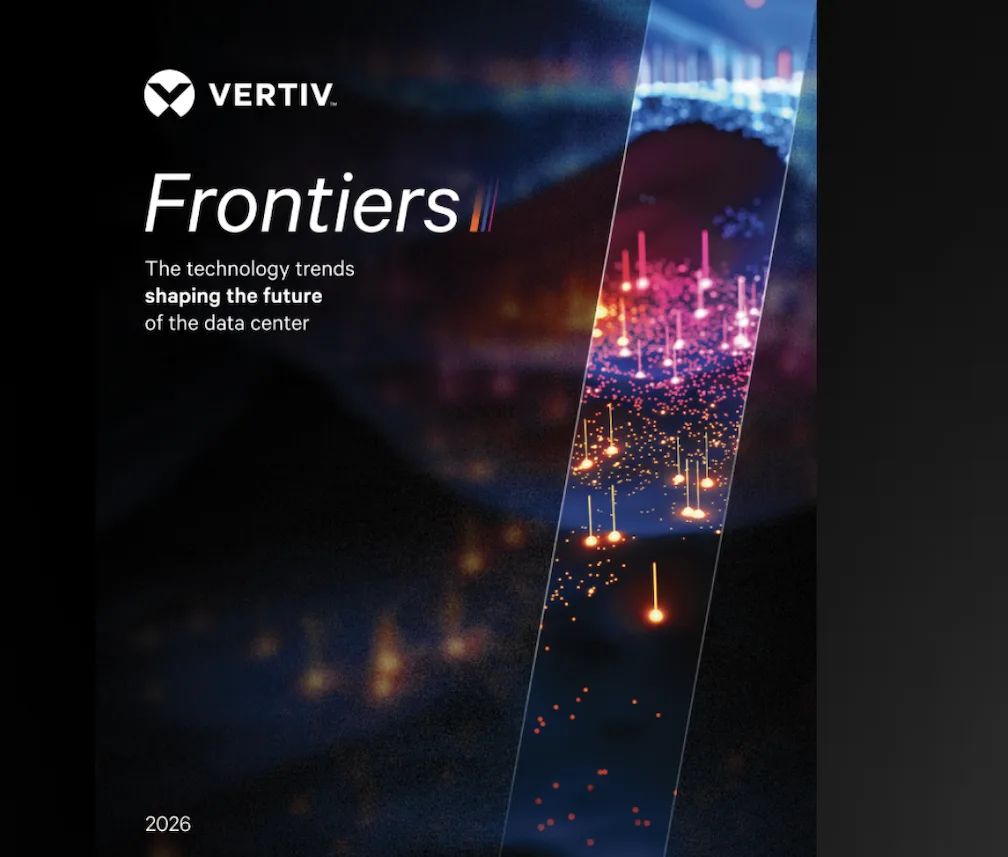
The Vertiv Frontiers report expands on the company’s earlier annual data center trends outlook, identifying four structural forces now defining infrastructure strategy:
- Extreme densification, driven by AI and HPC workloads that far exceed traditional rack power levels
- Gigawatt scaling at speed, as hyperscale and AI-focused facilities are deployed faster and at larger capacities
- Data center as a unit of compute, where IT and infrastructure are designed and operated as one system
- Silicon diversification, requiring infrastructure that can support a growing mix of chips and accelerators
These forces, Vertiv said, are already translating into five major technology and operational shifts.
Powering up for AI
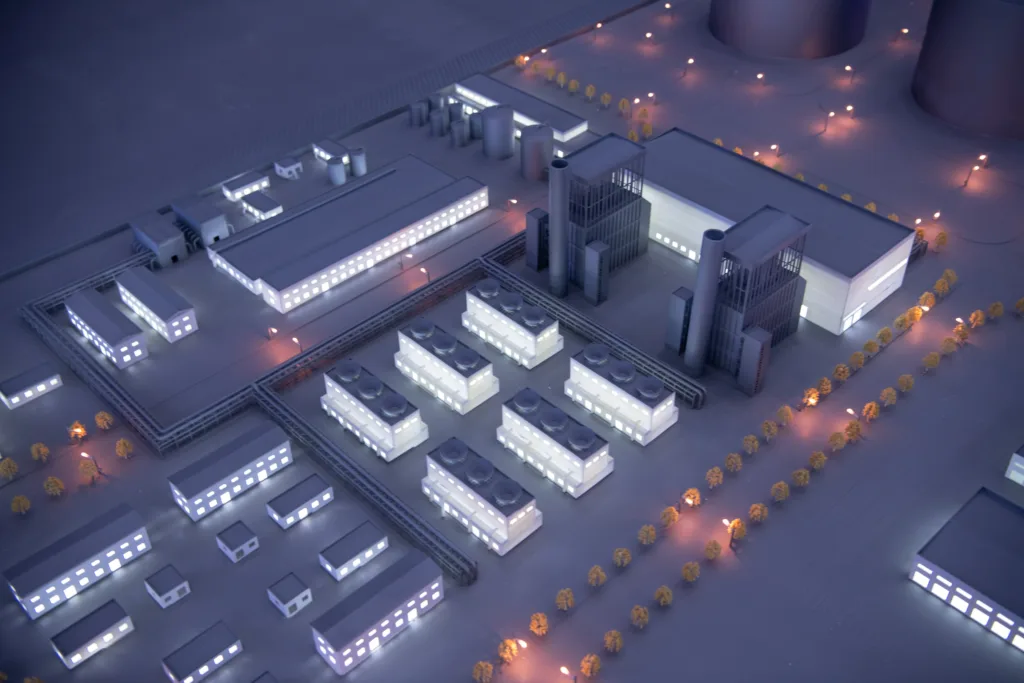
Most data centers today still rely on hybrid AC/DC power architectures, which involve multiple conversion stages and growing inefficiencies at higher densities.
As AI racks demand more power, Vertiv expects a gradual shift toward higher-voltage DC systems, which reduce current, minimize conductor size, and cut conversion losses by centralizing power conversion at the room level.
While hybrid systems will remain common in the near term, higher-voltage DC architectures — along with on-site generation and microgrids — are likely to gain traction as rack densities climb and power availability becomes more constrained.
Distributed AI takes shape
While billions of dollars have flowed into hyperscale AI data centers to support large language models, Vertiv sees inference increasingly moving closer to end users.
For highly regulated industries such as finance, healthcare, and defense, private or hybrid AI environments may be necessary to meet data residency, security, and latency requirements.
This shift could drive demand for flexible, high-density power and liquid cooling solutions, enabling both new builds and retrofits of existing on-premise facilities.
Energy autonomy moves to the forefront
Resiliency has long required short-term backup power, but power grid constraints are pushing operators to consider extended on-site energy generation — particularly for AI-heavy data centers.
Technologies such as natural gas turbines and “Bring Your Own Power (and Cooling)” strategies are emerging as practical responses to limited grid capacity, according to the report.
Digital twins speed up AI deployments

As AI factories grow more complex, speed has become a competitive differentiator. Vertiv points to digital twin technology as a way to virtually design, test, and optimize data centers before physical deployment.
By integrating IT and infrastructure in prefabricated, modular designs, operators can deploy entire “units of compute” and cut time-to-token by as much as 50 percent.
This approach, the company said, will be critical to delivering future gigawatt-scale AI campuses efficiently.
Adaptive liquid cooling becomes mission-critical
Liquid cooling has rapidly shifted from niche to necessity as AI workloads push thermal limits. Vertiv expects the next phase to involve AI-enhanced cooling systems that can monitor performance, predict failures, and dynamically optimize fluid management. These adaptive systems could improve reliability and uptime for high-value AI hardware and workloads.
A broader infrastructure rethink

Vertiv operates in more than 130 countries, providing power, thermal, and IT infrastructure solutions across data centers, networks, and industrial environments.
The company said its integrated portfolio is designed to help customers navigate the rising complexity of AI-era infrastructure while maintaining performance and resilience.
More details on Vertiv’s data center outlook and the Vertiv™ Frontiers report are available at Vertiv.com.