


The Philippines has maintained its standing in the global credit markets, as S&P Global Ratings affirmed the country’s long-term credit rating at “BBB+” and short-term rating at “A-2.”
However, reflecting the tightening grip of global volatility, the agency has revised its outlook from “positive” to “stable,” citing the escalating economic fallout from the Middle East conflict.
The affirmation signals that despite a darkening geopolitical horizon, the Philippines’ fundamental economic engine remains resilient. A stable outlook suggests that the country’s rating is unlikely to move in either direction over the next two years, providing a sense of predictability for investors and fintech players navigating the local landscape.
Macro-resilience amid global headwinds
S&P’s report highlights the Philippines’ “above-average economic growth” as a primary buffer against external shocks. The agency projects a robust GDP expansion of 5.8% for 2026, with an expected climb to 6.2% between 2027 and 2029.
While the Middle East conflict has introduced higher risks to the country’s external and fiscal metrics, S&P noted that the nation’s external position remains an “anchor of strength.” This is supported by a declining fiscal deficit and a banking system that continues to show remarkable stability.
The BSP’s stabilizing hand
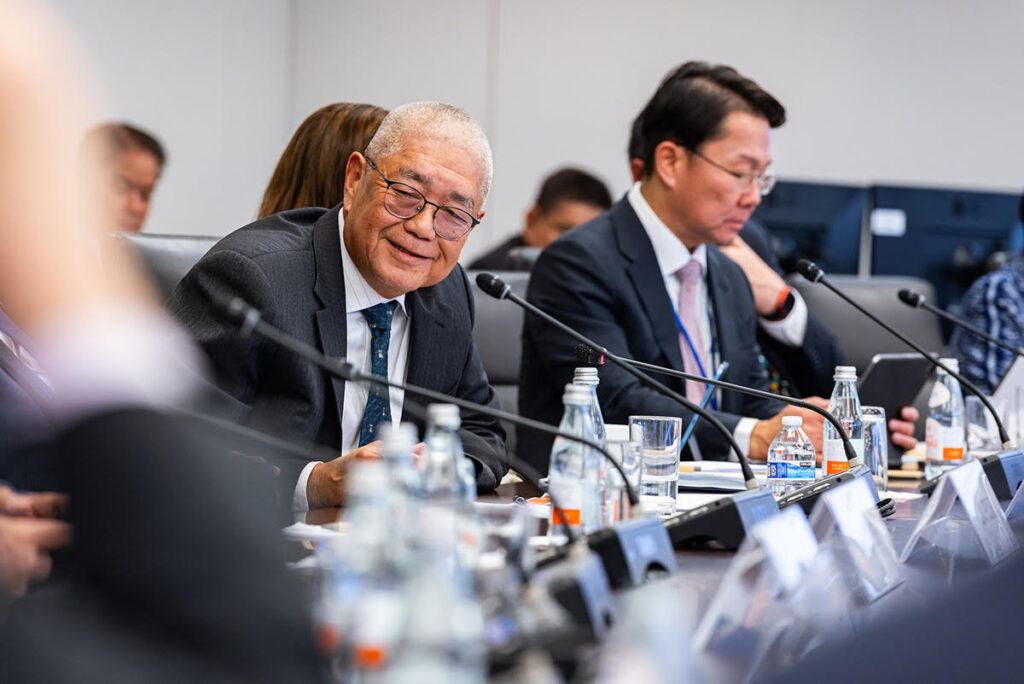
BSP Governor Eli M. Remolona, Jr. (IMAGE CREDIT: BSP)
Bangko Sentral ng Pilipinas (BSP) Governor Eli M. Remolona, Jr. emphasized the central bank’s proactive stance in the face of these shifts. “The BSP will continue to monitor local and overseas data to effect policies aimed at safeguarding price and financial stability amid a challenging economic and geopolitical landscape,” Remolona stated.
The central bank’s war chest remains formidable. As of end-March 2026, the Philippines’ gross international reserves (GIR) stood at US$107.5 billion. This liquidity buffer is equivalent to 7.1 months’ worth of imports and nearly four times the country’s short-term external debt, providing the BSP significant room to maneuver.
Implications for the financial sector
For the burgeoning fintech and financial services sector, an investment-grade rating is more than a badge of honor — it ensures affordable access to funding and lower credit risk.
S&P specifically credited the BSP’s “strengthened oversight” for bolstering the stability of the domestic banking system in recent years.
As the Philippines balances high growth with external pressures, the “BBB+” rating ensures the government can continue to fund essential digital infrastructure and social programs, even as it navigates the high-stakes environment of 2026.