



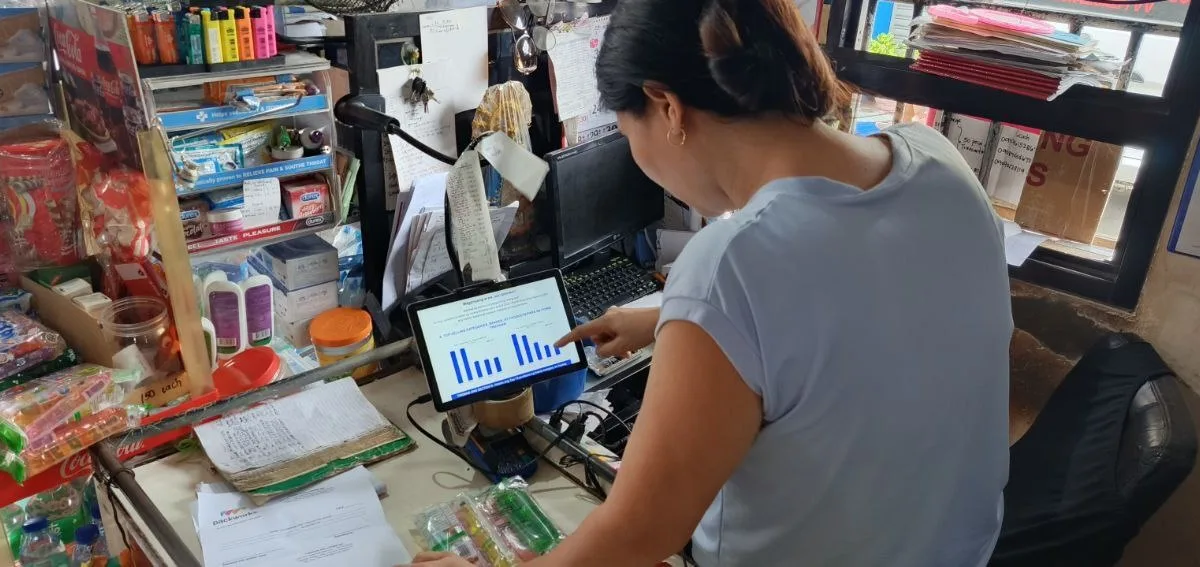
Growth in the Philippines’ micro-retail sector is increasingly being driven outside the capital, as regional sari-sari stores outpace Metro Manila in both expansion and transaction activity, according to a new study by Packworks.
Drawing from over one million monthly transactions across its network of more than 300,000 stores, the startup reported that 213,051 stores actively transacted through its platform in 2025, marking a 21% increase from 176,000 in 2024 and a sharp rise from 133,000 in 2023.
These consistent increases reinforce findings from Packworks’ previous report, which highlight the historical resilience and continued growth of sari-sari stores as essential lifelines even in disaster-prone regions.
In contrast, the data also highlighted areas for further support. Region XIII (Caraga) saw an 11% growth in the number of stores, but a 15% decline in app usage, likely due to the region’s current internet penetration levels, marking an opportunity for future infrastructure development.
Regional hubs emerge as growth engines
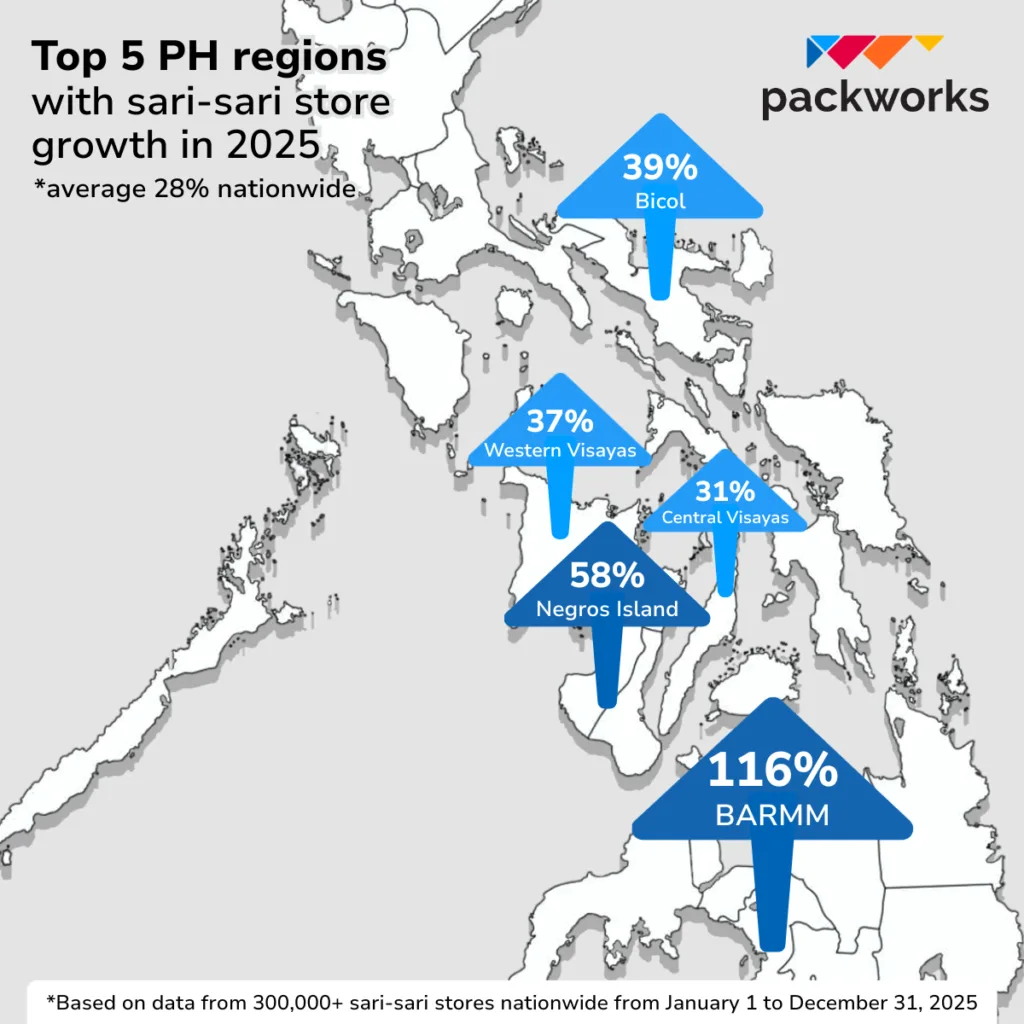
The study identified the Bangsamoro Autonomous Region in Muslim Mindanao and the Negros Island Region as key drivers of nationwide growth.
BARMM recorded the fastest expansion, with a 116% increase in active stores, alongside a 77% rise in app usage, a 119% surge in gross merchandise value (GMV), and a 97% increase in transactions. Growth accelerated in the second half of the year, following improvements in regional internet connectivity.
Meanwhile, Negros Island Region posted a 58% increase in active stores, with app usage jumping 106% and both GMV and transactions rising by more than 100%.
“We are seeing a shift where regional economies are becoming the new centers of growth for the sari-sari store sector,” said Andoy Montiel. “While Metro Manila remains a stable core, regional store owners are rapidly adopting digital tools to serve a broader customer base.”
Metro Manila shows efficiency gains
IMAGE CREDIT: Packworks
In contrast, the National Capital Region showed a “quality over quantity” trend.
While the number of active stores slightly declined, those remaining became more productive, with app usage rising 15%, GMV increasing 31%, and transactions growing 37%.
This suggests that while growth may be plateauing in urban centers, operational efficiency and transaction value are improving.
Resilience amid disruptions
IMAGE CREDIT: Packworks
The data also highlights the resilience of micro-retailers in disaster-prone areas.
In Central Visayas, sari-sari stores rebounded quickly after a 6.9-magnitude earthquake in late September, with GMV climbing from nearly P131 million to P 158 million by December.
Similarly, stores in Central Luzon recorded a 15% increase in GMV despite being affected by Typhoon Paolo, with sales peaking during the holiday season.
These trends reinforce the role of sari-sari stores as critical economic lifelines in local communities, particularly during periods of disruption.
Connectivity gaps remain a challenge
Not all regions experienced the same momentum. Caraga Region saw an 11% increase in store count but a 15% decline in app usage, pointing to ongoing infrastructure and connectivity challenges.
“As store owners in the provinces gain access to more resources, they are proving to be the economic backbone of their communities,” said Hubert Yap. “This surge shows that sari-sari stores are evolving into more dynamic, tech-enabled businesses capable of driving regional economic growth.”