


The Philippines recorded a US$225 million balance of payments (BOP) deficit in November 2025, bringing the cumulative shortfall for the first 11 months of the year to US$4.8 billion, according to the Bangko Sentral ng Pilipinas (BSP).
Despite the monthly deficit, the country’s external buffers continued to strengthen. Gross international reserves (GIR) [1] rose to US$111.3 billion as of end-November, providing an external liquidity cushion equivalent to 7.4 months of imports and around four times the country’s short-term external debt based on residual maturity.
The BSP said the reserve position remains more than adequate to meet balance of payments needs, support the peso, and cushion the economy against external shocks — an increasingly critical consideration amid global volatility, tighter financial conditions, and geopolitical uncertainty. [2]
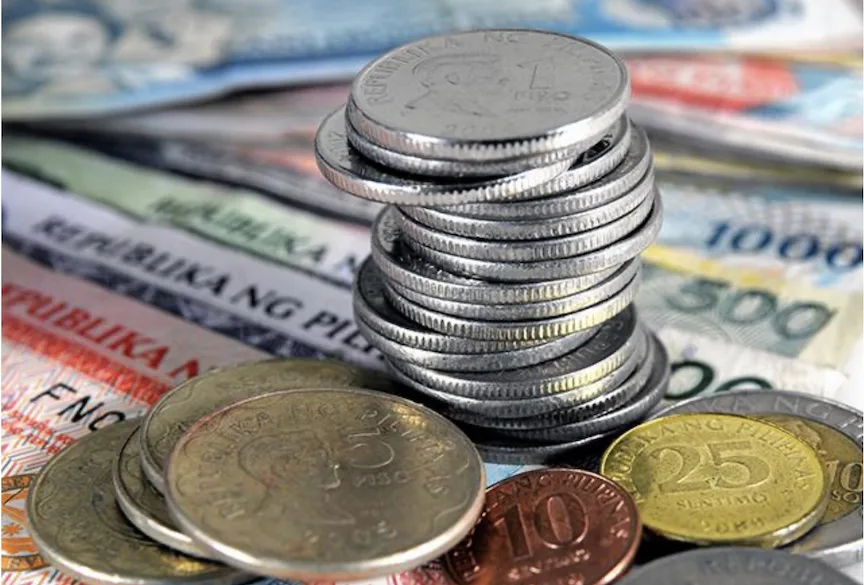
The BOP reflects the country’s transactions with the rest of the world, while GIR — comprising foreign-denominated securities, foreign exchange, and gold — serve as the first line of defense against disruptions in trade flows and capital movements. [3]
Anchoring policy in a volatile environment
The release of the latest external sector data comes as the BSP doubles down on evidence-based policymaking, a theme highlighted during its inaugural Central Banking Symposium held on November 24, 2025, in Panglao, Bohol.
In his opening remarks, BSP Governor Eli M. Remolona Jr. underscored the growing challenge of monetary policy in an era defined by frequent and overlapping shocks.
“Anchoring policy is necessary to keep the economy steady,” Remolona said, likening central banking to a fisher checking an anchor amid shifting currents. “If the anchor holds, you will be okay.”
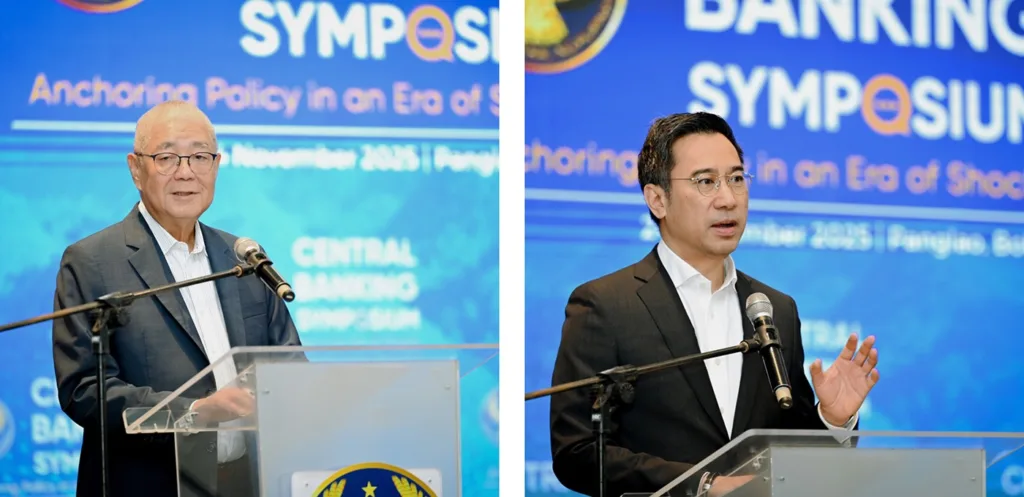
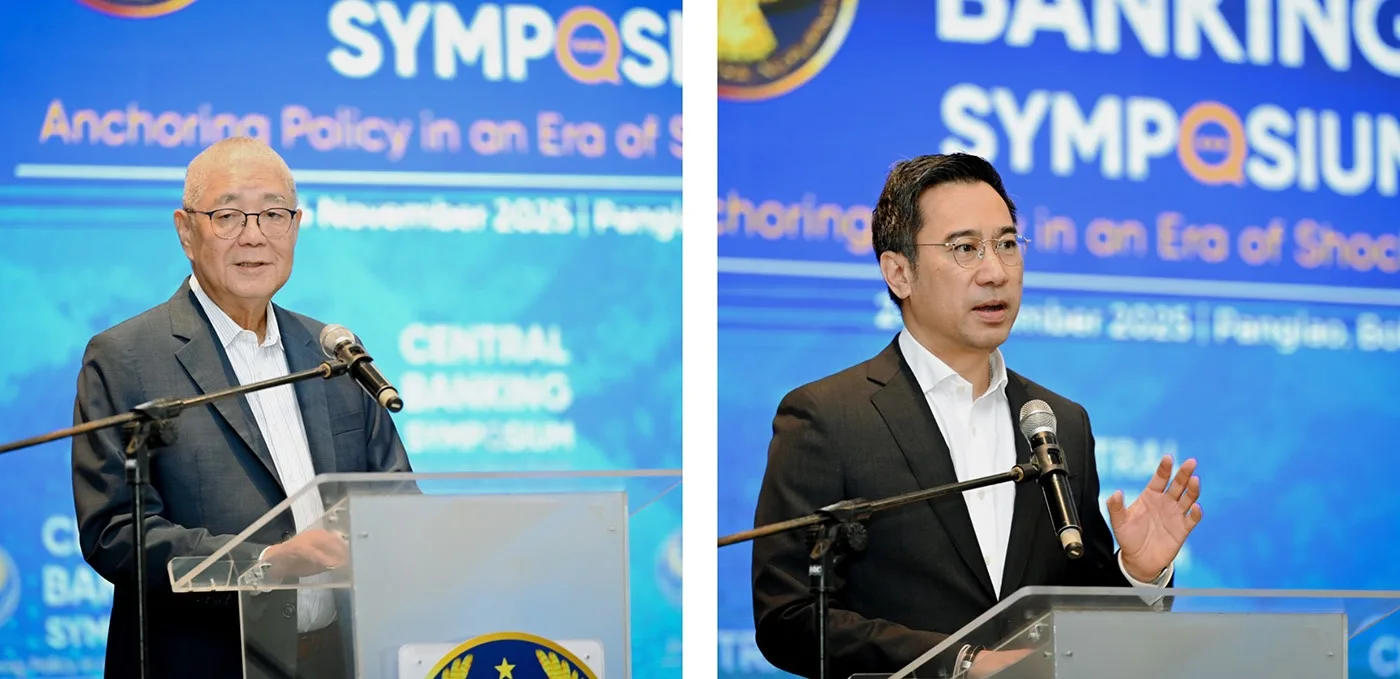
Photo shows BSP Governor Eli M. Remolona, Jr. and former Bank of Thailand Governor Sethaput Suthiwartnarueput during the Central Banking Symposium in Panglao, Bohol.
Former Bank of Thailand Governor Sethaput Suthiwartnarueput, the symposium’s keynote speaker, echoed the need for resilience over experimentation, citing former Bank of England Governor Mervyn King’s view that effective central banks should be “boring.”
“In this era of unprecedented shocks, stability requires that we also be robust,” Suthiwartnarueput said. “Robust is the new boring.”
Data, confidence, and financial stability
The symposium convened Monetary Board members, BSP senior officials, banking industry leaders, economists, and members of the financial press to examine the evolving dynamics shaping monetary policy and financial stability in the Philippines.
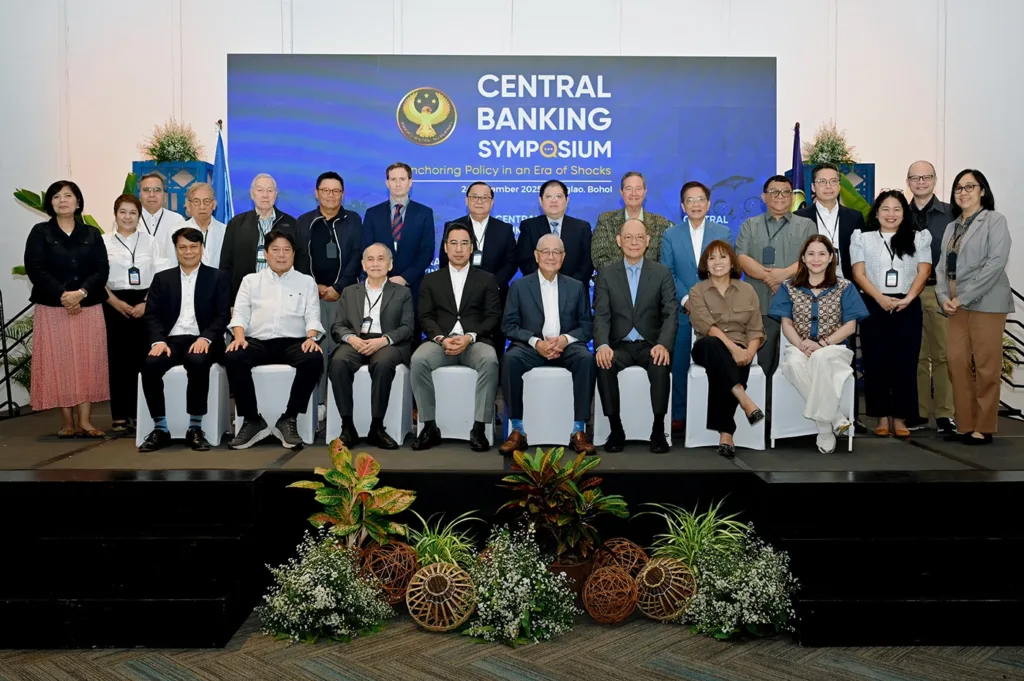
Photo shows BSP Governor Eli M. Remolona, Jr. (seated, fourth from right) with the invited speakers and central bank senior officials at the Central Banking Symposium (CBS) in Panglao, Bohol.
Discussions — led by BSP Deputy Governor Zeno Ronald R. Abenoja, UP Professor Emeritus Dante B. Canlas, and ASEAN+3 Macroeconomic Research Office economist Andrew Tsang — covered how Filipino households form inflation expectations, shifts in deposit behavior, exchange rate dynamics, and their implications for policy transmission.
Taken together, the BOP data and the BSP’s policy dialogue highlight a central theme: maintaining credibility and resilience in a volatile global environment. While external pressures continue to weigh on the balance of payments, the country’s reserve position and policy framework provide a stabilizing anchor.
As global shocks persist — from tighter monetary conditions to trade disruptions — the BSP’s emphasis on data-driven decision-making and strong buffers underscores its approach to safeguarding macro-financial stability while navigating an increasingly complex external landscape.
—
[1] Revised GIR level
[2] Specifically, the latest GIR level ensures availability of foreign exchange to meet balance of payments financing needs, such as for payment of imports and debt service, in extreme conditions when there are no export earnings or foreign loans.
[3] Short-term debt based on residual maturity refers to outstanding external debt with original maturity of one year or less, plus principal payments on medium- and long-term loans of the public and private sectors falling due within the next 12 months.