




Despite rapid economic growth and the rise of financial technology (fintech) across emerging markets especially in the Philippines — inequality remains entrenched, raising fresh questions about whether digital finance has lived up to its promise of inclusive development.
Fintech innovations such as mobile wallets, digital credit platforms, and online banking have dramatically expanded access to financial services.
In theory, these tools can deepen financial inclusion, lower transaction costs, and support broader economic goals such as reducing poverty and improving productivity. But growth alone, experts say, has not been enough to fundamentally shift the entrenched patterns of inequality seen in countries like the Philippines.

A recent World Bank report on inequality underscores this disconnect.
While the Philippines has made notable strides in reducing poverty, driving the national rate down from nearly 50 percent in 1985 to about 16.7 percent in 2018 income inequality remains high.
In 2018, the country recorded one of the highest income Gini coefficients in East Asia at 42.3 percent, indicating a wide income gap between the wealthy and the poor. The top one percent of earners captured 17 percent of national income while the bottom half shared just 14 percent.
“The Philippines aims to become a middle-class society free of poverty by 2040, but we know from global experience that no country has managed to make this transition while maintaining high levels of inequality,” said Ndiamé Diop, World Bank Country Director for Brunei, Malaysia, the Philippines, and Thailand. Inequality of opportunity and low mobility across generations “wastes human potential and slows innovation,” he added.
Fintech’s promise vs. reality
Fintech’s rapid expansion has opened doors to digital financial services for millions of Filipinos.
Mobile wallets and digital payments have proliferated, especially in urban centers and among younger demographics.
Financial inclusion advocates argue these technologies bring the previously unbanked into formal financial systems, a critical step toward facilitating savings, credit access, and economic participation.
Yet the reality on the ground remains that access does not automatically translate into equitable economic outcomes. Structural issues such as unequal opportunities, limited digital literacy, and spatial divides between urban and rural areas have muted fintech’s impact on reducing inequality.
According to the World Bank report, disparities in access to quality education and basic services from health care to sanitation begin early in life and carry through into adulthood, shaping future income and opportunity gaps.
Key barriers beyond technology

Economists and development specialists highlight several factors that limit fintech’s potential as an equalizer:
• Digital divide and capacity gaps
In parts of the Philippines, uneven digital infrastructure and limited internet access undermine widespread adoption of digital financial services. Rural and low-income populations often lack the connectivity and digital skills needed to benefit fully from fintech tools.
• Unequal economic opportunity
Digital finance can actually amplify advantages for wealthier and more educated groups, who are better positioned to leverage online credit, investment tools, and high-yield savings products. Those without digital fluency risk being left further behind.
• Regulatory and institutional constraints
Effective financial inclusion requires robust consumer protection, clear data privacy rules, and policies that ensure equitable access. Innovation has often outpaced regulatory safeguards, creating gaps that limit fintech’s potential to serve the underserved.
• Persistent structural inequality
The World Bank emphasizes that inequality in the Philippines is deeply rooted in social and economic structures — including differential access to quality education and unequal labor market opportunities. These forces reinforce income inequality regardless of digital finance adoption.
What digital finance can achieve

Despite these constraints, digital finance still holds real promise particularly when embedded within broader inclusion policies:
Targeted financial inclusion
Digital credit and mobile financial services can help lower barriers to basic financial tools for underserved groups, including small entrepreneurs and informal workers.
Gender inclusion gains
Digital accounts and mobile money services can expand financial participation among women, a group historically excluded from formal finance in many developing economies.
Informal sector integration
Low-cost fintech platforms can reach workers and businesses outside the formal sector, offering tools for savings, payments, and small loans that traditional banks often overlook.
Still, experts caution that digital finance “is not a silver bullet.” It must complement broader policy efforts including investments in education, labor market reforms, infrastructure, and social safety nets to produce meaningful and sustained reductions in inequality.
Toward inclusive growth
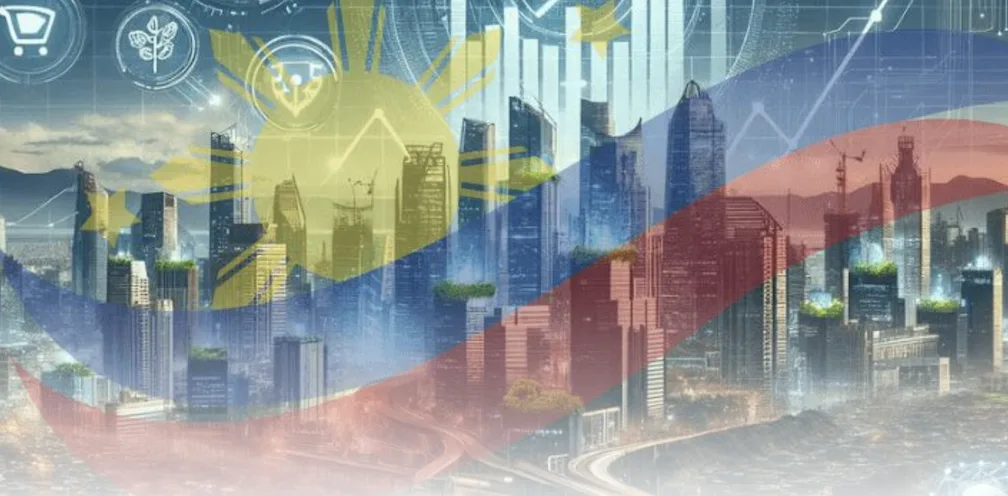
For policymakers, the way forward lies in aligning fintech innovation with targeted inclusion strategies and structural reforms.
This includes bolstering digital literacy, expanding reliable connectivity, and shaping regulatory frameworks that protect consumers while encouraging innovation.
Financial institutions and fintech companies should design products tailored to underserved populations, not just tech-savvy consumers.
Ultimately, observers say the fintech narrative must evolve from one of technological optimism to pragmatic integration — positioning digital finance as a powerful enabler within a larger anti-inequality agenda, rather than its sole solution.