



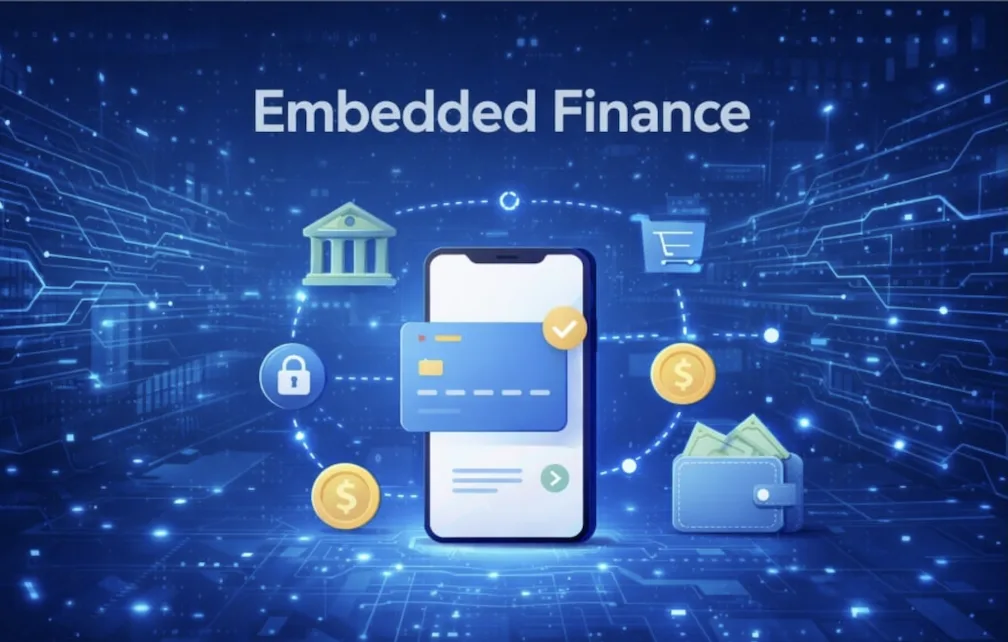
How seamless payments, lending and insurance are reshaping finance, and forcing banks and regulators to adapt.
Embedded finance or the integration of financial services directly into non-financial digital experiences —is no longer an abstract concept. What once sat on the periphery of fintech is now reshaping retail, marketplaces, and digital platforms globally and in the Philippines, allowing everyday payment, lending, and insurance products to emerge where consumers and businesses already transact.
At its core, embedded finance breaks down traditional boundaries between technology platforms and financial institutions. Instead of redirecting customers to banks or standalone apps, payments, credit, digital wallets, and even insurance are delivered within the apps, websites, and ecosystems people use daily — from e-commerce checkouts to retail apps and delivery platforms.
For Philippine retailers and digital platforms, this shift translates into richer user experiences and new commercial opportunities. Integrating embedded payments and lending helps companies reduce friction at checkout, offer tailored financing options, and boost customer loyalty, while opening up new revenue streams that were historically dominated by banks.
Retail at the forefront of the Shift
In retail, embedded finance is already visible in “buy now, pay later” (BNPL) options offered at point of checkout, digital wallets for seamless instant payment, and lending at the moment of purchase. These features reduce drop-offs in e-commerce sales and give consumers more accessible financing without ever leaving a platform.
Globally, embedded finance is forecast to expand sharply with industry analysts projecting significant market growth in embedded payments, lending and insurance over the coming years. The embedded finance ecosystem is estimated to grow more than fivefold over the next decade and capture a wide range of financial activity traditionally handled by banks and finance companies.
For Philippine platforms, that growth could stretch beyond payments and credit. Some companies are exploring embedded insurance offers alongside purchases, while others look at loyalty programs and digital savings products integrated into their existing user flows effectively blurring lines between retail, services and financial engagement.
Banks Facing a New Financial Landscape
The rise of embedded finance carries existential implications for traditional banks. On one hand, banks risk losing customer touchpoints as payments and credit decisions shift into non-bank platforms that own the interface and relationship with end users. Customers may never visit a bank app, instead experiencing banking services through retail, logistics or SaaS ecosystems.
But embedded finance isn’t only a threat, it’s also an opportunity. Many banks have begun partnering with fintech providers and platforms through Banking-as-a-Service (BaaS) offerings, providing the regulated backbone that allows non-financial companies to integrate financial services without becoming licensed banks themselves. Such collaborations enable banks to extend their reach and tap into new customer segments while sharing risk.
Yet the implications go deeper than customer ownership. Embedded lending and credit provisions shape risk distribution and credit data flows in new ways. By leveraging alternative data from platforms such as transaction histories and supply-chain patterns providers can assess creditworthiness outside traditional credit bureau models. This opens access for underserved populations and MSMEs but also introduces complexity to how loans are underwritten and regulated.
Regulatory Challenges and Consumer Protection
Regulators face a similar inflection point. Embedded finance’s decentralised nature complicates transparency and oversight. When financial services are stitched across platforms, apps and banks, it becomes harder to monitor compliance with anti-money laundering (AML), know-your-customer (KYC) and data privacy laws — all pillars of safe financial systems.
For Philippine authorities like the Bangko Sentral ng Pilipinas (BSP), the challenge will be balancing innovation with consumer safeguards. Regulators globally are experimenting with frameworks and sandboxes that allow financial innovation while containing systemic risks, but the regulatory landscape is still evolving.
Consumer protection concerns are far from theoretical. Industry commentators have pointed to potential pitfalls ranging from cybersecurity vulnerabilities in API-based integrations to consumer harm when lending is made too easy at the point of sale without adequate disclosures.
Redefining the Financial Ecosystem

As embedded finance gains traction in the Philippines, its influence extends beyond convenience. It has the potential to democratise financial access for unbanked and underbanked Filipinos by lowering barriers to entry and meeting users where they already transact.But that promise comes with responsibilities. Platforms, banks and regulators must work together to ensure that embedded offerings are secure, compliant and transparent, and that they support financial inclusion without introducing undue risk. Embedded finance may well be the future of retail and platforms, but forging a sustainable path forward will require thoughtful governance as much as innovation.