



The Philippines’ digital services economy is no longer a side story to national growth. It is increasingly central to how the country creates jobs, attracts capital, and moves closer to upper-middle-income status.
From business process outsourcing (BPO) and fintech to e-commerce, trade facilitation, and tourism platforms, digital services now sit at the intersection of productivity, inclusion, and competitiveness. Government sees this clearly.

For 2026, the Department of Information and Communications Technology (DICT) has been directed to make the ICT sector a primary engine of economic recovery and expansion, with ambitions to lift the digital economy’s contribution to as much as 12% of gross domestic product.
That target, if reached, would mark a structural shift in how the Philippine economy grows—less dependent on consumption alone, and more anchored on services, technology, and globally tradable digital work.
A sector that quietly underpins growth
Recent estimates place the digital economy’s share of GDP at about 8.4%, down from roughly 10% in prior years. Rather than signaling a slowdown, economic planners see the dip as evidence of underutilized capacity.
Digital services already underpin some of the country’s strongest growth engines. The IT-BPM sector employs millions of Filipinos and remains one of the largest sources of foreign exchange.

Fintech platforms have reshaped how Filipinos pay, save, borrow, and send money, particularly outside major urban centers. Online marketplaces and logistics platforms allow small merchants to reach customers nationwide. Digital booking platforms and marketing tools now form part of the tourism sector’s post-pandemic recovery playbook.
What ties these sectors together is connectivity. Without reliable, affordable internet, the digital services economy stalls. With it, productivity gains compound across industries.
DICT’s 2026 agenda frames this clearly: build infrastructure faster, clarify rules for data and capital, and align public spending so digital investments reinforce each other rather than compete.
Infrastructure reform as economic policy
At the center of the government’s digital push is the full implementation of the Konektadong Pinoy Act. Long criticized for slow and fragmented telecom deployment, the Philippines has historically faced high costs and uneven coverage, particularly outside Metro Manila.

The law aims to remove structural bottlenecks that have delayed tower construction, fiber rollout, and network upgrades. By simplifying permitting and encouraging competition, policymakers expect faster deployment, lower consumer costs, and improved service quality nationwide.
For digital services, this matters directly. BPO firms rely on stable, high-bandwidth connections to serve overseas clients.
Fintech platforms depend on always-on connectivity to process payments and verify identities. Tourism and trade platforms require reliable mobile data to support bookings, logistics tracking, and digital marketing.
Over time, improved connectivity is expected to lift household incomes and expand participation in the digital economy, especially in underserved provinces where online work and digital commerce can supplement traditional livelihoods.
Data policy and the bid to become a regional hub
Beyond connectivity, data policy has become a decisive factor in attracting investment. Hyperscalers, cloud providers, and data center operators look for regulatory clarity on where data can be stored, how it can be processed, and what security standards apply.
DICT’s push for clearer data localization and governance rules is designed to give that certainty. By setting predictable standards, the government hopes to position the Philippines as a trusted regional hub for digital services, capable of hosting data centers and supporting cross-border digital operations.
The implications extend beyond infrastructure. Data centers generate high-value jobs, from engineering and cybersecurity to operations and compliance. They also anchor broader ecosystems, supporting fintech firms, software developers, and digital platforms that require low-latency, secure data services.
For a country with a young, English-speaking workforce, the combination of talent and regulatory clarity could translate into sustained foreign direct investment rather than one-off projects.
Fintech and inclusion as growth multipliers
Few sectors illustrate the social impact of digital services as clearly as fintech. E-wallets, digital banks, and payment platforms have expanded access to financial services for millions of Filipinos who were previously unbanked or underbanked.
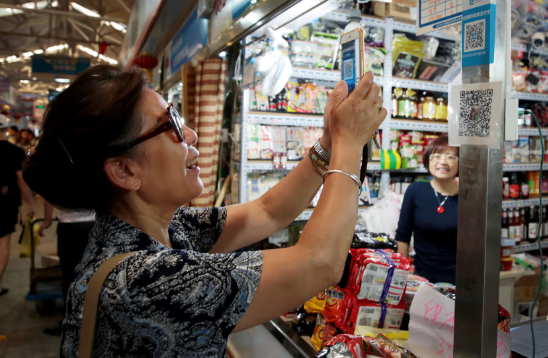
Lower transaction costs and wider acceptance of digital payments support small businesses, from sari-sari stores to transport operators. Digital lending and savings products, when properly regulated, offer alternatives to informal finance. Cross-border payment platforms also support overseas Filipino workers and their families by reducing remittance friction.
As connectivity improves and capital becomes more accessible, fintech’s role shifts from convenience to infrastructure — supporting trade, consumption, and small-enterprise growth across the economy.
Capital markets and keeping tech champions at home
Another pillar of the 2026 agenda is capital market modernization. DICT is working with the Philippine Stock Exchange and the Securities and Exchange Commission to create clearer pathways for tech companies to list locally.
Historically, many high-growth Filipino tech firms have looked abroad for capital, limiting domestic participation in their success. A more predictable IPO environment could encourage companies to scale at home, deepening local capital markets and expanding wealth creation within the country.
For the broader economy, this matters in two ways. First, it retains high-value firms and jobs locally. Second, it channels domestic savings into productive, technology-driven sectors rather than purely speculative or consumption-led activity.
Unlocking liquidity without raising taxes
Ongoing discussions with economic managers include proposals to modernize Agri-Agra compliance and carefully ease reserve requirements. While technical, these reforms could unlock significant liquidity if implemented prudently.
For digital services, additional capital can mean faster platform expansion, more competitive financing for tech-enabled firms, and higher valuations that attract long-term investors. The emphasis, officials stress, is on prudence — supporting growth without undermining financial stability.
Tourism and trade in a digital-first economy
Digital platforms are also reshaping tourism and trade, two sectors critical to Philippine growth. Online booking systems, digital marketing tools, and data-driven pricing allow tourism operators to reach global audiences more efficiently.
For trade, digital customs processes, logistics platforms, and electronic documentation reduce friction and improve competitiveness.
As these systems mature, they reinforce each other. A tourist who pays digitally, books transport online, and leaves a data trail becomes part of a broader services ecosystem that supports jobs well beyond hospitality.
From recovery to resilience
For ordinary Filipinos, the benefits of a stronger digital services economy are tangible: lower internet costs, more reliable connectivity, more tech-enabled jobs, wider access to finance, and better public services delivered through modern systems.
For policymakers, the larger prize is resilience. An economy anchored in digital services is better positioned to weather external shocks, from pandemics to global slowdowns, because it relies less on physical movement and more on skills, data, and networks.
The challenge now is execution. Infrastructure must roll out on time, rules must remain clear and consistent, and public and private sectors must move in step.
If they do, 2026 could mark a turning point — when the Philippine digital economy stops being a promise and starts functioning as a durable engine of national growth, helping push the country closer to upper-middle-income status while improving daily life for millions of Filipinos.