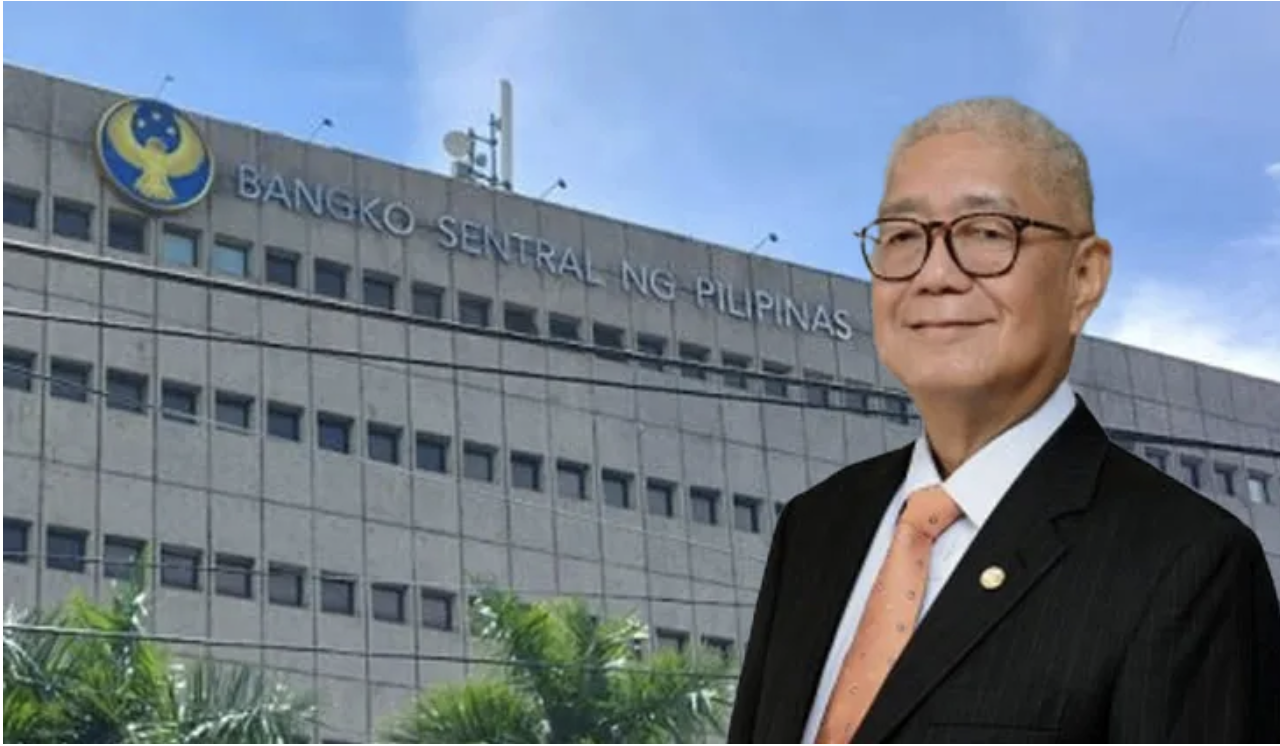



The Philippines is positioning itself as a strategic gateway in the global digital economy, with DICT Secretary Henry Aguda likening data to the “next oil” and the country to a critical global chokepoint.
Speaking at the 3rd Telco Forum organized by the Anti-Red Tape Authority (ARTA), Aguda pointed to the Philippines’ geographic advantage as a natural crossroads for international data flows.
“If there’s the Strait of Hormuz for oil, there’s the Philippines for the next oil — which is data,” Aguda said in his speech, underscoring the country’s role in global connectivity.
He explained that the Philippines sits along key subsea cable routes linking Asia and the United States, allowing data traffic to bypass geopolitical flashpoints in other regions.

DICT Secretary Henry Aguda (IMAGE CREDIT: DICT)
This positioning, he said, opens opportunities for the country to become a regional data center hub while potentially generating transit-related revenues.
The country currently has around 200 megawatts of data center capacity, with more facilities in development. To sustain this growth, the government is exploring policies such as a data sovereignty law and a “data embassy” framework, while pushing to streamline permitting processes for infrastructure projects.
Industry moves to match policy direction
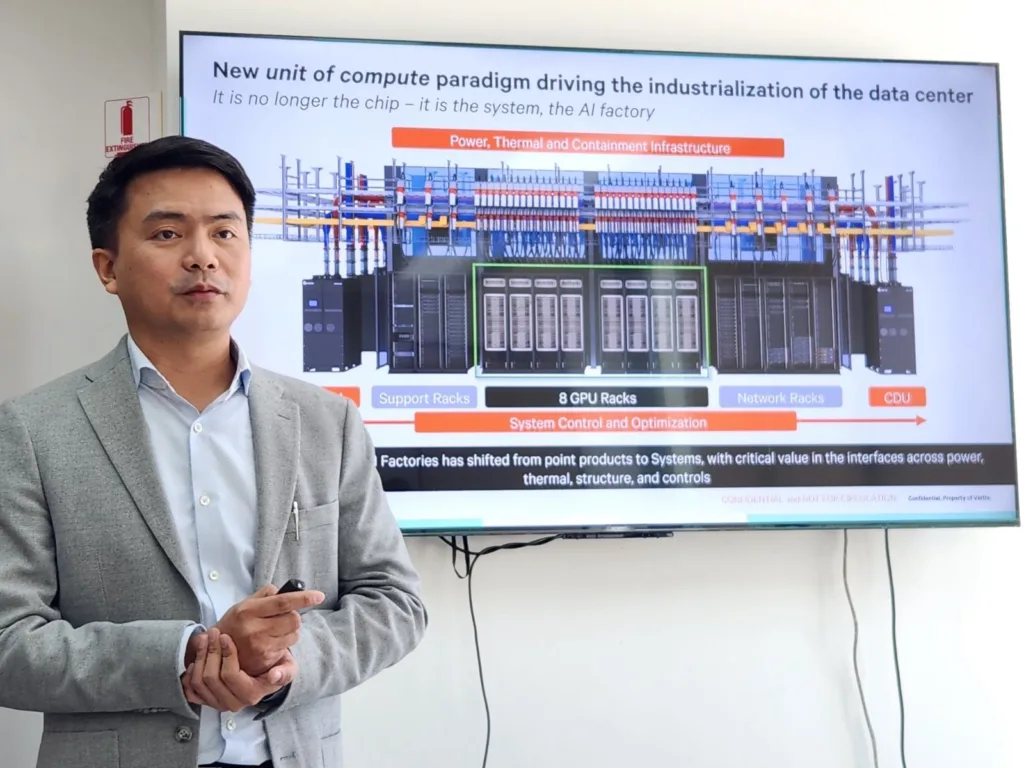
Vertiv‘s Nico Echavarria, Director for Sales Management and Country Head for PH
While the government is laying out the broader vision, industry players are preparing the infrastructure needed to support it.
During a media tour and interview at Vertiv’s office in Mandaluyong City, the company’s newly appointed Philippine head, Nico Echavarria, outlined how the firm plans to support the country’s anticipated data center expansion.
“We don’t make the chips, but we provide the power and cooling needed to support them. The world runs on the data that we cool and power,” Echavarria said during the interview.
Vertiv, a global provider of critical digital infrastructure, derives the bulk of its business from data centers. In the Philippines, it operates a 100-person team supporting customers nationwide, with services spanning equipment, maintenance, and system integration.
Echavarria said the company sees “very positive” growth prospects in the local market, driven largely by increasing demand for cloud services and the expected rollout of artificial intelligence workloads.
Positioning for AI-driven demand
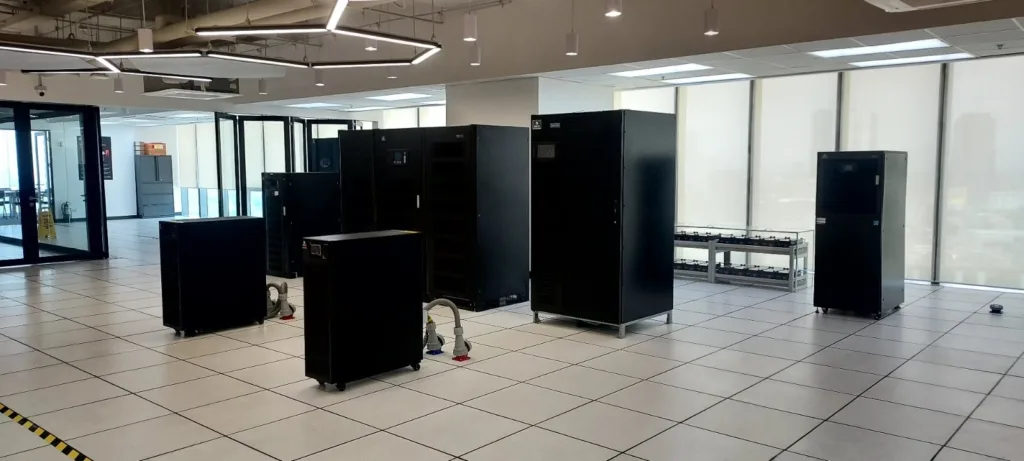
Vertiv: Preparing the PH market for high-density, AI-ready data centers
A key focus for Vertiv is preparing the Philippine market for high-density, AI-ready data centers — an area that remains limited locally but is expanding rapidly in neighboring countries.
“It’s already happening in markets like Vietnam and South Korea. For the Philippines, it’s just a matter of time,” he said.
To address this, Vertiv is introducing integrated solutions designed to handle the complex power and cooling requirements of AI infrastructure. These systems combine multiple components into a single platform, reducing the need for operators to design facilities piece by piece.
The company is also shifting from a product-based approach to a solutions-driven model, aiming to simplify deployment for both hyperscale and enterprise clients.
Expanding partnerships and local footprint
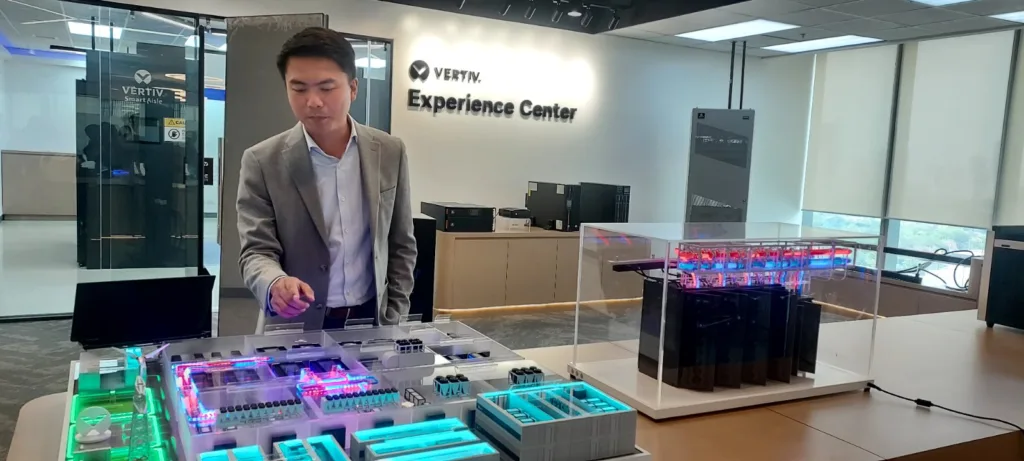
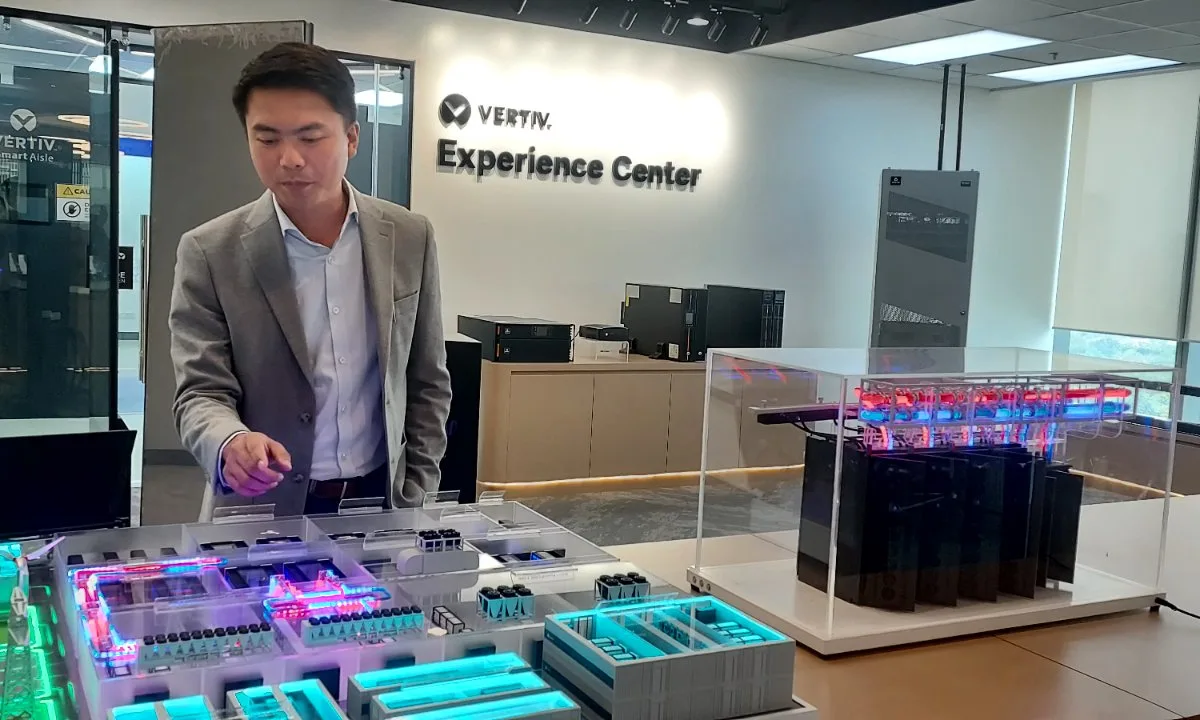
Echavarria explaining the company’s products and plans for 2026
For 2026, Vertiv plans to deepen its engagement with partners and customers across key sectors, including data centers, telecommunications, and commercial and industrial segments.
Echavarria said the company is strengthening ties with local distributors and resellers, while also working closely with enterprise clients and colocation providers expected to expand their presence in the country.
Emerging demand from industries such as banking and finance is also shaping strategy, particularly as firms explore AI applications and require more localized, secure infrastructure.
Part of this includes compact, integrated systems that bring data center capabilities closer to end users (such as within branch offices) alongside service platforms that use analytics to predict and prevent system failures.
Aligning ambition with execution

The contrast between Aguda’s remarks at the ARTA forum and Vertiv’s plans on the ground highlights a broader convergence: policy ambition meeting private sector execution.
For the government, the priority is to position the Philippines as a regional hub for the “next oil.” For companies like Vertiv, the task is to build the infrastructure needed to support that ambition.
As global demand for data continues to surge, the Philippines’ role in the digital supply chain may increasingly resemble that of traditional energy corridors — less visible, but no less critical.