



If legislation backed by Sen. Bam Aquino moves forward, the Department of Information and Communications Technology’s (DICT) blockchain budget plan could push the Philippines toward a radical experiment: placing the entire national budget cycle on blockchain infrastructure by 2026.
Supporters describe it as a system that’s “tamper-proof” or even “101% hack-free” — one that could track every peso from allocation to disbursement and leave a permanent digital trail.
The pitch is straightforward. If every peso in the national budget leaves a permanent, traceable digital footprint, opportunities for manipulation could narrow dramatically.
Yet behind the headline promise lies a more complex reality. Blockchain can strengthen record integrity and audit trails. It cannot, on its own, eliminate corruption, insider abuse, or governance weaknesses.
Photo Credit: PIA
The feasibility of a blockchain national budget Philippines initiative will depend less on the technology itself and more on how it is designed, integrated, and governed.
What moving the budget “on-chain” actually means
At present, the Philippine budget process runs through interconnected but largely centralized digital systems across the Department of Budget and Management, the Bureau of the Treasury, and implementing agencies. Transactions are logged in internal databases, audited post facto and reconciled across systems.
A blockchain-based architecture would not replace budgeting laws or fiscal controls. Instead, it would function as a shared ledger layer that records key events in the budget lifecycle. Once entries are validated and added to the ledger, they become extremely difficult to alter retroactively without consensus from authorized nodes.
In practical terms, this could mean that once Congress approves appropriations, corresponding releases and disbursements are logged in a system that automatically preserves the transaction history. Any attempt to revise, reallocate, or modify entries would leave a visible audit trail.
The appeal is clear in a country where budget realignments and fund misuse have historically triggered controversy. But blockchain’s immutability applies to recorded data, not to the real-world processes that generate them. If inaccurate figures are encoded at the source, the ledger merely preserves the error.
The limits of “hack-free”

Describing a blockchain-based budget as “hack-free” oversimplifies cybersecurity.
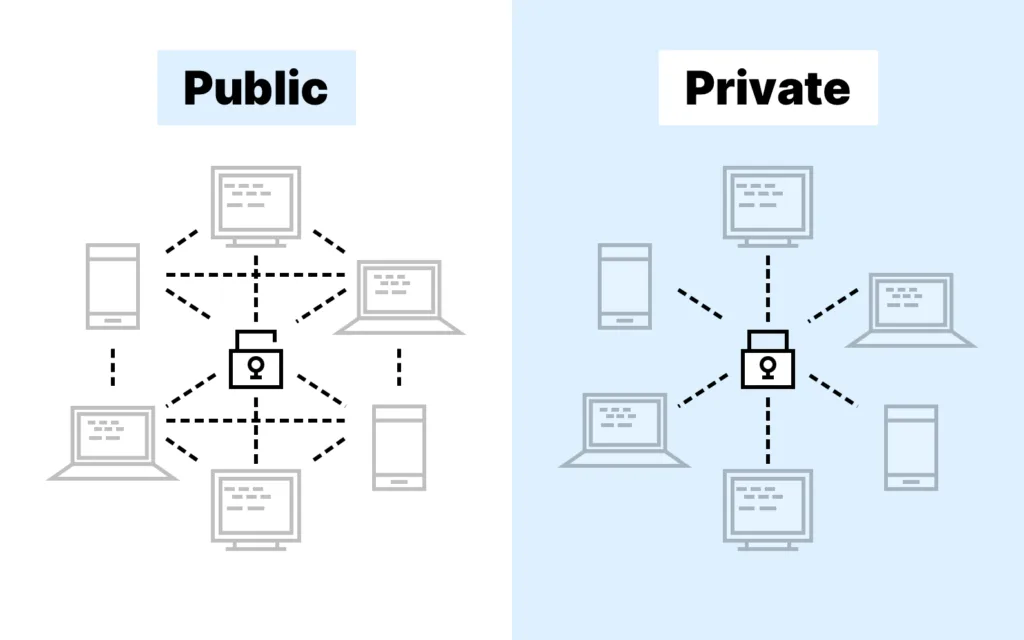
Public blockchains such as Bitcoin rely on massive decentralized networks to secure transactions. A government budget system, however, would almost certainly operate as a permissioned blockchain, where only designated institutions validate entries. That structure improves efficiency and privacy but shifts trust to participating agencies.
Permissioned systems are generally resilient to external tampering.
They are not immune to insider collusion, key mismanagement or flawed governance rules. If a small group controls validation authority, the system’s integrity ultimately rests on institutional safeguards rather than cryptography alone.
In other words, blockchain can make unauthorized changes more detectable and more difficult. It does not remove human discretion from fiscal administration.
Integration will be the hardest part
The Philippine national budget runs into the trillions of pesos annually and touches hundreds of agencies, state universities, and government-owned corporations. Integrating this scale of activity into a single distributed ledger would be a significant engineering task.
Existing treasury and accounting systems would need standardized data formats. Application programming interfaces would have to transmit information securely and in real time. Legal frameworks would need to recognize blockchain entries as official government records.
More critically, inter-agency coordination would have to improve. Budget execution involves sequential steps across departments. A blockchain layer could expose inconsistencies instantly, but it would also require agencies to align workflows more tightly than they do today.
Without harmonized processes, a distributed ledger risks becoming an additional reporting layer rather than a transformative one.
Transparency vs. practical governance
One argument for the blockchain national budget proposal is that it could enhance public trust. If citizens and watchdog groups can verify that appropriated funds were released and spent as authorized, oversight may become more immediate and data-driven.

But transparency is not synonymous with accessibility. Raw ledger data can be difficult to interpret without contextual reporting and analysis. Moreover, certain budget items, particularly in defense or national security, cannot be fully public without compromising operational integrity.
This raises a policy question: will the ledger be publicly viewable, partially open or restricted to auditors? Each option carries trade-offs between openness, privacy and security.
Costs and sustainability
Large-scale blockchain deployments are not inexpensive. Infrastructure must be built, secured and maintained. Validator nodes require redundancy and cybersecurity protections. Personnel need training in digital key management and distributed systems.
The long-term operational cost may rival, or even exceed, that of centralized systems if not carefully designed. Governments that have experimented with blockchain pilots in land registries and procurement often limit scope precisely to manage complexity and cost.
A full national budget integration would represent a much more ambitious undertaking.
Political signal or structural reform?
For the Department of Information and Communications Technology, championing a blockchain budget could position the Philippines as a digital governance leader in Southeast Asia. It aligns with broader e-government modernization efforts and signals openness to emerging technologies.
Yet the credibility of the reform will hinge on execution. Independent security audits, transparent procurement of technology vendors, and clear performance metrics would be necessary to demonstrate that the system delivers measurable improvements in accountability.
If implemented as a symbolic layer without deep institutional reform, the initiative could generate headlines without materially changing fiscal discipline.
The real test
The promise of a blockchain national budget Philippines initiative lies in traceability. A well-designed distributed ledger can strengthen audit trails and reduce the risk of unauthorized retroactive edits. It can also accelerate reconciliation between agencies by providing a single source of shared truth.
But blockchain does not substitute for enforcement, legal clarity, or ethical governance. It cannot prevent inflated contracts, discretionary spending abuses, or policy-driven reallocations that are legally permitted.
As lawmakers debate the proposal, the central question is not whether blockchain is innovative. It is whether the country’s fiscal institutions are ready to integrate a system that makes every recorded transaction permanently visible and cryptographically secured.
If the governance architecture matches the technological ambition, the Philippines could pioneer a new model of digital public finance in Asia. If it does not, the experiment may reveal that transparency is less about the tool and more about the institutions that wield it.