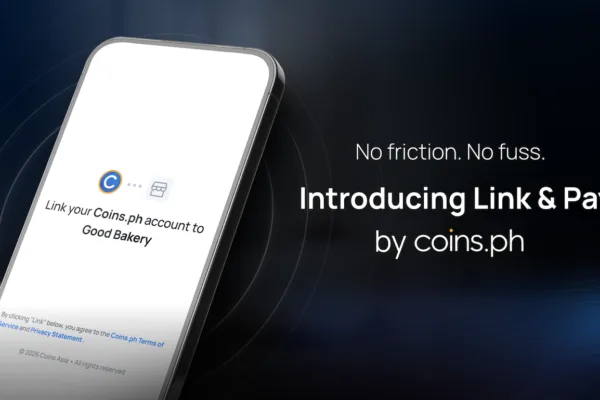



Coins.ph is expanding its positioning beyond digital assets as it pushes to become an all-in-one financial app designed for everyday use, reflecting how Filipinos increasingly expect payments, transfers, and financial tools to work seamlessly in one place.
The BSP-licensed digital asset exchange and mobile wallet said it is bringing together payments, fund transfers, bill settlement, remittances, and digital asset services into a single platform, as more consumers seek simpler ways to manage money without switching between multiple apps.
Coins.ph, which launched in 2014, has grown into one of the country’s most widely used fintech platforms, supported by its dual regulatory licenses from the Bangko Sentral ng Pilipinas (BSP) as both a virtual asset service provider and an electronic money issuer.
“Filipinos want money that simply works,” said Amira Alawi, global marketing director at Coins.ph. “Whether it’s paying bills, sending funds, or managing day-to-day expenses, financial services should feel as intuitive as the rest of their digital lives.”

Amira Alawi, global marketing director at Coins.ph
Coins.ph: Building an everyday finance platform
“What we originally hoped to do was to make Coins.ph the starting point for people entering crypto,” said Wei Zhou, chief executive officer of Coins.ph. “But the market has evolved, and so has our business. Today, blockchain is at the core of our service offerings, and our focus is on making those tools practical for everyday financial use.”
At the core of Coins.ph’s strategy is a unified wallet that allows users to move funds across banks, e-wallets, and borders, while also supporting digital asset trading and crypto-enabled remittances.
The company said the goal is to reduce friction in routine financial activities, particularly for users who currently juggle multiple platforms to pay bills, send money, or receive funds from overseas.
Coins.ph’s app enables users to:
- Transfer funds across banks and e-wallets
- Receive international remittances
- Pay bills and government fees
- Trade digital assets within the same platform
By integrating these services, the company is positioning itself as infrastructure for everyday financial activity rather than a niche crypto platform.
Expanding cashless payments through QR Ph
A key pillar of the app is its support for QR Ph, the national QR code standard overseen by the BSP. Coins.ph said its wallet can now be used to pay merchants nationwide, from large retailers to small neighborhood stores.
The platform currently supports payments at more than 600,000 merchants across the country, including restaurants, grocery stores, markets, and sari-sari stores, allowing users to pay without cash or additional apps.
Industry observers note that wider QR Ph adoption has been central to the BSP’s push for greater financial inclusion, particularly for micro-merchants that lack traditional point-of-sale systems.
Bill payments and everyday utilities
Beyond merchant payments, Coins.ph is also expanding its bill payment capabilities, allowing users to settle more than 120 types of bills directly in the app.
These include utility payments, government and mandatory contributions, loan and insurance payments, and tuition fees. The company said payments are processed in real time, providing immediate confirmation and reducing the risk of missed deadlines.
The app also supports donations to accredited non-government organizations, adding another use case to its growing payments ecosystem.
Infrastructure over interface
“The goal isn’t for users to think about blockchain or the underlying technology,” Zhou said. “We want the infrastructure to disappear into the background, so people simply experience fast, reliable payments and money movement.”
While Coins.ph continues to support digital asset trading, the company said its broader focus is on building financial infrastructure that operates in the background.
The aim, it said, is for users to experience faster and more reliable money movement without having to think about the underlying technology, whether blockchain-based or otherwise.
For remittance users, this means faster settlement and lower costs. For local users, it means instant transfers and payments that mirror the speed of modern digital services.
A broader push toward financial inclusion
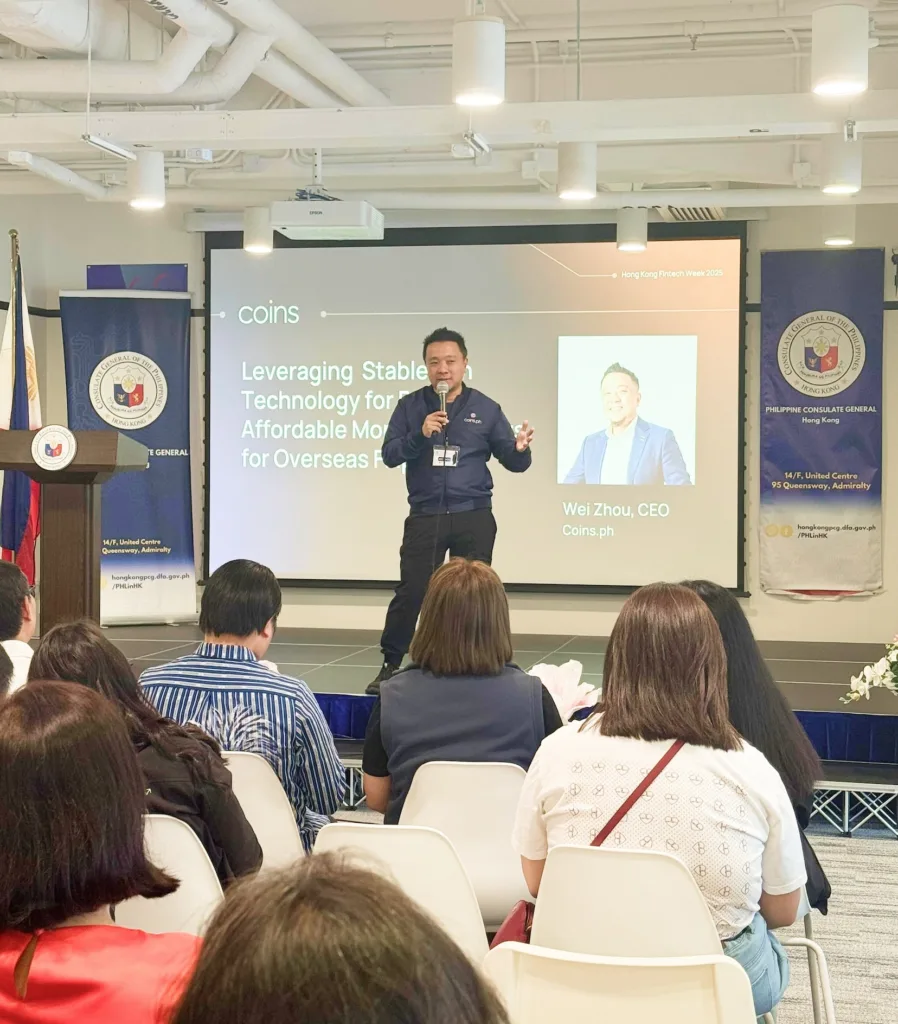
Wei Zhou, chief executive officer of Coins.ph
Coins.ph’s all-in-one approach comes as Philippine fintech firms increasingly compete on convenience, speed, and interoperability, rather than on single-use financial products.
Zhou said stablecoins are emerging as the next major phase of crypto adoption, particularly for cross-border payments. “What we’re pushing toward in 2026 is enabling Filipinos who work, travel, or live overseas to send and receive remittances cheaply, efficiently, and 24/7 using stablecoins,” he said.
By combining payments, transfers, remittances, and digital assets in one regulated platform, Coins.ph is positioning itself to play a larger role in everyday financial activity — particularly for users who remain underserved by traditional banking.
As competition in the digital wallet space intensifies, platforms that can balance regulatory compliance, infrastructure scale, and user experience are likely to shape how Filipinos manage money in the years ahead.