


In the heart of most Philippine neighborhoods, sari-sari stores like ours have always been more than just shops — they’re gathering spots where folks grab a quick snack, top up their phone load, or chat about the day’s news (even chismis).
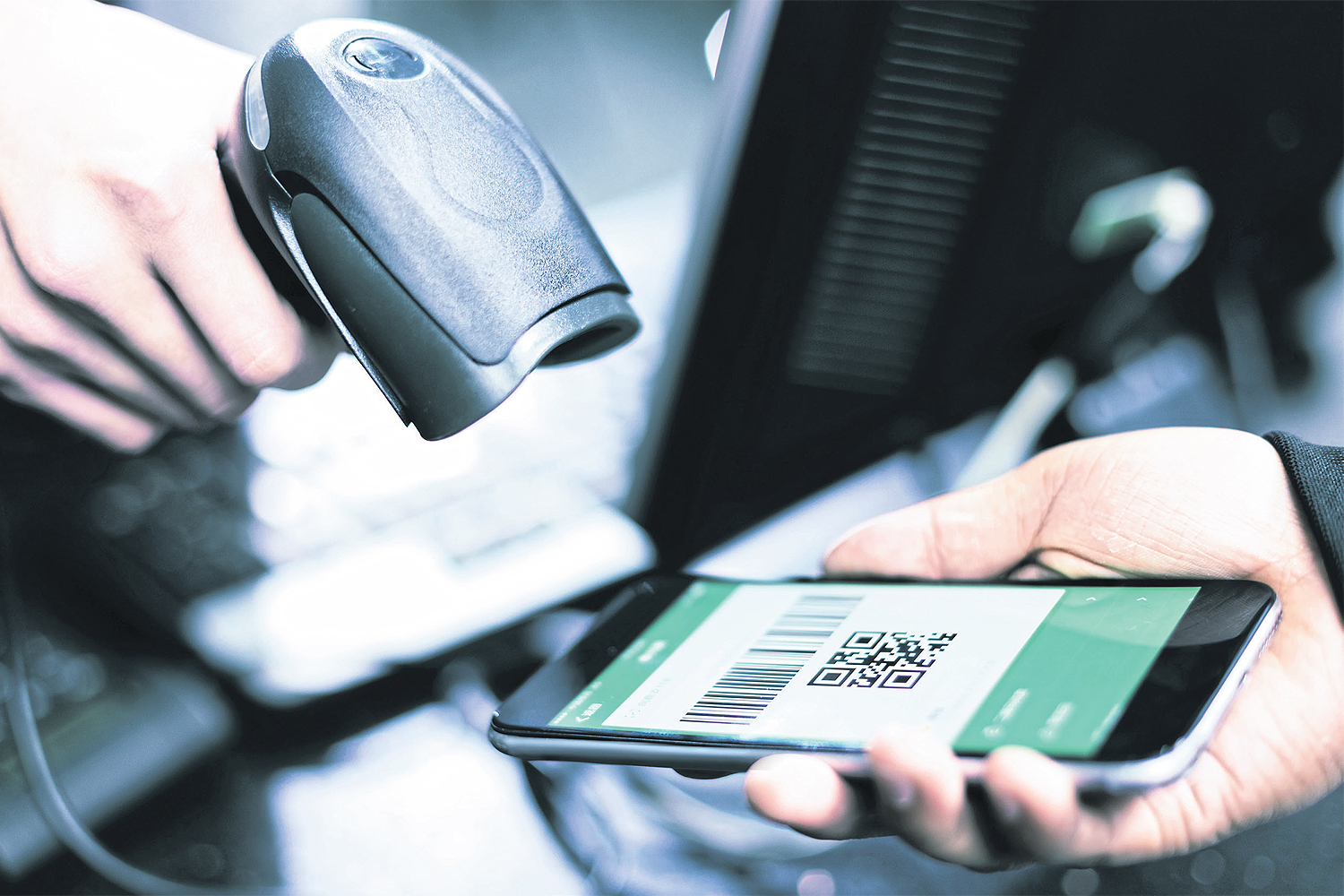
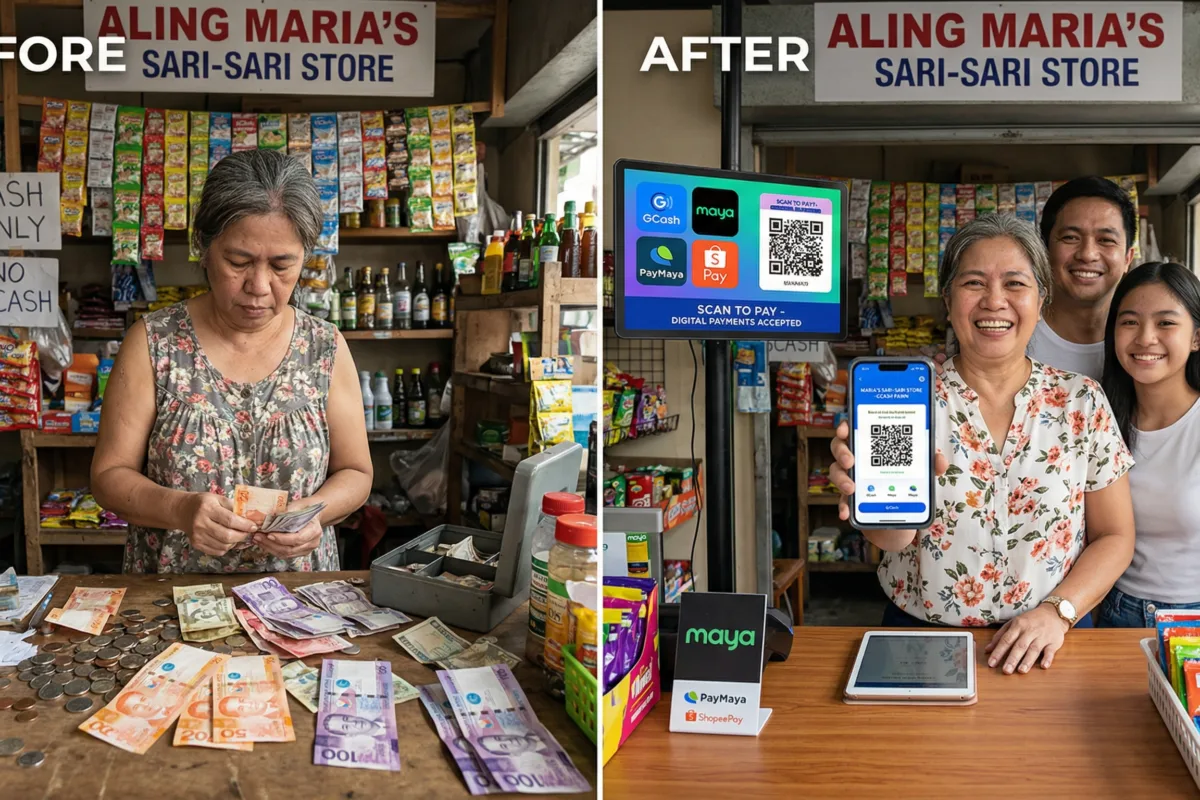
Growing up, I watched my mom and dad handle everything with a trusty cash box and a smile. But these days, fintech in sari-sari stores is changing the game, with QR codes and e-wallets turning these humble spots into mini financial hubs.
It’s exciting, sure, but after what we’ve been through, I’m more cautious than optimistic. This isn’t just a trend; it’s a shift that comes with real risks if you’re not careful.
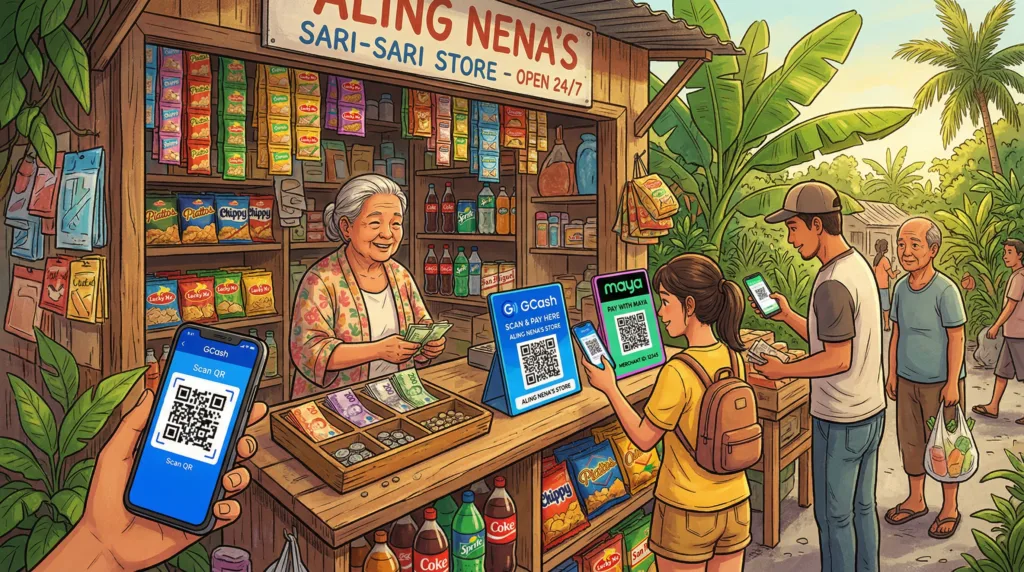
As a family running our own sari-sari store, we’ve dabbled in cash-ins and cash-outs via trusted apps like GCash and Maya. It started as a way to help neighbors without bank accounts, but it quickly opened doors to sketchy activities, like ties to online sugal (gambling).
Despite government efforts to crack down on it, it pops up everywhere—ads, links, you name it. And honestly, with whispers that some government pockets might be lining up anonymously through it, avoidance feels like the smartest play.
Let’s break it down, drawing from our family’s bumps along the way, to show why fintech in sari-sari stores needs a guarded approach.
The rise of fintech in neighborhood stores
Sari-sari stores are everywhere — over 1.3 million strong, powering daily life in barangays far from malls.
In 2025, e-wallet usage in these stores skyrocketed by 75%, turning them into digital touch points for communities. GCash dominates with about 85% of transactions, while Maya fills in the gaps.
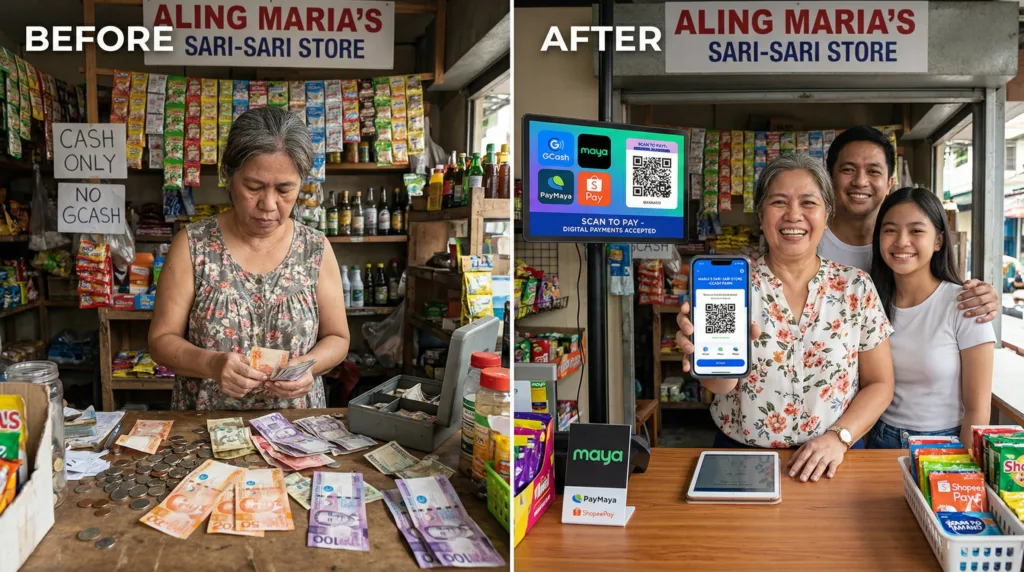
The Bangko Sentral ng Pilipinas (BSP) has fueled this with QR Ph, a standard that lets even small shops accept payments without high-tech gear.
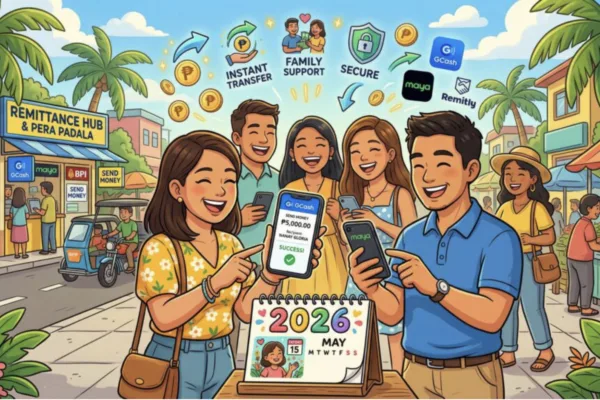
For us, it began innocently. Mom set up a GCash QR code after seeing neighbors struggle with cash during the pandemic.
Suddenly, we were handling remittances and bill payments, boosting our income by 10–15% early on.
But as digital payments hit 57.4% of retail volume by 2024 (and continued climbing into 2026), the flip side emerged — more exposure to scams and shady dealings. Fintech in sari-sari stores is booming, but it’s not all progress; it’s a doorway that needs locks.
Benefits vs. risks: Weighing the scales in our family store
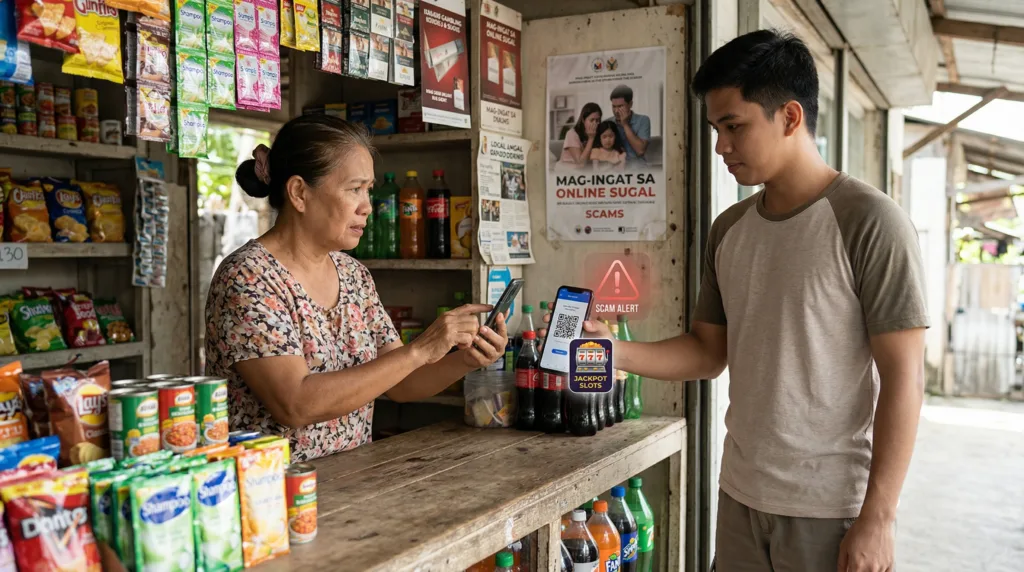
Let’s get real about the pros and cons—because in our experience, the benefits of fintech in sari-sari stores are tempting, but the risks can hit hard and fast.
The Benefits: On the upside, convenience is king. Customers scan and go, with no fumbling for change, especially during busy hours. In our store, cash-ins drew more people; we’d see regulars topping up e-wallets while buying tingi items, turning one-stop visits into steady revenue.
Women like my mom, who make up 75% of owners, are empowered with tools for inventory and sales boosts — some stores saw 46% jumps in 2025. It feels modern, like we’re part of the digital economy surge, where payments grew 185% from 2020 to 2024. Dad even jokes it’s like having a bank in our living room, helping the unbanked in our community.
I pushed us to add services like transfers via trusted apps. It worked for a while, adding 20% to our margins from fees. We bonded over late-night tallies, seeing how it kept the store afloat during slow months.
The Risks: Now, the cautionary part — and boy, do we have stories. The biggest pitfall? Scams tied to unauthorized QR codes, especially from online sugal players. These individuals, often without full verification, use agents like sari-sari stores to funnel bets and bypass rules. Mom got pulled in by the “easy profit,” ignoring my warnings. “Sayang ang profit,” she’d say, echoing what many owners think amid the hype.
One day, a stranger asked for a 100-peso cash-in via QR, claiming it was for Scatter (a popular online game). Mom scanned it, but boom — 500 pesos vanished from her GCash, her entire remaining balance. She burst into my room during a work meeting, yelling about the deduction. We froze the account and reported it, but the stress? Unforgettable. It wasn’t isolated; similar scams hit others, like linking store numbers to Lazada for fraudulent shopping sprees, costing thousands.
Online sugal is a beast. Government crackdowns by PAGCOR and BSP haven’t eradicated it, with controversies over funding and links to crimes like money laundering. Some say parts of the government anonymously back it through regulatory loopholes, making avoidance the only safe bet. In our family, it sparked arguments.
I begged Mom to stick to GCash, Maya, or verified e-wallets only — no outside QRs, no exceptions. The risks outweigh the benefits when fraud can wipe out weeks of earnings, and with cyber threats rising, it’s not worth the gamble.
Balancing it? We’ve learned the hard way: the benefits shine with caution, but the risks dominate if you’re lax. Stick to trusted platforms — that’s our rule now.
Moving forward: Lessons from our store to yours
Fintech in sari-sari stores isn’t going away; with trends like Google Pay and AI tools, it’s evolving into 2026. But our family’s wake-up call? Prioritize safety. (See how digital tools are turning sari-sari stores into social media stars in this related story.)
Government pushes like Paleng-QR Ph Plus help, expanding to more LGUs for secure transactions. We’ve tightened up: only accept payments from verified e-wallets, double-check amounts, and educate customers on red flags.
If you’re running a store, start cautiously — get that QR Ph code, but train yourself on scams. Fintech has transformed our spot, but a cautious lens keeps us grounded. What’s your take?
Sources:
E-wallet usage in sari-sari stores on the rise – https://www.philstar.com/business/2025/10/26/2482475/e-wallet-usage-sari-sari-stores-rise
E-wallet use jumps 75% in sari-sari stores–Packworks – https://businessmirror.com.ph/2025/10/25/e-wallet-use-jumps-75-in-sari-sari-stores-packworks
E-wallet surge powers ‘sari-sari’ stores’ digital transformation – https://insiderph.com/e-wallet-surge-powers-sari-sari-stores-digital-transformation
‘Sari-sari’ stores’ e-wallet use surged as of August – https://business.inquirer.net/554306/sari-sari-stores-e-wallet-use-surged-as-of-august
Financial technology adoption and operational effectiveness of sari-sari stores in the Philippines – https://www.ijrpa.com/myimgup/2113464693IJRPA-1210.pdf
Packworks Report: E-wallet use jumps 75% in sari-sari stores – https://www.linkedin.com/pulse/packworks-report-e-wallet-use-jumps-75-sari-sari-stores-fueling-nqkic
GCash, Maya lead 75% surge in e-wallet use among sari-sari stores—Packworks – https://mb.com.ph/2025/10/25/gcash-maya-lead-75-surge-in-e-wallet-use-among-sari-sari-storespackworks
E-wallet use jumps 75% in sari-sari stores – survey – https://www.rappler.com/technology/e-wallet-use-jumps-sari-sari-stores-survey-2025
Philippines Digital Wallet Market Size & Share Growth 2035 – https://www.expertmarketresearch.com/reports/philippines-digital-wallet-market
How QR payments are reshaping survival, one scan at a time – https://peopleplacesplates.ph/qr-payments-everyday-one-scan-at-a-time
The Philippines Advances Cashless Payments with Paleng-QR PH – https://opengovasia.com/the-philippines-advances-cashless-payments-with-paleng-qr-ph
Sari-sari store owners have warned netizens about an emerging scam – https://www.facebook.com/photo.php?fbid=1244828700851310&id=100059725742871&set=a.497885732212281
Breaks down the ugly truth behind the Philippines’ gambling crackdown – https://www.instagram.com/reel/DQYw0e3k1bi
THE “DANGEROUS COMBINATION”? Corruption + Poverty + Casino Boom in the Philippines – https://www.facebook.com/PinasPulse/posts/the-dangerous-combinationcorruption-poverty-casino-boom-in-the-philippinesis-the/122167602098872450