

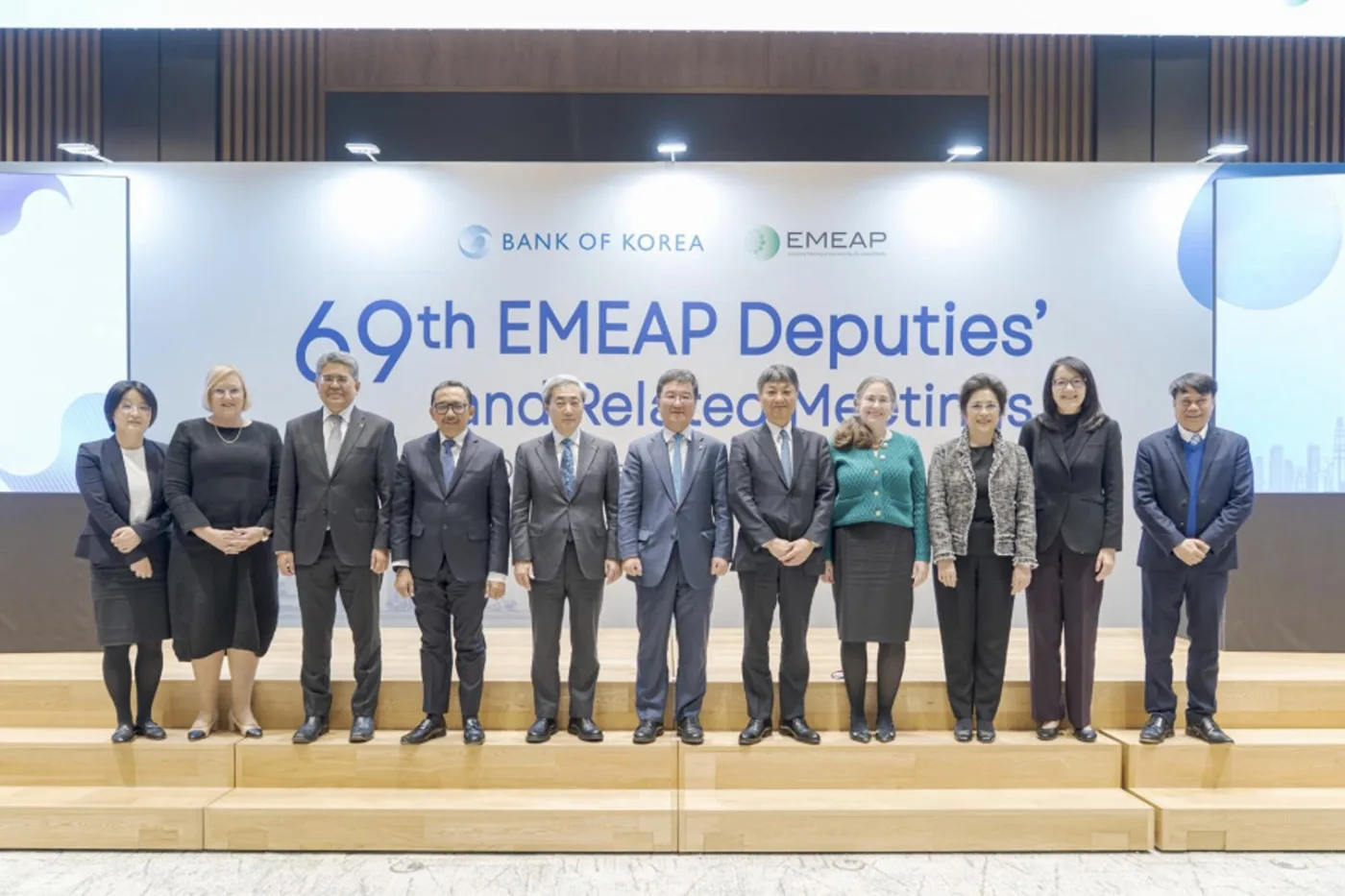
The Bangko Sentral ng Pilipinas (BSP) has reaffirmed its commitment to deeper financial integration and resilience in the Asia-Pacific region, as central bank leaders from East Asia and the Pacific gathered in Seoul, South Korea for the 69th Executives’ Meeting of East Asia-Pacific Central Banks (EMEAP) Deputies’ and Related Meetings from December 3-5, 2025.
During the meetings, EMEAP members underscored the importance of strengthening cooperative frameworks that support financial stability, innovation, and cross-border connectivity amid an increasingly complex global financial environment.
The discussions highlighted shared priorities ranging from market resilience and regulatory coordination to the modernization of financial infrastructures that enable smoother regional flows of capital and payments.
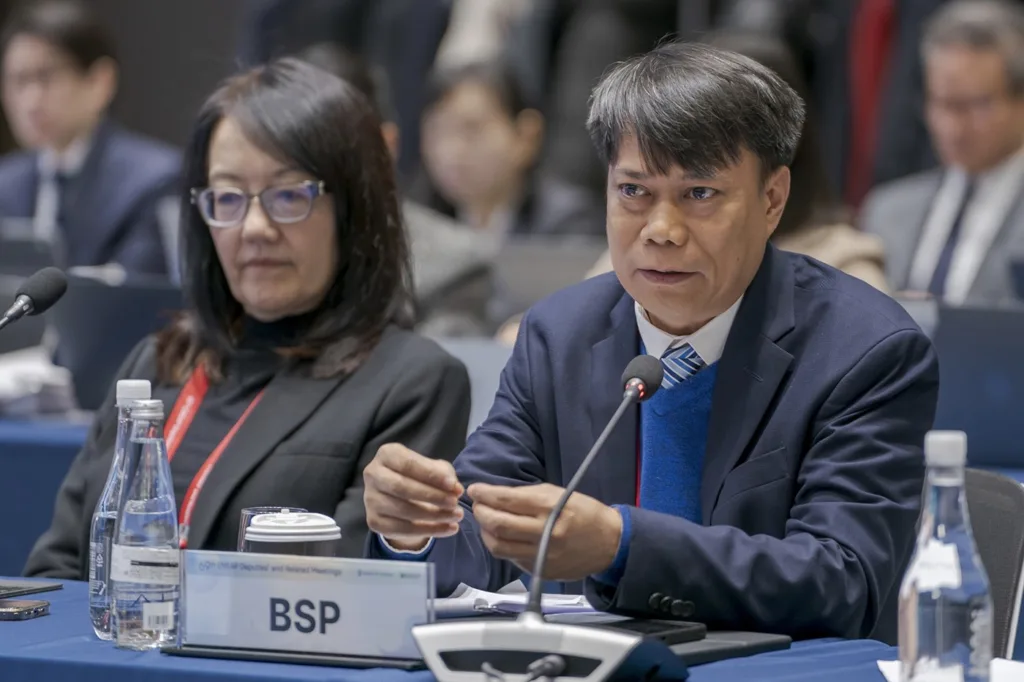
BSP Deputy Governor Zeno Ronald Abenoja (right) together with Deputy Director General Ye Liu of the People’s Bank of China. IMAGE CEDIT: Bank of Korea.
Deputy Governor Zeno Ronald R. Abenoja led the BSP delegation, joining senior officials from the region’s major central banks and monetary authorities, including representatives from Australia, China, Japan, Korea, and Southeast Asia.
The EMEAP, a long-standing cooperative forum of 11 central banks in the East Asia-Pacific region, serves as a platform for policy dialogue and collaboration aimed at reinforcing regional financial stability and integration.
The BSP said its participation in the EMEAP meetings reflects the Philippines’ continued support for regional initiatives that enhance interoperability among financial systems — an objective that is increasingly critical as economies deepen trade, investment, and remittance links across borders.
This regional commitment is mirrored by the BSP’s recent domestic policy actions, particularly its move to align the country’s retail payment systems with global standards.
BSP aligns Philippine payments with ISO 20022
Earlier, the central bank issued BSP Circular No. 1223, mandating all retail payment systems in the Philippines to adopt the ISO 20022 standard, an international framework designed to make domestic and cross-border payments more seamless, efficient, and secure.
The circular follows specifications set by the Bank for International Settlements–Committee on Payments and Market Infrastructures (BIS-CPMI), reinforcing global best practices in transaction monitoring, compliance, and consumer protection.
While major retail payment systems such as InstaPay and PESONet have already adopted ISO 20022, the BSP noted that implementation across the industry has been uneven, prompting the need for a harmonized, system-wide requirement.
By mandating consistent adoption of ISO 20022, the BSP said it is contributing to broader regional and global efforts — aligned with G20 objectives — to improve the affordability, speed, and transparency of both domestic and cross-border payments.
The enhanced data structure under the standard is expected to benefit consumers through faster resolution of transaction inquiries, help businesses reduce manual processing and improve invoice reconciliation, and enable financial institutions to strengthen regulatory compliance and interoperability.
Circular No. 1223 provides a two-year phased implementation period to allow industry participants to transition smoothly. To support this shift, the BSP has also established an ISO 20022 Harmonization Industry Project Team that will oversee coordination and implementation across the payments ecosystem.
Taken together, the BSP said its active engagement in regional policy forums such as EMEAP and its ongoing modernization of domestic payment infrastructure underscore a consistent strategy: strengthening the Philippines’ financial system while contributing to a more integrated, resilient, and future-ready Asia-Pacific financial landscape.