


The Bangko Sentral ng Pilipinas (BSP) is doubling down on capital market development and next-generation cross-border payment solutions as it positions the Philippines more deeply within the ASEAN+3 financial ecosystem.
Speaking at the recently-concluded 4th ASEAN+3 Economic Cooperation and Financial Stability Forum in Hong Kong, BSP Deputy Governor Zeno Ronald R. Abenoja highlighted ongoing efforts to deepen the domestic money market and adopt more market-oriented operations — moves aimed at strengthening liquidity, improving monetary policy transmission, and reinforcing financial stability amid global uncertainty.
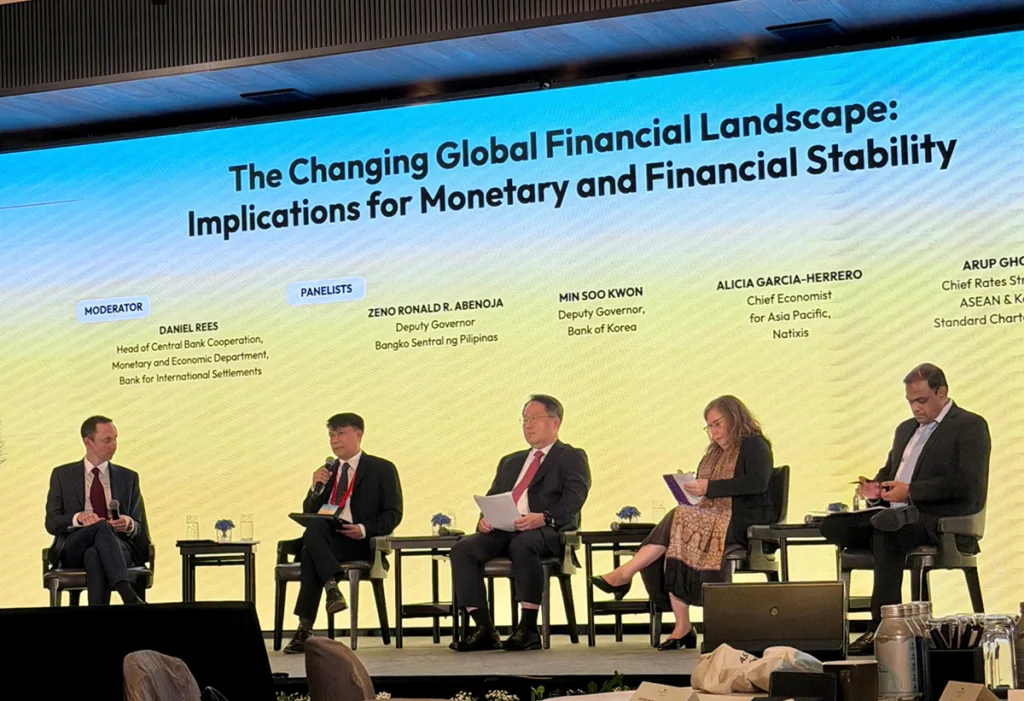
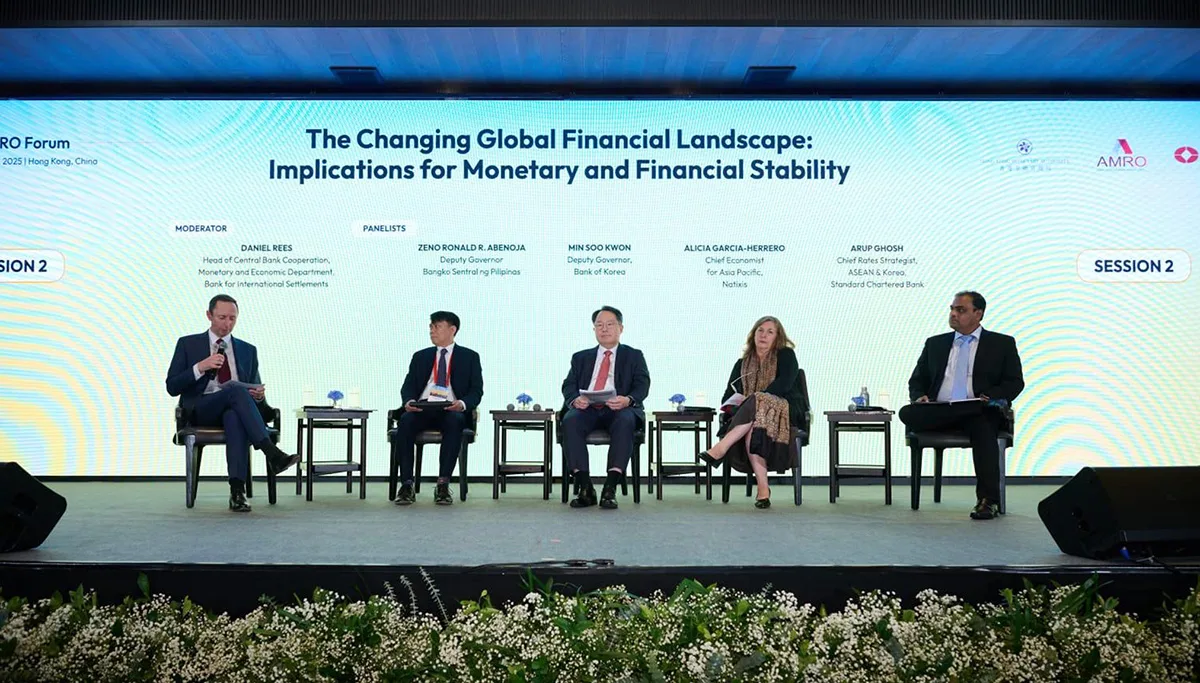
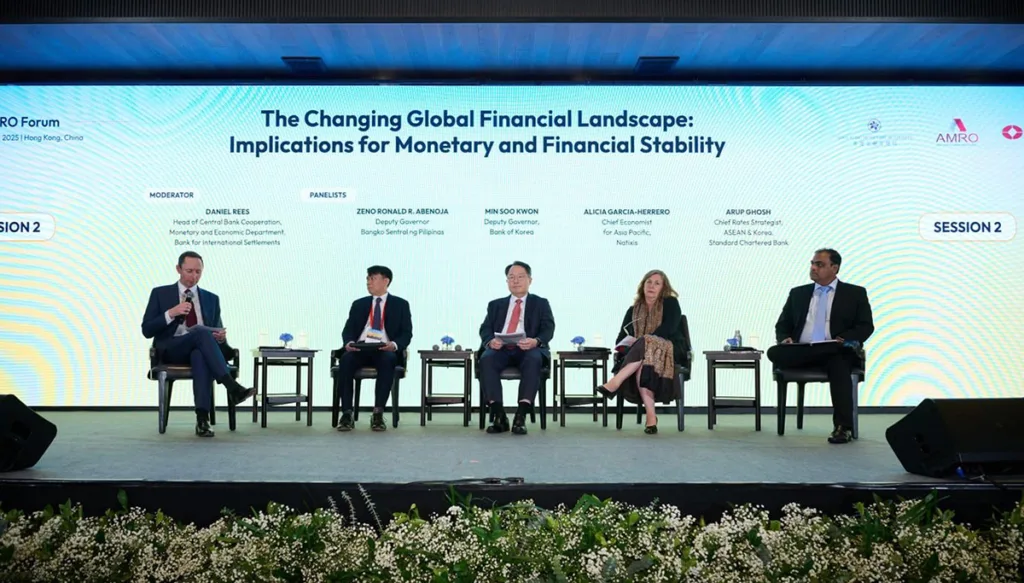
BSP Deputy Governor Zeno Ronald R. Abenoja (second from left) served as a panelist during the 4thASEAN+3 Economic Cooperation and Financial Stability Forum (AMRO Forum) in Hong Kong. Joining him were (from left) Daniel Rees, Head of Central Bank Cooperation, Bank for International Settlements; Min Soo Kwoon, Deputy Governor, Bank of Korea; Alicia Garcia-Herrero, Chief Economist for Asia Pacific, Natixis; and Arup Ghosh, Chief Rates Strategist for ASEAN and Korea, Standard Chartered Bank.
“The BSP is working to deepen the money market and introduce more market-oriented operations,” Abenoja said during a panel discussion, noting that these reforms are critical to integrating the Philippine financial system more closely with regional and global markets, especially as digital transformation accelerates.
The forum, themed “From Fragmentation to Resilience: Macro-financial Stability and Regional Integration in ASEAN+3,” brought together policymakers, central bankers, academics, and financial experts to discuss how economies can build resilience through cooperation, innovation, and more efficient financial infrastructure. It was co-organized by the ASEAN+3 Macroeconomic Research Office (AMRO), the Bank for International Settlements (BIS), and the Hong Kong Monetary Authority.
Tokenization seen as catalyst for faster cross-border payments
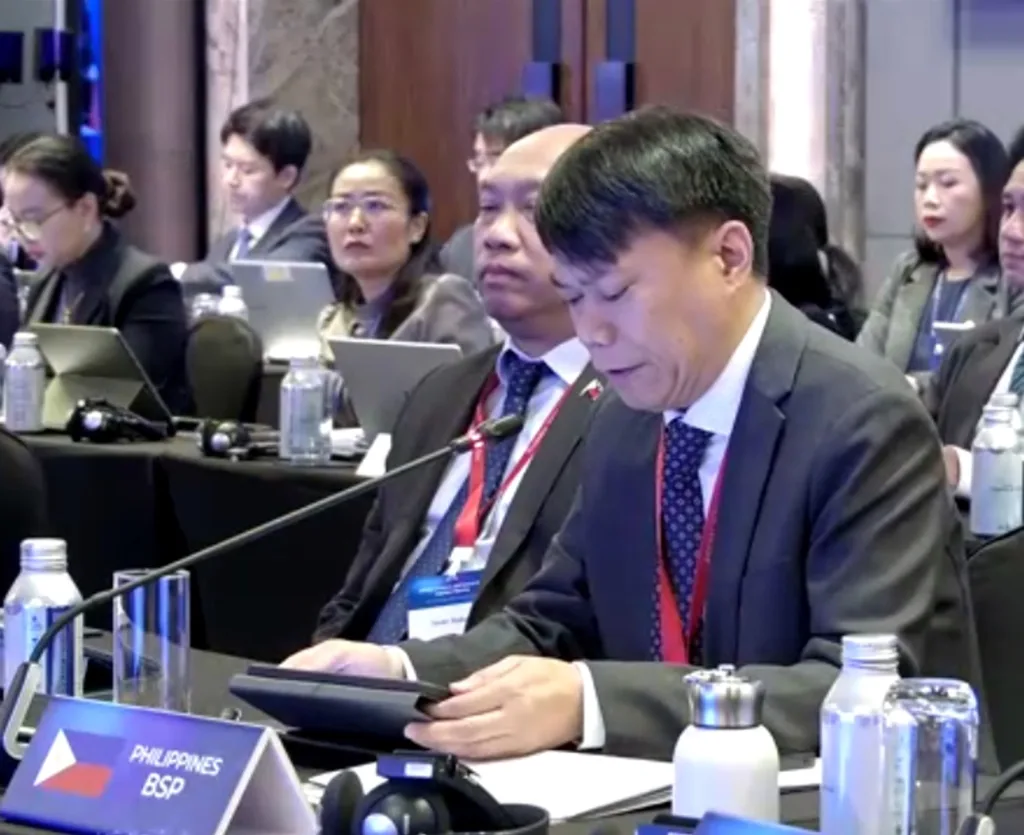
BSP Deputy Governor Zeno Ronald R. Abenoja
Beyond capital markets, Abenoja pointed to tokenization and stablecoin-based solutions as having significant potential to transform cross-border payments, particularly for retail transactions and remittances — an area critical to the Philippine economy.
By leveraging tokenized payment rails, he said, cross-border transactions could become faster, more affordable, and more accessible, addressing long-standing frictions in remittance corridors while supporting financial inclusion.
This policy direction comes as overseas Filipino (OF) remittances remain robust.
Cash remittances reached US$3.17 billion in October 2025, bringing the year-to-date total to US$29.20 billion for January to October, according to BSP data. Personal remittances — which include informal transfers and remittances in kind— rose to US$3.52 billion in October and US$32.49 billion for the first ten months of the year.
The United States continued to account for the largest share of remittance inflows, followed by Singapore and Saudi Arabia, underscoring the scale and complexity of cross-border payment flows that could benefit from more efficient digital rails.
Monetary easing supports liquidity, market confidence
Parallel to its regional engagement, the BSP has also taken steps to ease domestic financial conditions. On December 11, 2025, the Monetary Board cut the target reverse repurchase (RRP) rate by 25 basis points to 4.50 percent, lowering the overnight deposit and lending facility rates to 4.00 percent and 5.00 percent, respectively.
Effective December 15, 2025, peso Discount Window Facility (DWF) rates were adjusted in line with the new overnight lending rate, with loans maturing in 1–90 days priced at 5.6433 percent, and those with 91–180 day tenors at 5.7866 percent. US dollar and Japanese yen DWF rates were kept unchanged, reflecting prevailing benchmark rates.
The central bank said the applicable spreads on DWF rates may be adjusted over time to align with monetary policy objectives and market interest rate movements — signaling continued flexibility as conditions evolve.
Regional leadership role ahead
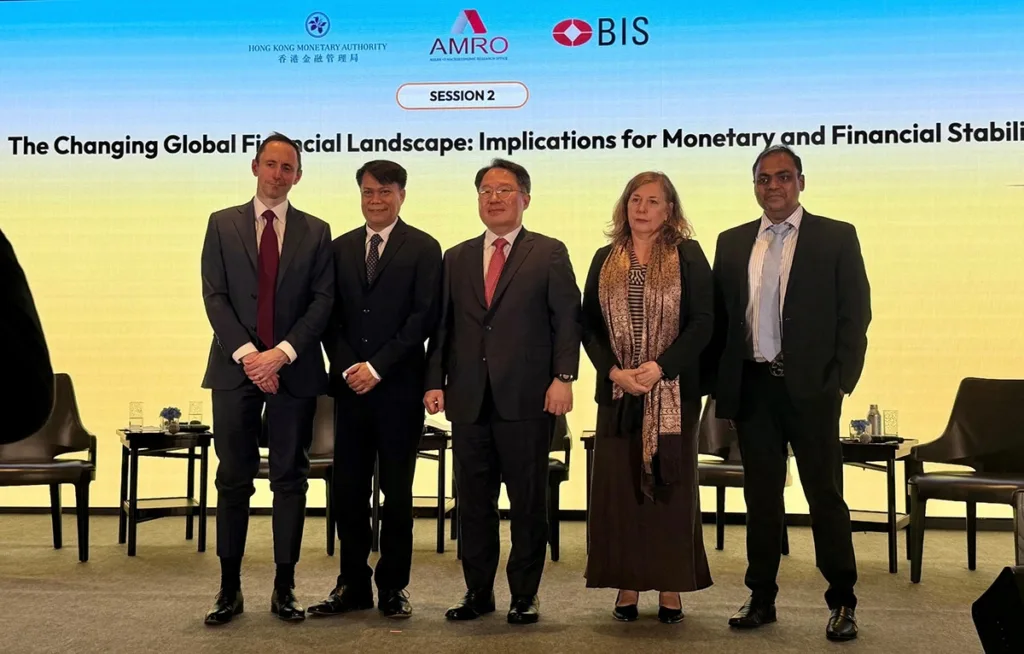
Abenoja also represented the BSP at the ASEAN+3 Finance and Central Bank Deputies’ Meeting from 26 to 27 November in Hong Kong, as preparations ramp up for the Philippines to co-chair the ASEAN+3 Finance Process with Japan in 2026.
Taken together, the BSP’s push for capital market reforms, its openness to tokenized cross-border payments, and recent policy rate adjustments reflect a broader strategy: strengthening financial resilience at home while actively shaping the region’s digital and monetary future.
For fintech players, payment providers, and financial institutions, these signals point to a policy environment increasingly supportive of modern payment rails, regional interoperability, and deeper capital markets — areas expected to define the next phase of financial innovation in the Philippines and beyond.