


In a digital era where hackers move at the speed of light, the Philippines has finally retired a 70-year-old relic to save its citizens’ hard-earned savings.
For decades, Republic Act 1405 — the “Bank Secrecy Law” — stood as an impenetrable fortress.
Enacted in 1955 when Eisenhower was in the White House and Elvis was just starting to shake his hips, the law was originally designed to encourage post-WWII investment. However, seven decades later, it had become a “cloak” for modern fraudsters.
As the Bangko Sentral ng Pilipinas (BSP) diplomatically puts it, the world that required such absolute secrecy “is no longer existing.” The tipping point for reform wasn’t a policy paper, but a personal nightmare.
The ₱1.1 Million “lauriat” that changed the law

The catalyst for this landmark change was Senator Sherwin Gatchalian’s credit card hijacking ordeal.
In a heist that became legislative legend, a hacker bypassed the Senator’s security to rack up ₱1.1 million in fraudulent charges on a food delivery app.
Stunned by the scale of the theft, Gatchalian famously asked, “Ano ‘to, lauriat para sa buong barangay?” (What is this, a feast for the whole village?)
That “lauriat” served as a wake-up call for Congress. His experience helped drive the passage of the Anti-Financial Account Scamming Act (AFASA), a game-changing law that finally gives the BSP the teeth to pry open suspicious bank accounts.
A “scam capital” strikes back

BSP executives during the launch of its “PYM” campaign
The timing could not be more critical. The Philippines has earned the dubious distinction of being Southeast Asia’s “scam capital,” with fraud rates 67% higher than the global average.
- Surging crime: Bank account “renting” via fake identities surged 105% between 2019 and 2023.
- The human cost: Social engineering schemes, particularly romance scams, devastate victims for an average of ₱84,000 each.
- Digital dominance: With over 100 million registered mobile wallets, the average Filipino checks their e-wallet 7.3 times a day.
(Internal link suggestion: For more tips on securing your digital accounts, see our guide on online banking safety practices).
The new legal reality: Privacy vs. protection
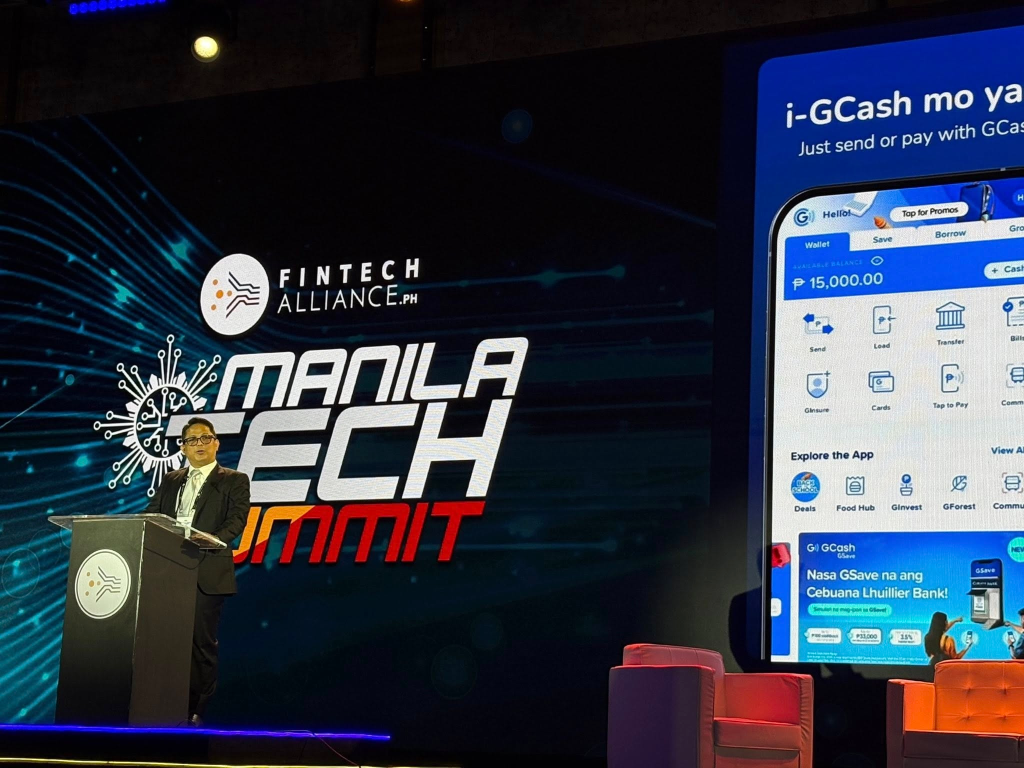
At the recent Manila Tech Summit, BSP Deputy Governor Elmore Capule revealed that AFASA now allows the BSP to freeze disputed funds for up to 30 days, a move designed to restore trust in a system traumatized by hackers.
Adding weight to this reform, a December 2025 Supreme Court ruling clarified that while general deposits remain confidential, the “Bank Secrecy Law” does not bar the disclosure of basic account holder information during cybercrime investigations.
The Court ruled that digital banks are “service providers” under the law, meaning they must comply with court-issued warrants to help trace fraudulent transactions.
(NOTE: The Supreme Court has clarified that while bank deposits remain generally confidential, banks may disclose specific customer transaction data when authorized by a court-issued warrant, particularly in cases involving cyber-enabled fraud and scams. Check out the story here.)
How to navigate the new digital fortress
While the era of absolute bank secrecy is over for criminal investigations, your privacy remains a priority.
Here is how you can stay protected:
| Feature | How It Works Under the New Laws |
| Account Freezes | The BSP can now hold disputed funds for up to 30 days to prevent scammers from withdrawing the loot. |
| Data Disclosure | Authorities can access specific transactional data only with a court-issued warrant. |
| Bank Duty | Digital banks must use AI-driven fraud detection and provide 24/7 reporting channels. |
External resource: BSP guidelines on digital banking: https://www.bsp.gov.ph/SitePages/DigitalBanking.aspx (DoFollow).
Practical takeaways for users
- Monitor daily: With 100 million transactions happening daily on platforms like GCash, seconds matter. Enable real-time alerts.
- Know your rights: Information sharing is limited to fraud-related data; your general balance is still protected.
- Proactive security: Always use multi-factor authentication (MFA).
The 70-year-old wall of secrecy has finally come down, not to expose the innocent, but to unmask the thieves. As Senator Gatchalian’s ordeal proved, sometimes it takes a personal hit to build a national defense.
Internal link suggestion: Learn more about protecting your privacy in fintech apps in our article on fintech security tips.