




AMD (NASDAQ: AMD) took center stage at CES 2026 with a sweeping set of announcements that underscored how artificial intelligence (AI) has already moved beyond the cloud and into everyday computing — an evolution closely watched by the fintech industry as AI became increasingly central to financial services innovation.
That attention intensified as AMD Chair and CEO Dr. Lisa Su delivered a CES 2026 keynote, where she outlined how AI-driven high-performance computing was reshaping industries — from cloud and enterprise systems to edge devices, gaming platforms, and the future of financial technology.
Dr. Su’s keynote took at the Palazzo Ballroom in The Venetian, ahead of the official CES show floor opening held on January 6.
AI PCs move closer to the mainstream
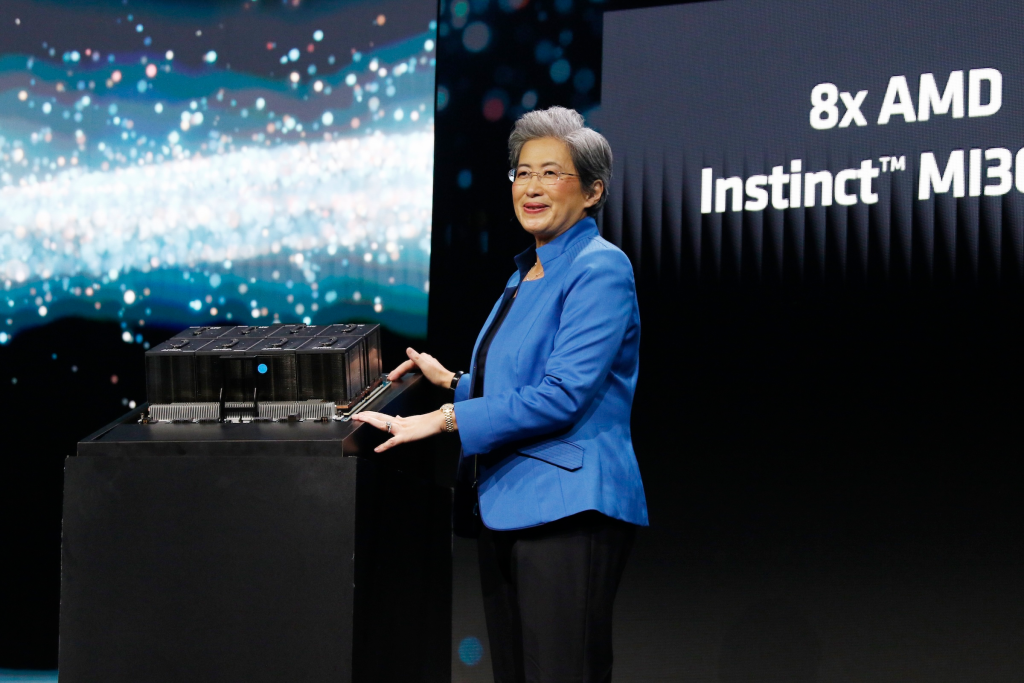
Dr. Lisa Su, AMD Chair and CEO
Right after the keynote, AMD unveiled a new generation of processors designed to accelerate on-device AI. The company introduced the Ryzen AI 400 Series and Ryzen AI PRO 400 Series, targeting Microsoft Copilot+ PCs and enterprise laptops.
Built on AMD’s “Zen 5” architecture and powered by second-generation XDNA 2 NPUs, the processors deliver up to 60 TOPS of AI compute, exceeding Copilot+ PC requirements and enabling advanced AI workloads to run locally.
For fintech firms, this shift has meaningful implications.
As banks, payment providers, and fintech startups increasingly deploy AI for fraud detection, credit assessment, document processing, and customer engagement, higher local AI compute offers potential gains in latency, privacy, and cost efficiency, particularly for sensitive financial data.
The Ryzen AI PRO 400 Series adds enterprise-grade security, manageability, and platform stability through AMD PRO Technologies — features critical for regulated environments such as banking and financial services.
Systems powered by the new processors are expected to ship starting Q1 2026 from OEM partners including Acer, ASUS, Dell, HP, GIGABYTE, and Lenovo.
Ultra-thin systems gain high-performance AI muscle
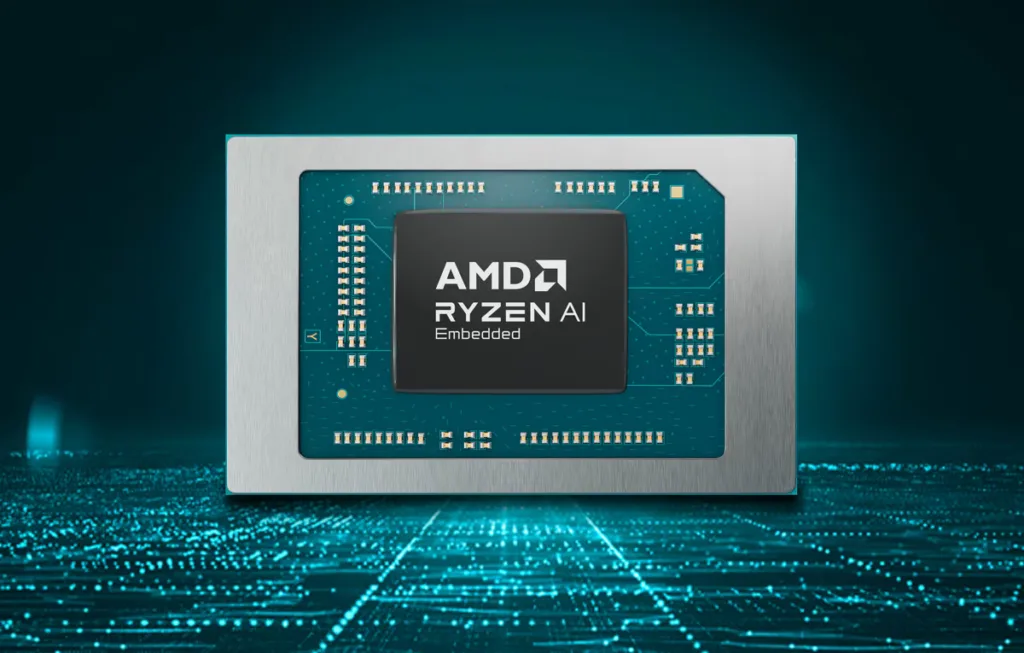
AMD also expanded its Ryzen AI Max+ Series, introducing new processors aimed at ultra-thin notebooks, compact workstations, and mini-PCs.
Combining Zen 5 CPU cores, Radeon 8060S graphics, and XDNA-based NPUs, the platform is designed to handle demanding AI and graphics workloads in portable form factors.
While positioned toward creators and developers, these systems could appeal to fintech innovation teams testing AI models locally or building edge-based analytics tools — use cases increasingly relevant as institutions look to reduce reliance on centralized cloud infrastructure.
Ryzen AI Halo targets edge and enterprise developers

One of AMD’s more notable announcements was Ryzen AI Halo, its first AMD-branded AI developer mini-PC.
Built on Ryzen AI Max+ processors, the compact system supports up to 128GB of unified memory and is capable of running models with up to 200 billion parameters locally.
For fintech developers, Ryzen AI Halo reflects a growing emphasis on edge AI, enabling experimentation, prototyping, and secure inference without requiring large data center resources.
The platform supports both Windows and Linux and ships optimized for AMD’s ROCm software stack.
Commercial availability is planned for Q2 2026.
Software stack gains strategic importance

AMD paired its hardware announcements with significant updates to its software ecosystem.
The company introduced ROCm 7.2, expanding support for Ryzen AI 400 Series processors across Windows and Linux and integrating directly with tools such as ComfyUI.
AMD said ROCm performance has improved by as much as fivefold over the past year, with broader platform support driving a sharp increase in developer adoption.
For fintech teams building AI-driven applications — from real-time analytics to personalization engines — simpler deployment and wider compatibility lower barriers to entry.
The company also unveiled an AI Bundle within AMD Software: Adrenalin Edition, allowing users to install key AI tools and frameworks through a single setup —reflecting an industry-wide push to make AI development more accessible at the device level.
Beyond gaming, toward full-stack AI
Alongside its AI-focused roadmap, AMD introduced the Ryzen 7 9850X3D, positioning it as the fastest gaming processor to date, and highlighted machine learning-powered graphics enhancements under FSR “Redstone.”
While gaming-centric, these technologies reinforce AMD’s broader ambition to deliver a full-stack AI computing platform spanning CPUs, GPUs, and software.
Why it matters for fintech

As financial institutions explore AI-powered services under increasing regulatory scrutiny, AMD’s CES 2026 announcements signal a clear direction: intelligence is moving closer to the user.
On-device and edge AI promise greater control over data, faster decision-making, and new deployment models for financial services.
With Dr. Lisa Su’s keynote set to frame AMD’s long-term AI vision, fintech leaders will be watching closely to see how advances in high-performance computing translate into practical tools for fraud prevention, risk management, and digital finance innovation.
At CES 2026, AMD is not just showcasing faster chips — it is laying out how AI-ready computing could reshape how industries, including fintech, build and deploy intelligence in the years ahead.