


AI in Philippine finance is no longer a fringe experiment. Artificial intelligence is now quietly embedded across Philippine finance, shaping the systems used by banks and fintech firms to decide who gets approved for a loan, which transactions are flagged for fraud detection, and how quickly customer complaints are resolved.
For banks and fintech companies facing pressure to scale amid rising digital adoption, AI has become a practical tool for speed, automation, and operational efficiency across financial services.

Yet as deployment accelerates, so do concerns about transparency, governance, and bias. What was once framed as a back-office optimization tool is increasingly shaping consumer outcomes, raising a central question for the industry: Is AI primarily an efficiency engine, or a new risk vector hiding inside the country’s financial infrastructure?
This blog examines how banks and fintech firms in the Philippines are deploying AI across credit scoring, fraud detection, and customer service, while unpacking the governance, accountability, and bias risks emerging alongside its growing role in financial services.
From pilots to production systems
The use of AI in Philippine financial services has expanded alongside the rapid growth of digital payments, e-wallets, and app-based banking.
As transaction volumes increased and fraud patterns grew more complex, manual and rules-based systems struggled to keep up. AI offered a way to automate decisions, detect anomalies at scale, and reduce operational costs.
What began as pilot projects has since moved into production environments.
Machine learning models are now commonly used to score credit applications, monitor transactions in real time, and power customer-facing chatbots. In many institutions, these systems operate continuously, influencing thousands or even millions of customer interactions each day.
This shift has improved efficiency, but it has also introduced a new class of risks. Unlike traditional systems, AI models often function as probabilistic tools, producing outputs that are difficult to fully explain even to their designers.
Credit scoring: Speed over transparency?
One of the most visible applications of AI is in credit scoring. By analyzing large datasets, including alternative data such as transaction histories and behavioral signals, AI-driven models can assess creditworthiness faster than traditional underwriting methods.
For lenders, this means quicker approvals and the ability to reach borrowers with limited formal credit histories. For consumers, it can mean faster access to loans and financial products.
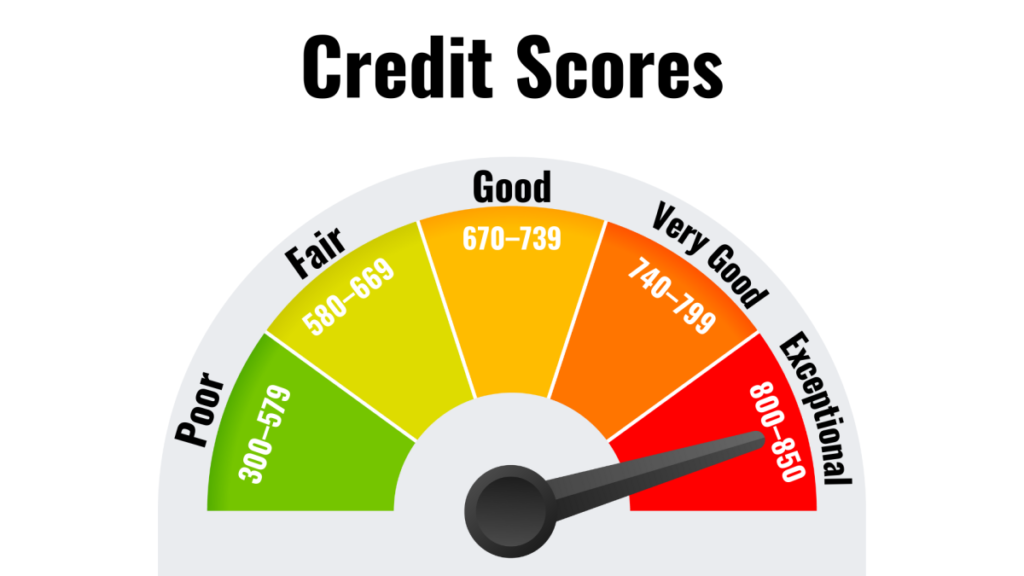
However, these gains come with trade-offs. AI credit models can be opaque, making it difficult for borrowers to understand why they were approved or rejected. This lack of explainability raises concerns around fairness and accountability, especially in a country where financial inclusion remains uneven.
There is also the risk of bias. If training data reflects existing socioeconomic disparities, AI systems may reinforce them, disproportionately affecting certain income groups or regions. Without robust oversight, biased outcomes can persist undetected at scale.
Fraud detection at machine speed
AI has also become central to fraud detection, where speed and pattern recognition are critical. Machine learning systems can analyze vast numbers of transactions in real time, identifying anomalies that might signal fraud, account takeovers, or unauthorized activity.

This capability has become increasingly important as digital payments expand and fraudsters adopt more sophisticated techniques. AI allows institutions to respond faster, reducing losses and improving customer protection.
Still, AI-driven fraud systems are not infallible. False positives can lead to legitimate transactions being blocked, frustrating customers and increasing support costs. Model drift, where system performance degrades over time as fraud patterns change, presents another challenge, requiring continuous monitoring and retraining.
Customer service automation and its limits
On the customer-facing side, AI-powered chatbots and virtual assistants have become common across banks and fintech apps. These tools handle routine inquiries, guide users through processes, and reduce the burden on human support teams.
The efficiency benefits are clear, particularly for institutions serving large user bases. But automation also has limits. Complex or emotionally sensitive issues often require human judgment, and poorly designed escalation pathways can erode customer trust.
There is also the question of accountability. When an AI system provides incorrect information or mishandles a complaint, responsibility ultimately falls back on the institution, even if the error originated from an automated process.
Governance gaps and accountability
As AI systems become more deeply embedded in financial operations, governance has emerged as a critical issue. Traditional risk frameworks were designed for deterministic systems, where decision logic could be traced step by step. AI challenges this model.
Key questions remain unresolved: Who is accountable when an AI system makes a harmful decision? How often should models be audited? What level of human oversight is sufficient?
Some institutions have adopted “human-in-the-loop” controls, where automated decisions are reviewed or overridden by staff under certain conditions. Others rely on internal validation teams to test models for accuracy and bias. However, practices vary widely, and industry standards are still evolving.
Bias and the Philippine data challenge
The risk of bias is particularly pronounced in the Philippine context. Financial behavior in the country is shaped by informal income streams, regional disparities, and varying levels of digital access. AI models trained on incomplete or non-representative data may struggle to capture this complexity.
Imported models or frameworks developed for other markets may not translate cleanly to local conditions. Without careful localization and continuous monitoring, these systems risk producing skewed outcomes that disadvantage certain segments of the population.
This makes data governance as important as model performance. Ensuring data quality, relevance, and ethical use is a prerequisite for responsible AI deployment.
Regulation playing catch-up
Regulatory oversight of AI in finance remains a work in progress. Existing frameworks focus on consumer protection, data privacy, and risk management, but few rules explicitly address AI-specific issues such as algorithmic transparency or automated decision-making.

In the Philippines, regulators such as the Bangko Sentral ng Pilipinas have emphasized technology risk management and cybersecurity, but detailed guidance on AI governance is still emerging. This creates a gap between rapid industry adoption and formal oversight.
For now, much of the responsibility rests with institutions themselves. How they design, deploy, and monitor AI systems will shape both consumer outcomes and regulatory responses in the years ahead.
Efficiency tool or emerging risk?
AI’s role in Philippine finance is unlikely to diminish. The efficiency gains are real, and the competitive pressures driving adoption show no signs of easing. But the technology’s impact extends beyond cost savings and faster decisions.
As AI systems increasingly influence who gets credit, how fraud is managed, and how customers experience financial services, the risks associated with opacity, bias, and governance failures become harder to ignore. The challenge for the industry is not whether to use AI, but how to do so responsibly.
In the long run, the value of AI in Philippine finance will depend less on algorithmic sophistication and more on transparency, accountability, and restraint. Without these, the same tools designed to improve efficiency could become a new source of systemic risk.